
Norway Fjords in Pictures: Puffins, Glaciers and Hidden Gems on a Norway Road Trip
In the first part of this Norway Road Trip, I battled deep snow, mountain passes and some of the most challenging driving conditions I have ever encountered. As the journey continued, however, the landscape began to change.
Leaving the snow-covered mountains behind, I headed northwest towards the coast and the spectacular scenery of Fjord Norway. The change brought a welcome variety to both the travel and the photography. Towering snow-capped peaks still dominated the horizon, but now they were joined by dramatic coastlines, abundant wildlife and the vast network of fjords that make this region so famous and drawing gigantic cruise ships navigating through these waters.
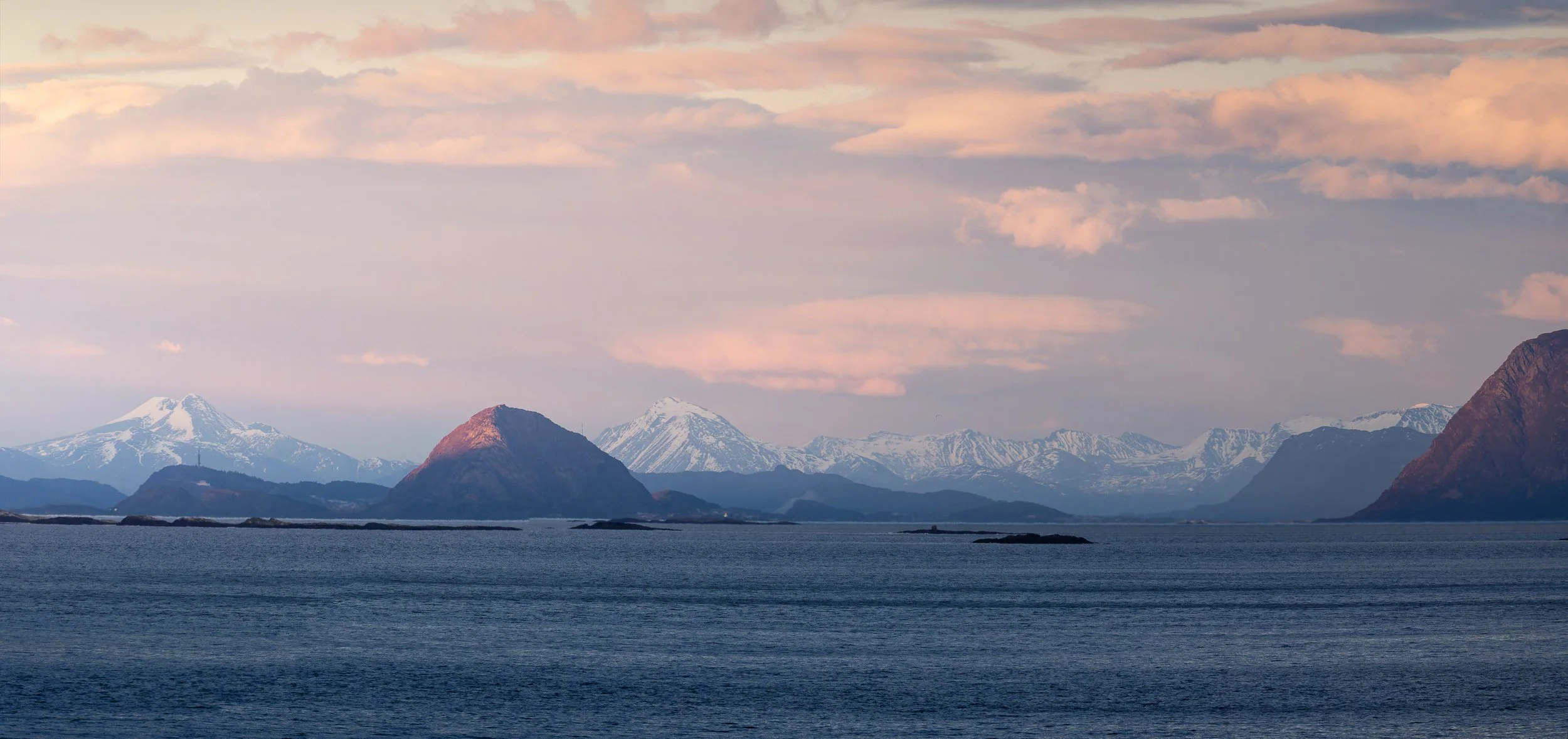
Entrance to the Fjords of Norway at Runde Island
This second part of the journey covers some of the highlights of travelling through the Norway fjords in my VW campervan, from photographing puffins and sea eagles on Runde Island to exploring the landscapes surrounding Briksdal Glacier near Olden. Along the way there were quiet camps beside the water, unforgettable drives through some of Europe's most dramatic scenery and countless photographic opportunities simply waiting around the next bend in the road.
While the glaciers and famous viewpoints attract thousands of visitors every year, some of my favourite images came from less obvious locations. Those moments discovered while exploring the fjords, following quiet roads and taking the time to stop whenever the light looked promising.
Runde Island Norway – Puffins, Eagles and Coastal Landscapes
One of the surprising and unplanned highlights of my journey through Fjord Norway was a visit to Runde Island, a place renowned for its seabird colonies and dramatic coastal scenery. Reaching the island was surprisingly straightforward. The roads linking the islands stretch across the sea on a series of bridges and causeways, creating a drive that occasionally feels reminiscent of the Atlantic Ocean Road. Even before reaching the destination, the journey itself becomes part of the experience. Some of these bridges resembled a series of roller-coaster rides, more Legoland than Alton Towers.
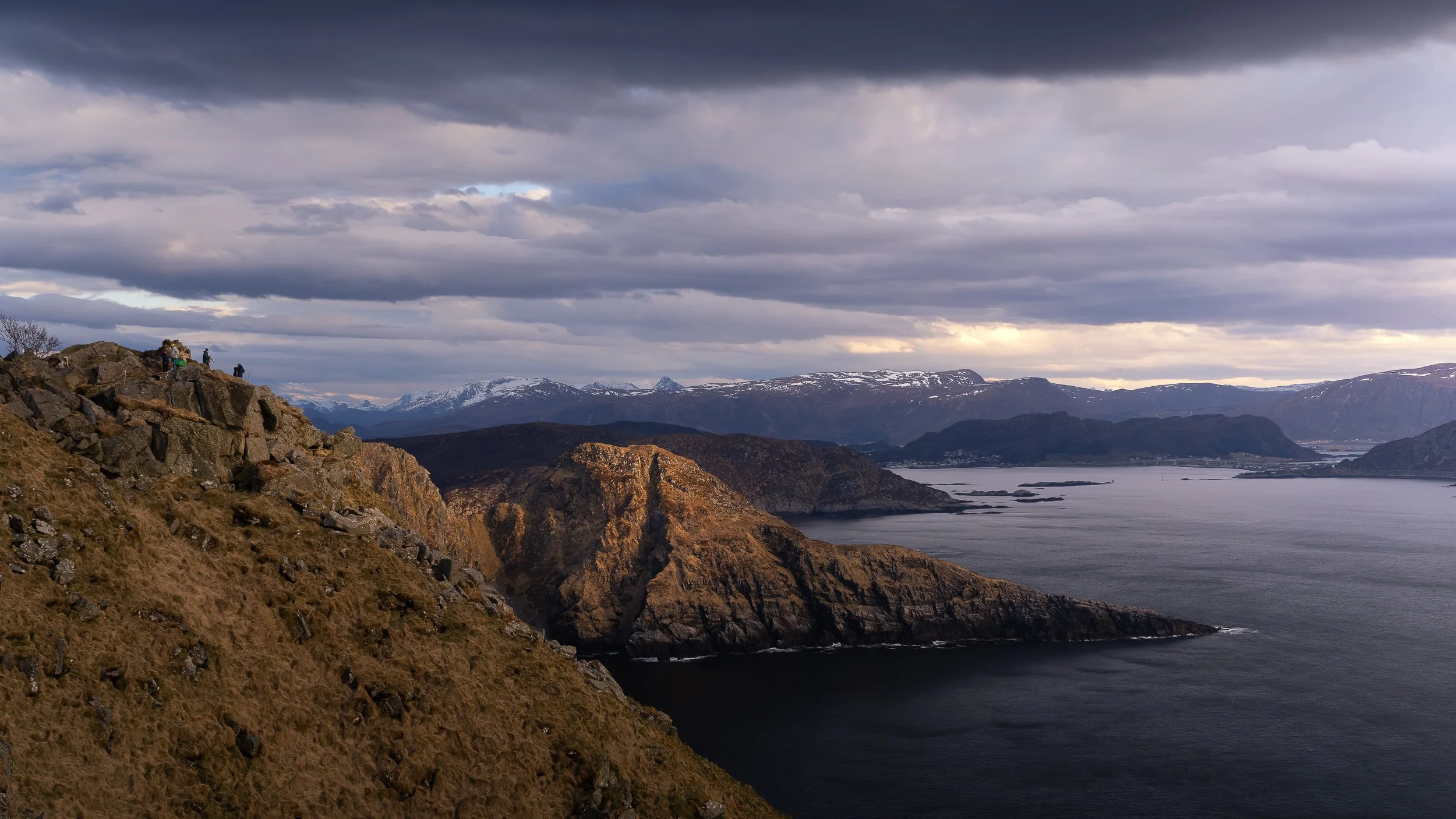
Runde Island, Norway. Puffin watchers wait in the cold on the left shoulder
For my stay, I based myself at Goksøyr Camping, a well-positioned campsite close to the start of the puffin trail. From there, it is a very steep, 40-minute walk to the main puffin viewing area. At this time of year, the birds were arriving back at the cliffs at around 8pm, leaving plenty of daylight for photography.
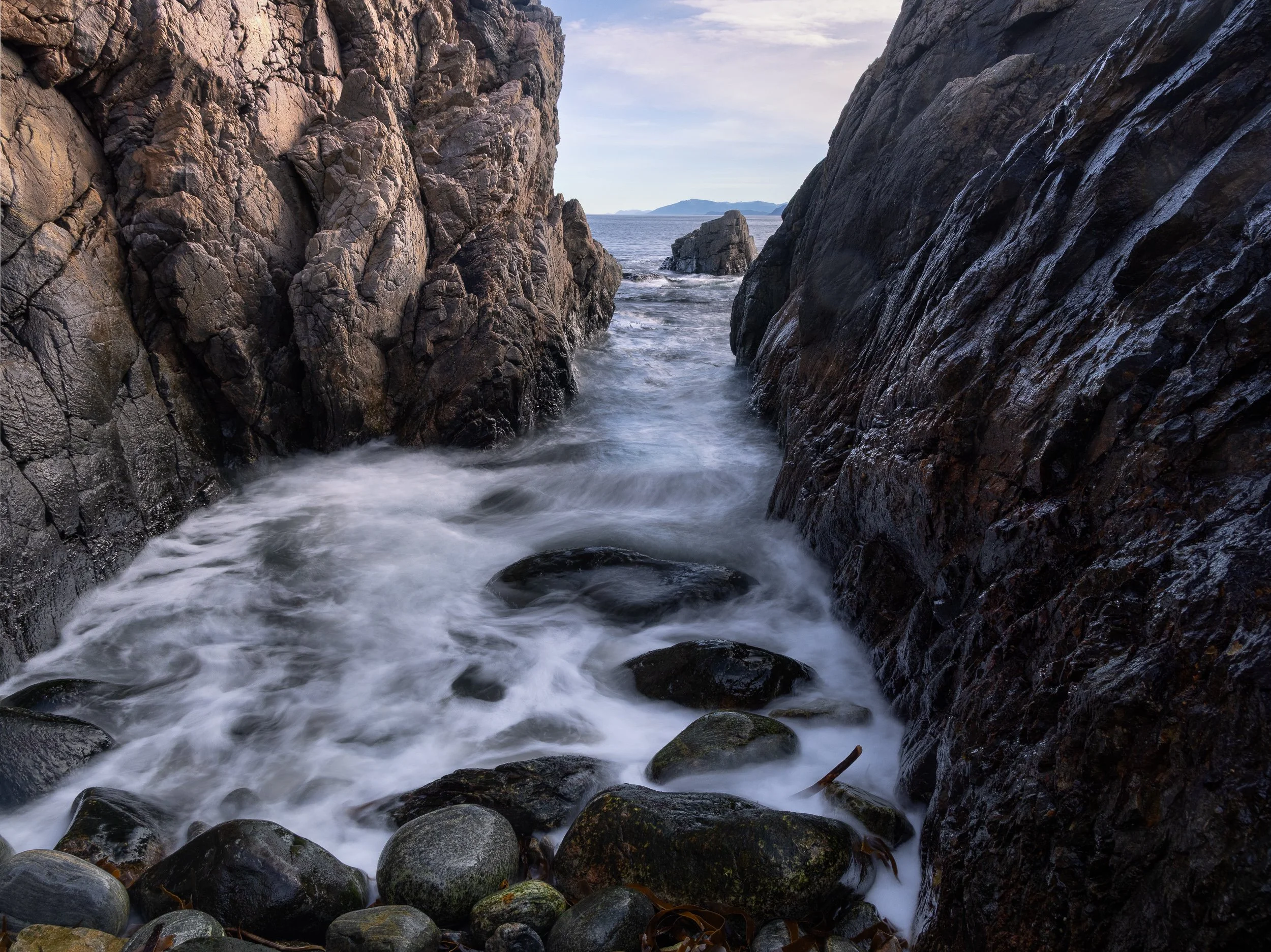
Cove below Søre Hamna, Runde Lighthouse
Before heading to the puffin colony, I spent time exploring the island and made the longer walk out to Søre Hamna and Runde Lighthouse. The route takes around an hour and a half and, while quite demanding in places, follows a good, well-maintained path through some spectacular coastal scenery.
The lighthouse itself became an unexpected photographic highlight. It is a relatively simple structure, but years of exposure to the harsh coastal weather have left their mark. Rusting metal window frames and fittings, peeling paint and weathered surfaces created wonderful textures that lent themselves perfectly to black and white photography. Rather than concentrating on wide landscapes, I found myself drawn to the details and character of the building.
From the lighthouse, I continued on towards the puffin colony, another 40 minutes away. The scenery along the route was breathtaking. Towering cliffs plunge into the sea, while gannets circle and gather on the rocky ledges below. It is one of those locations where the landscape alone would justify the walk.
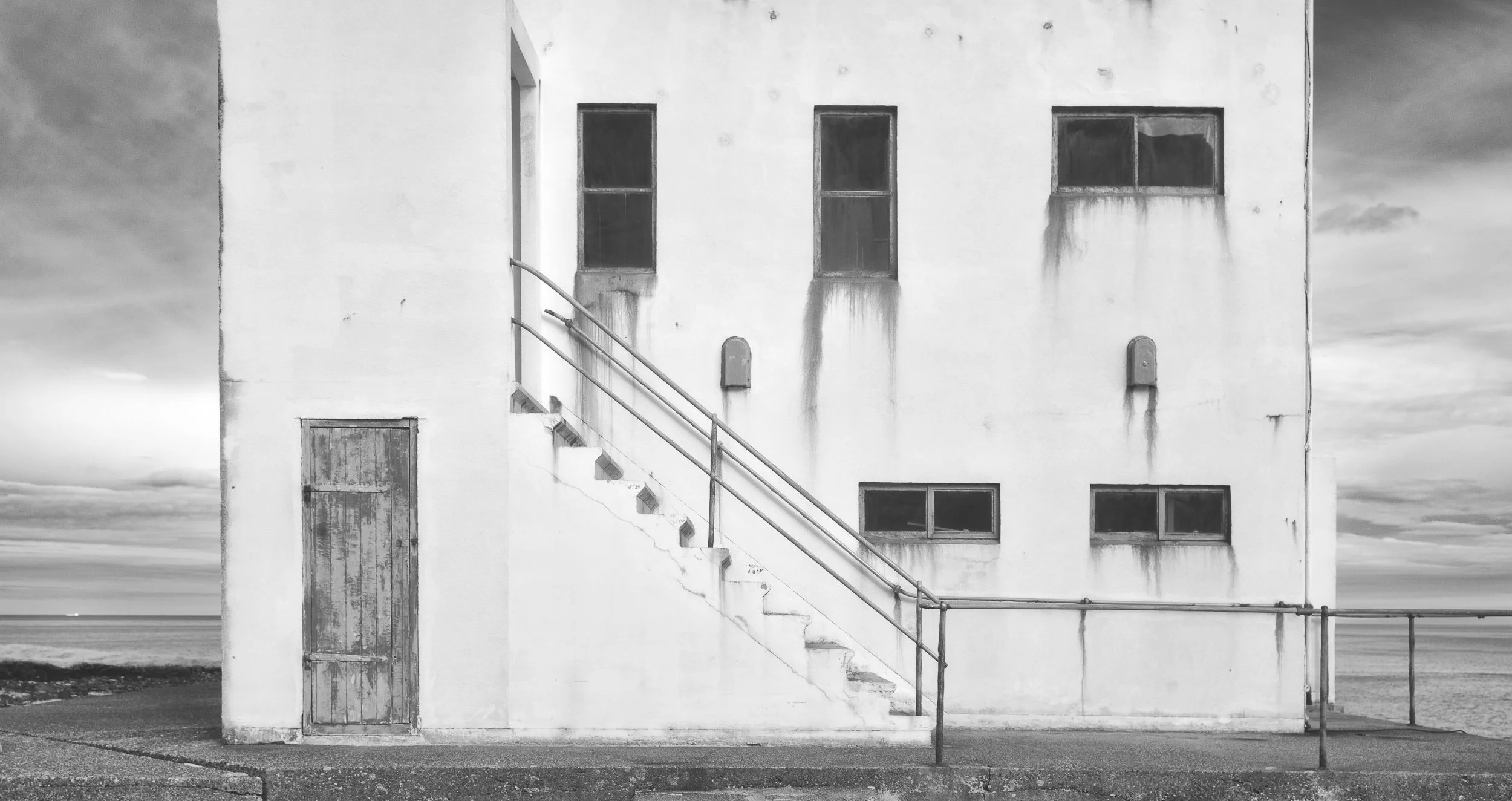
Runde Island Lighthouse
Eventually, I reached the puffin viewing area and settled in to wait. Runde Island is one of the best places to photograph Puffins in Norway. As the evening progressed, small groups of puffins began arriving from the sea. Then more followed. Before long, flocks of birds were sweeping around the cliffs and gathering near their nesting burrows. They look a bit crazy when trying to put down on land, more a thump and bump technique.
What happened next was completely unexpected.
One moment the puffins were everywhere; the next, many of them had vanished. Looking up, the reason became obvious. Two white-tailed sea eagles were circling above the colony, searching for an easy meal. The puffins had reacted instantly. They had immediately all disappeared into the holes in the side of the cliff.
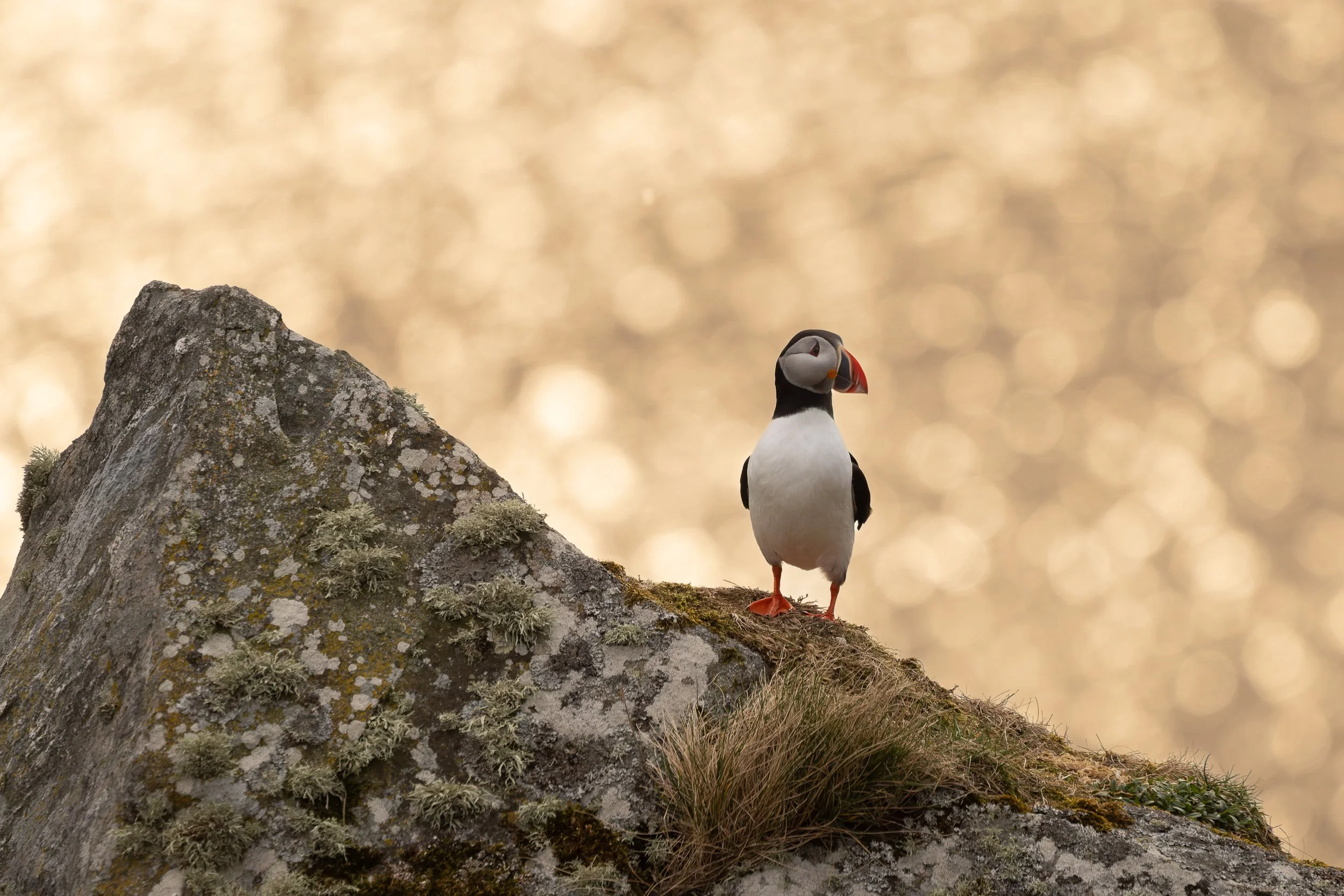
Puffin magic
Watching them move across the sky, just before the arrival of the eagles it almost resembled a murmuration, with thousands of birds responding together to confuse any pending threat from above. (A technique used here in the UK by starlings if they think there is a raptor close by). Once the eagles became bored, the puffins popped their heads out of their dens and were back to flying around in thier thousands in no time.
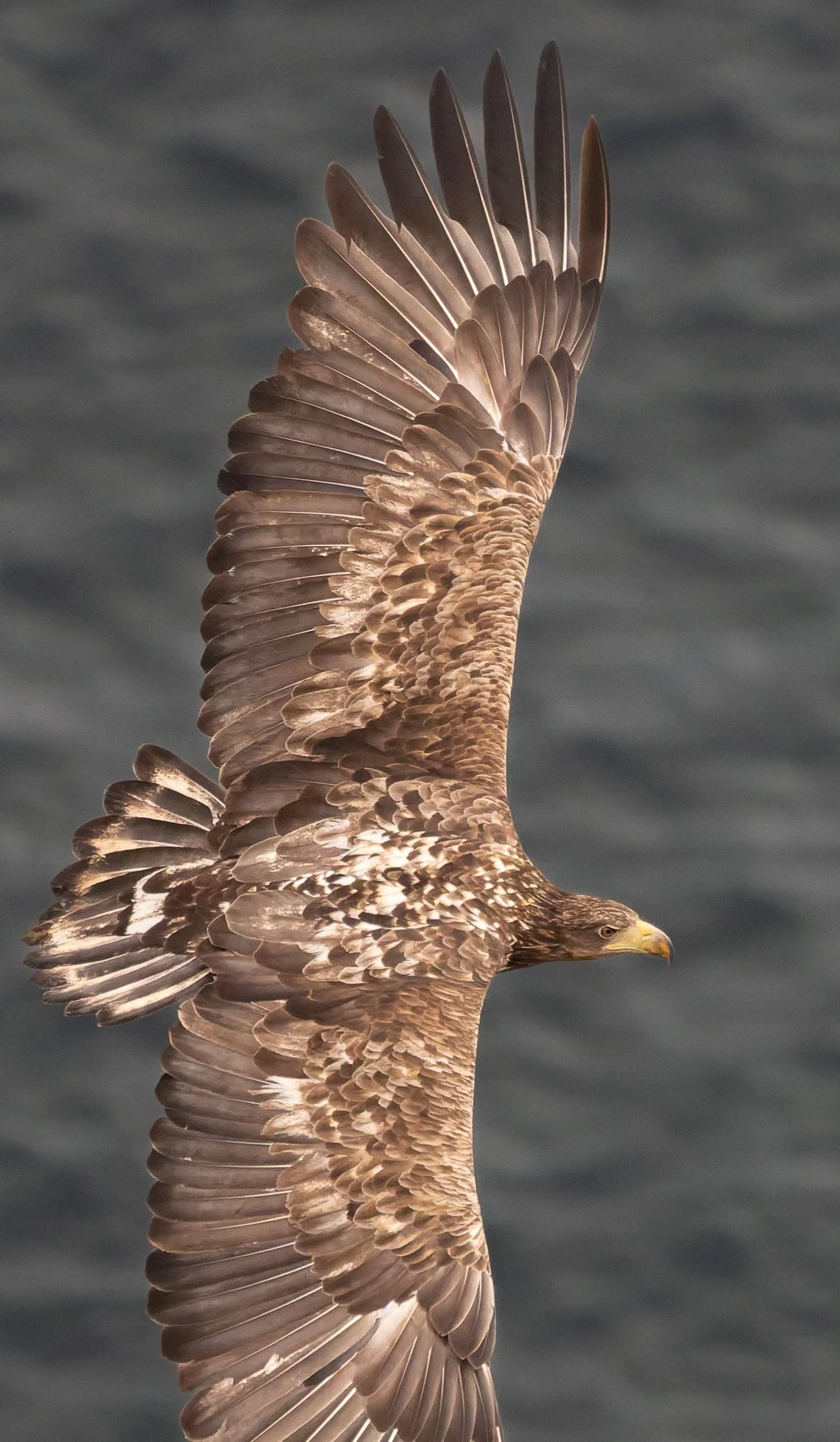
Eagles stalk the puffins
I had not realised that puffins spend most of their lives at sea, often remaining offshore for eight or nine months of the year before returning to land to breed. At the time of my visit they had only recently returned and were not yet bringing fish back to chicks, but the colony was already full of activity.
Photographing the puffins was relatively straightforward compared to the eagles. The sea eagles appeared suddenly, moved incredibly fast and never seemed to stay in one place for long. Capturing them sharply against the dramatic backdrop of the cliffs proved to be a real challenge.
As wildlife encounters go, however, it was hard to imagine a better evening. Between the puffins, the sea eagles, the dramatic coastal scenery and the weathered lighthouse, Runde Island provided some of the most memorable photography of the entire Norway Road Trip. Although the cold was never far away. Wrap up warm if visiting Runde Island and its birds.
Driving Through the Norwegian Fjords
A large part of any Norway Road Trip is simply spent driving, and nowhere is that more apparent than in Fjord Norway. Distances can be deceptive, with the route constantly weaving around mountains, crossing bridges and disappearing into tunnels.
The tunnels undoubtedly make travelling easier and faster, but there is a downside. Sometimes you find yourself spending so much time underground that you miss some of the spectacular scenery outside. On the other hand, many of the best photographic locations are found at the tunnel entrances themselves.
Often, an older road still exists beside the modern tunnel. These roads once clung precariously to the cliffs above the fjords but have now been replaced by more efficient tunnels. Many are dead ends today, while others continue as footpaths that can still be explored. They make excellent stopping points, providing uninterrupted views across the water without the traffic of the main road.
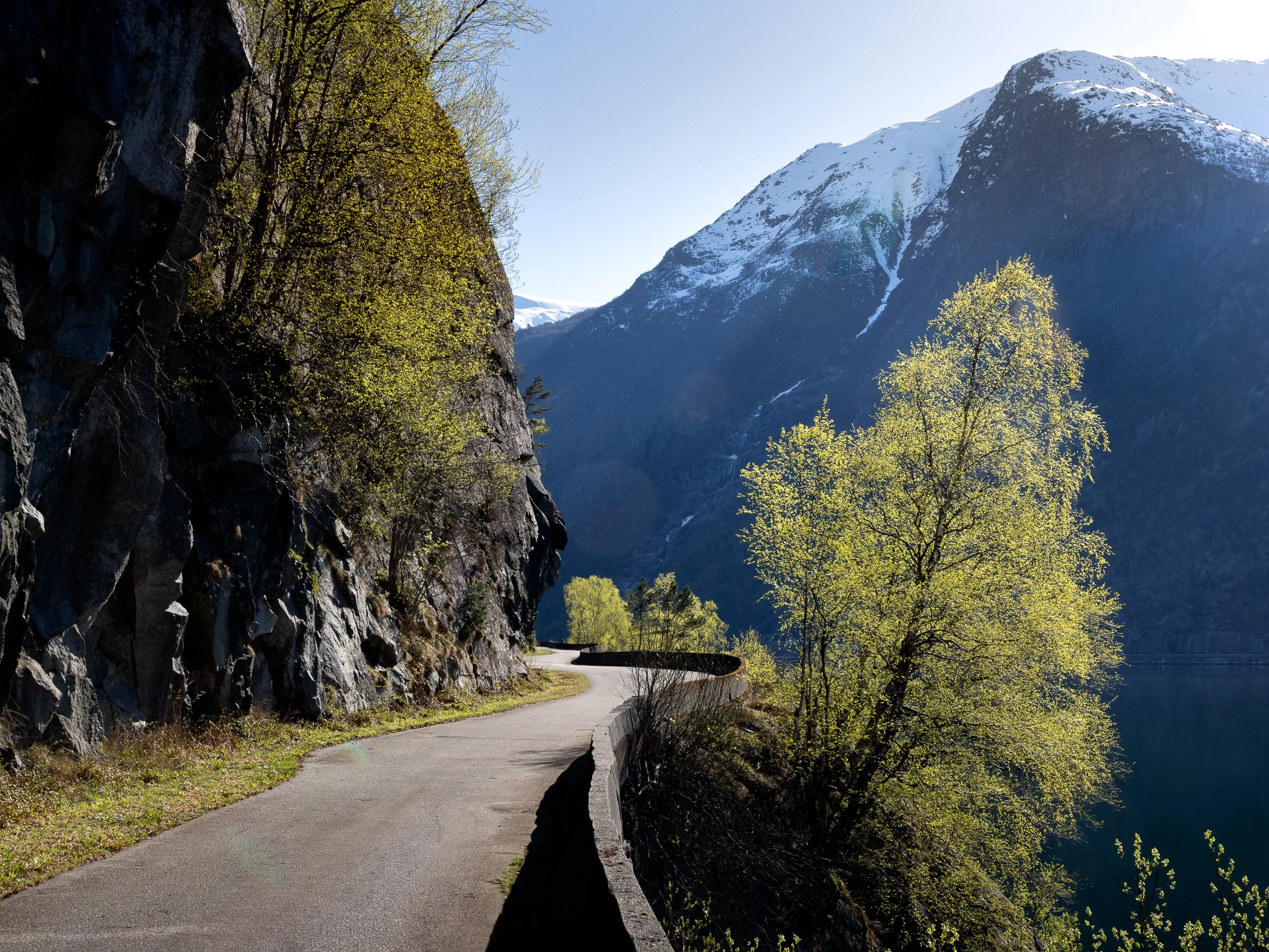
The old roads beside the tunnel exits
During my visit, the fjords were often remarkably calm, creating beautiful reflections of the surrounding mountains. The weather was generally sunny, which sometimes made photography challenging. Bright conditions are not always ideal for landscapes, but over the years I have learned that it is often better to work with the conditions rather than fight them.
The strong spring sunshine was beginning to illuminate fresh green growth along the shorelines and river valleys. What struck me most was the contrast with the higher mountains. Up in the snow-covered interior, many of the trees were still completely bare, but down by the fjords spring had already arrived. The new foliage added colour, depth and texture to many of the compositions and created opportunities that simply did not exist at higher elevations.
One of the great advantages of photographing the Norway fjords is that some of the strongest images require very little effort to reach. There is no need for long hikes or strenuous climbs. Many of my favourite photographs from this part of the journey came simply from stopping the campervan whenever the light, reflections or landscape caught my eye.
Finding overnight stops, however, was not always quite so easy.
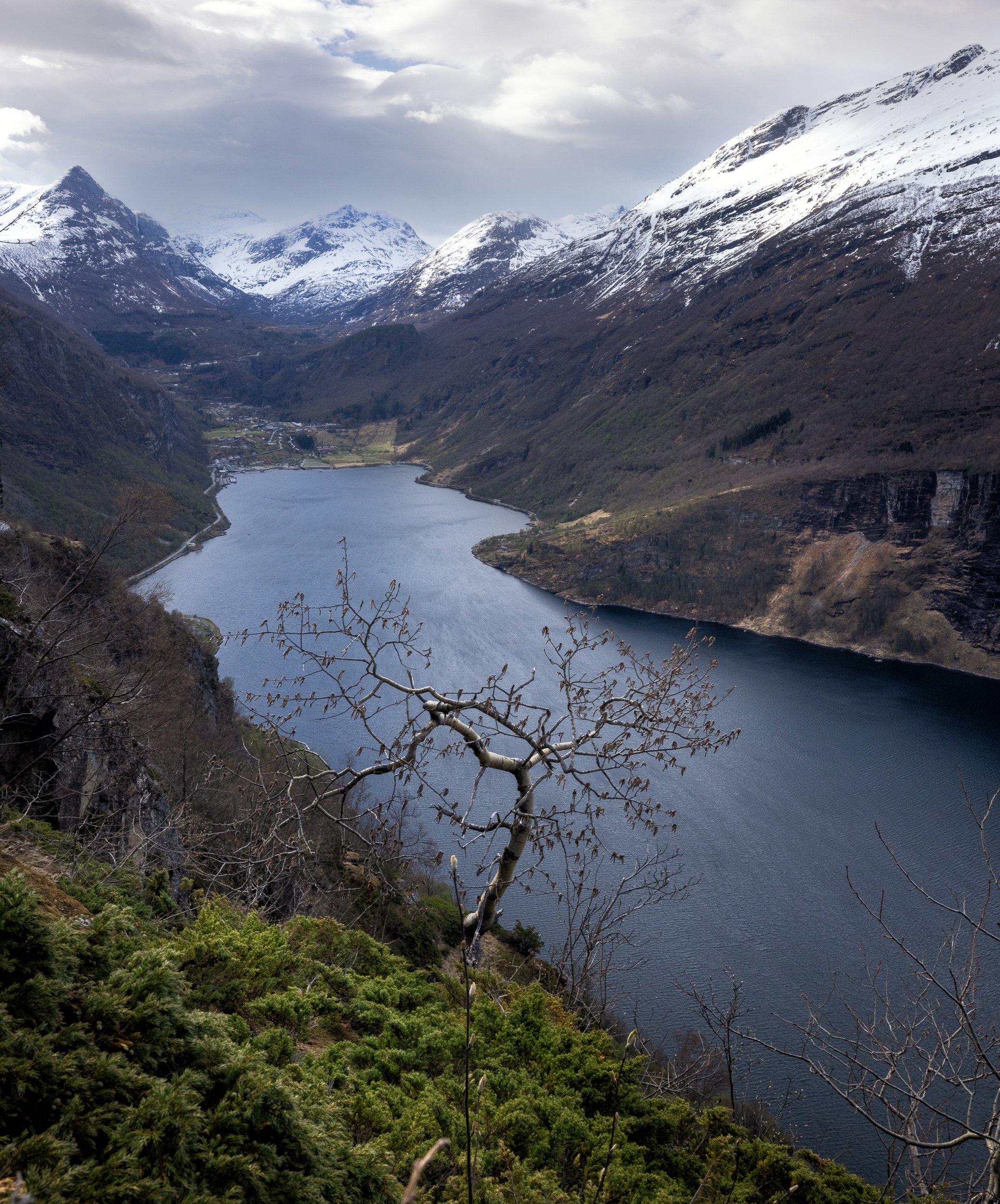
Geiranger fjord
Many of the fjord communities rely heavily on tourism and cruise ship visitors. As a result, free overnight parking opportunities can be more limited than in other parts of Norway. I occasionally used local campsites, although many were still closed for the season during my visit. On a couple of evenings, finding somewhere suitable to stay became surprisingly difficult.
The roads themselves can also be quite busy and are often major transport routes through the region. Unlike some of the quieter mountain areas, simply pulling over for the night beside the road rarely felt like a sensible option. It is one of the few challenges of exploring Fjord Norway by campervan, although the scenery more than compensates for the extra planning required. I can see the advantages of doing this exploration on a five-star cruise ship.
Along the fjords, there are a number of original stave churches dating back to the 12th century. Often tucked away in small villages beside the water's edge, these churches are quite stunning and well worth a visit. The architecture is remarkable, but I was equally fascinated by the artefacts inside. Many originated from elsewhere in Europe and beyond, highlighting the extensive reach of Viking trade and influence during this period.
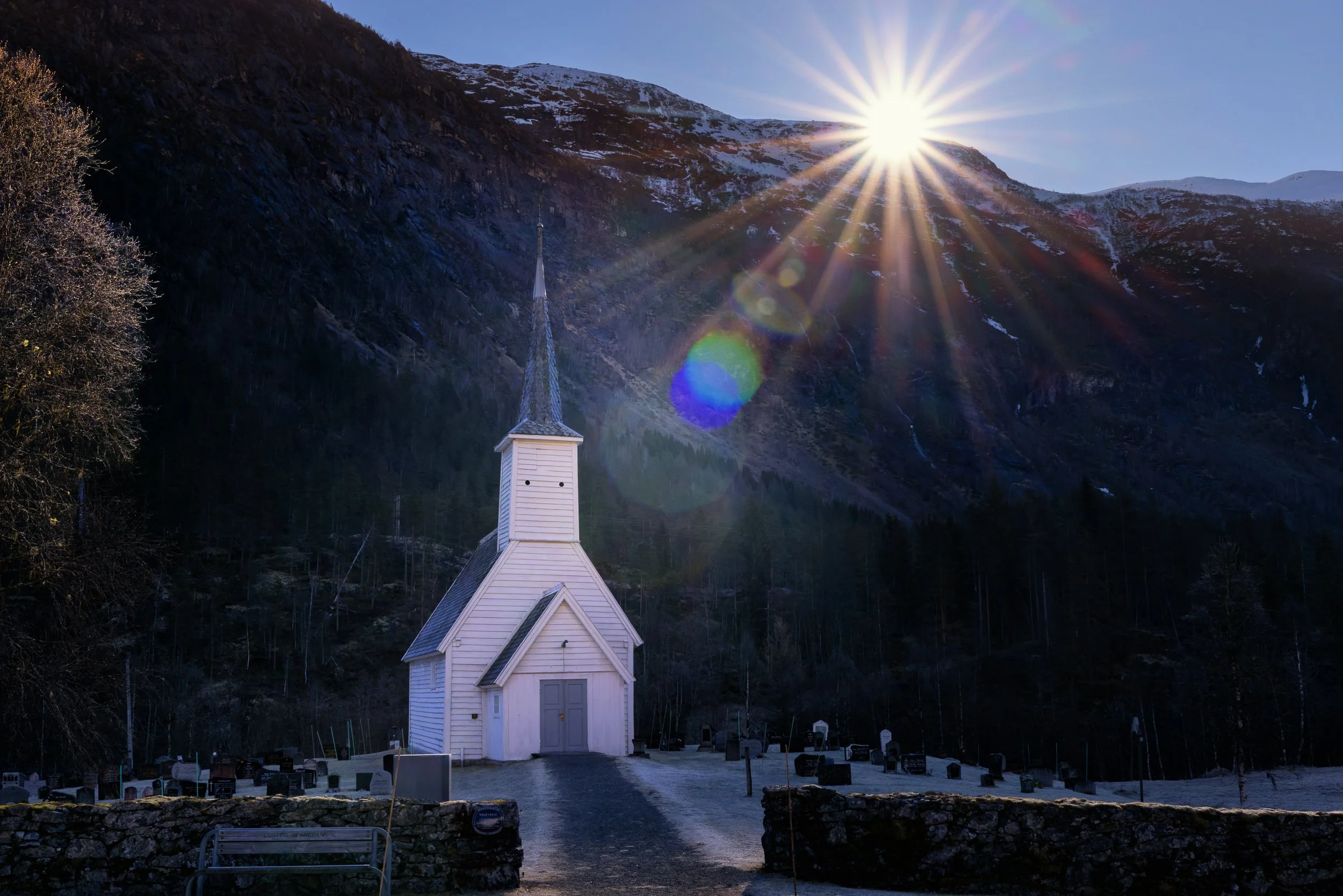
One of the many Stave Style churches arounds the fjords of Norway seems complete under a stunning Sunstar
Briksdal Glacier and the Olden Valley – Expectations and Reality
I think I developed something of a love-hate relationship with the Olden Valley and Briksdal Glacier during my time in Fjord Norway.
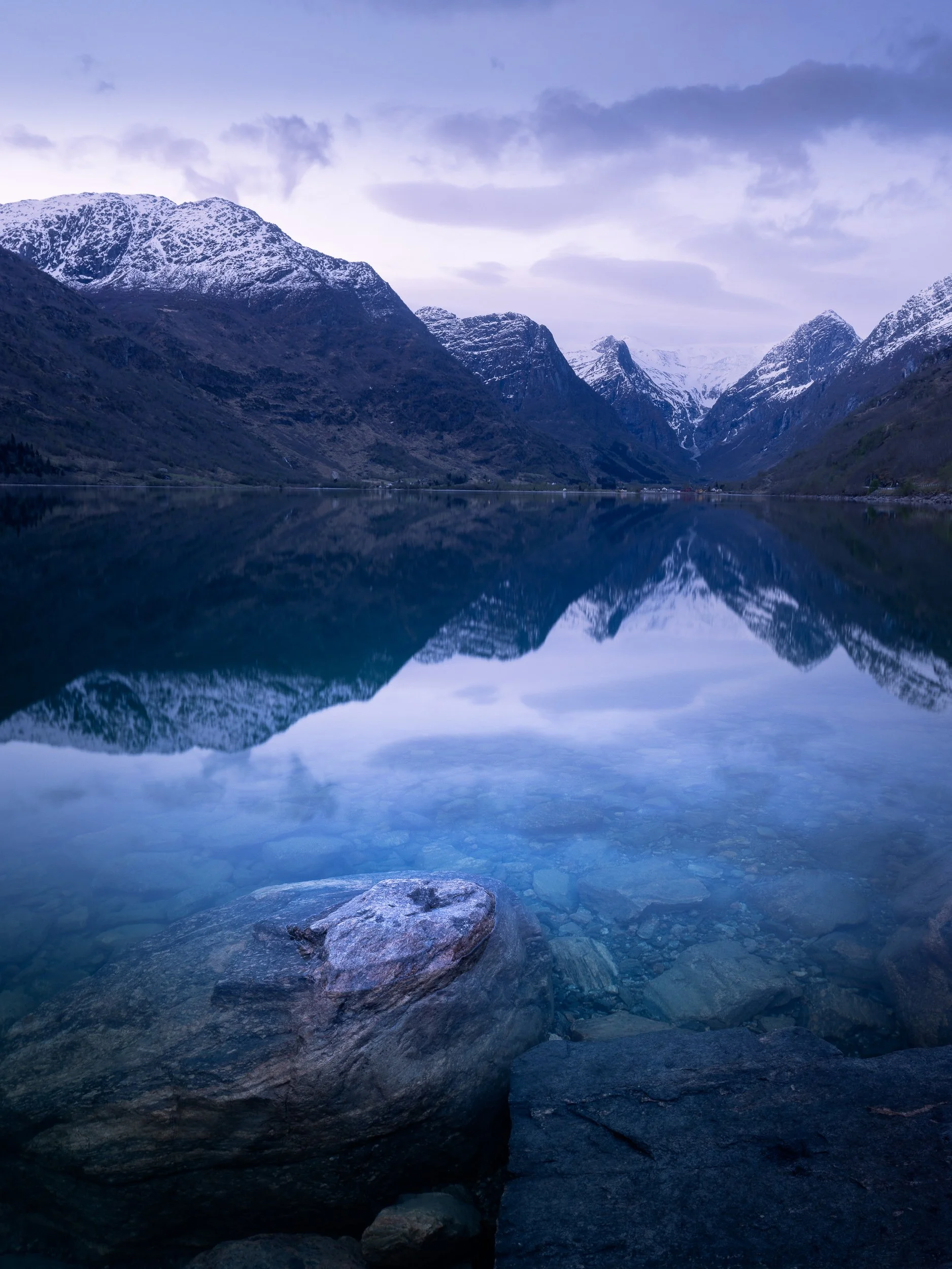
Olden Valley just before sunrise at 04.50 am
My first impression was not particularly positive. After spending so many hours driving through some of Norway's most spectacular landscapes, I arrived to find cruise ships unloading what seemed like thousands of visitors into the valley. Areas that had initially looked peaceful suddenly became crowded with people heading in every direction. Having travelled so far to reach the location, it was difficult not to feel slightly frustrated.
Rather than joining the crowds, I decided to move on and explore further north before returning later. That decision turned out to be one of the best I made during the trip.
When I returned a few days later, I spent the night at a nearby campsite, where the owner was exceptionally friendly and helpful. The following morning, I set the alarm early and left long before sunrise. By the time I reached the Olden Valley, just before 5 am, the first light was beginning to illuminate the mountains surrounding the fjord.
The early start immediately paid off. Before even reaching Briksdal Glacier, I was rewarded with a beautiful scene of the mountains reflected in the still water below. The calm conditions and soft morning light created one of my favourite images from this part of the journey.
From there, I continued towards the glacier itself.
The infrastructure around Briksdal Glacier has expanded significantly over the years. Large car parks accommodate the steady stream of visitors and coaches, while paths have been upgraded to allow electric buggies to transport people towards the glacier. Initially, this felt somewhat at odds with the wild landscapes I had experienced elsewhere in Norway.
On reflection, however, it makes complete sense. Many visitors arrive from cruise ships, and not everyone is able to undertake a long walk into the mountains. The improved access allows people of all ages and abilities to experience one of Norway's most famous natural attractions. More importantly, tourism provides a vital source of income for the local communities that call this remote region home.
What surprised me most was that despite the extensive facilities, there was nobody there.
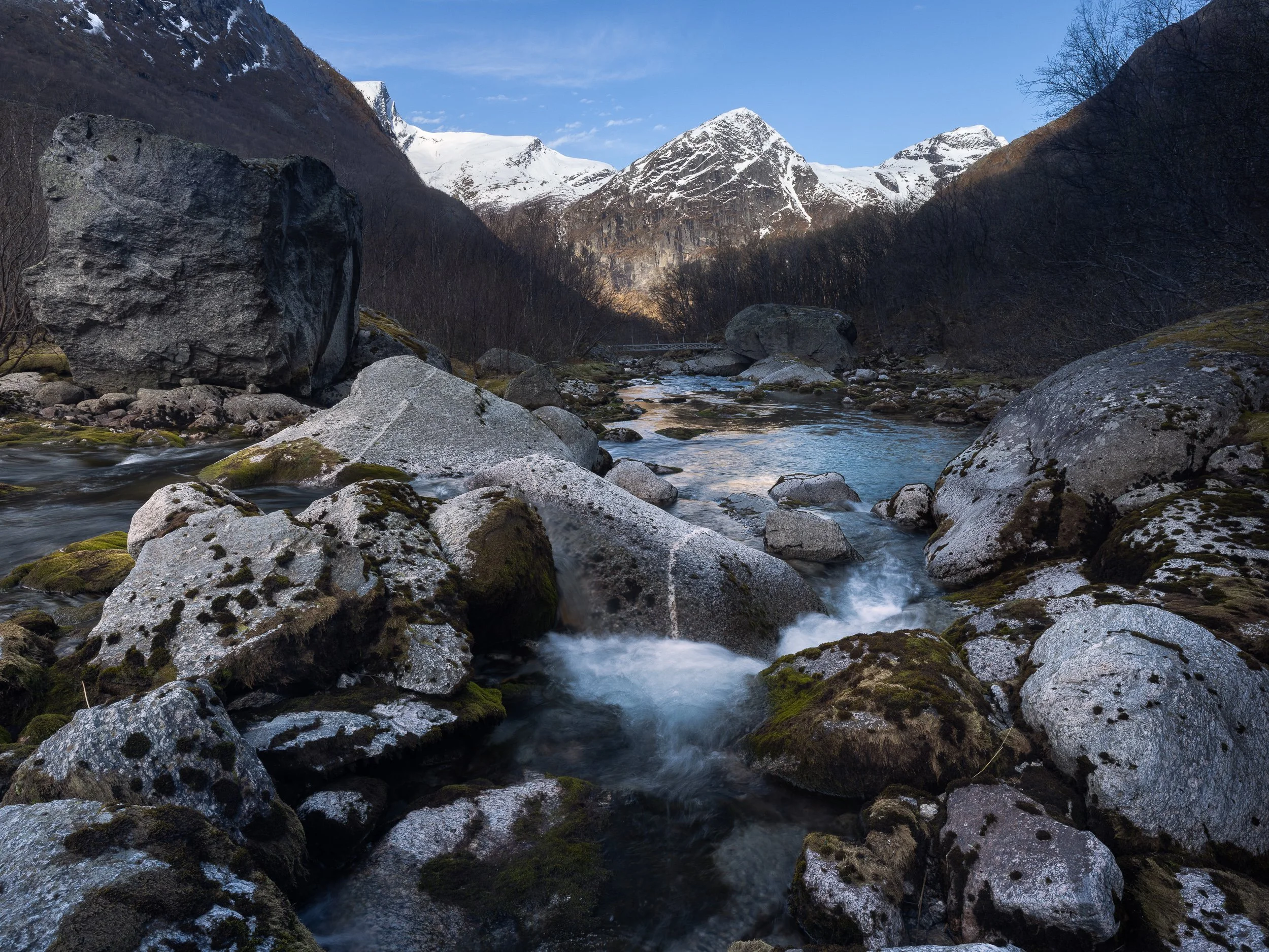
The view looking from the Briksdal Glacier
Arriving so early meant I effectively had the valley to myself. I spent almost four hours walking to the glacier and back without seeing another person. The cruise ship passengers would not arrive until much later in the day, leaving the landscape completely silent apart from the sound of rushing water.
Ironically, the glacier itself proved to be the least interesting part of the visit.
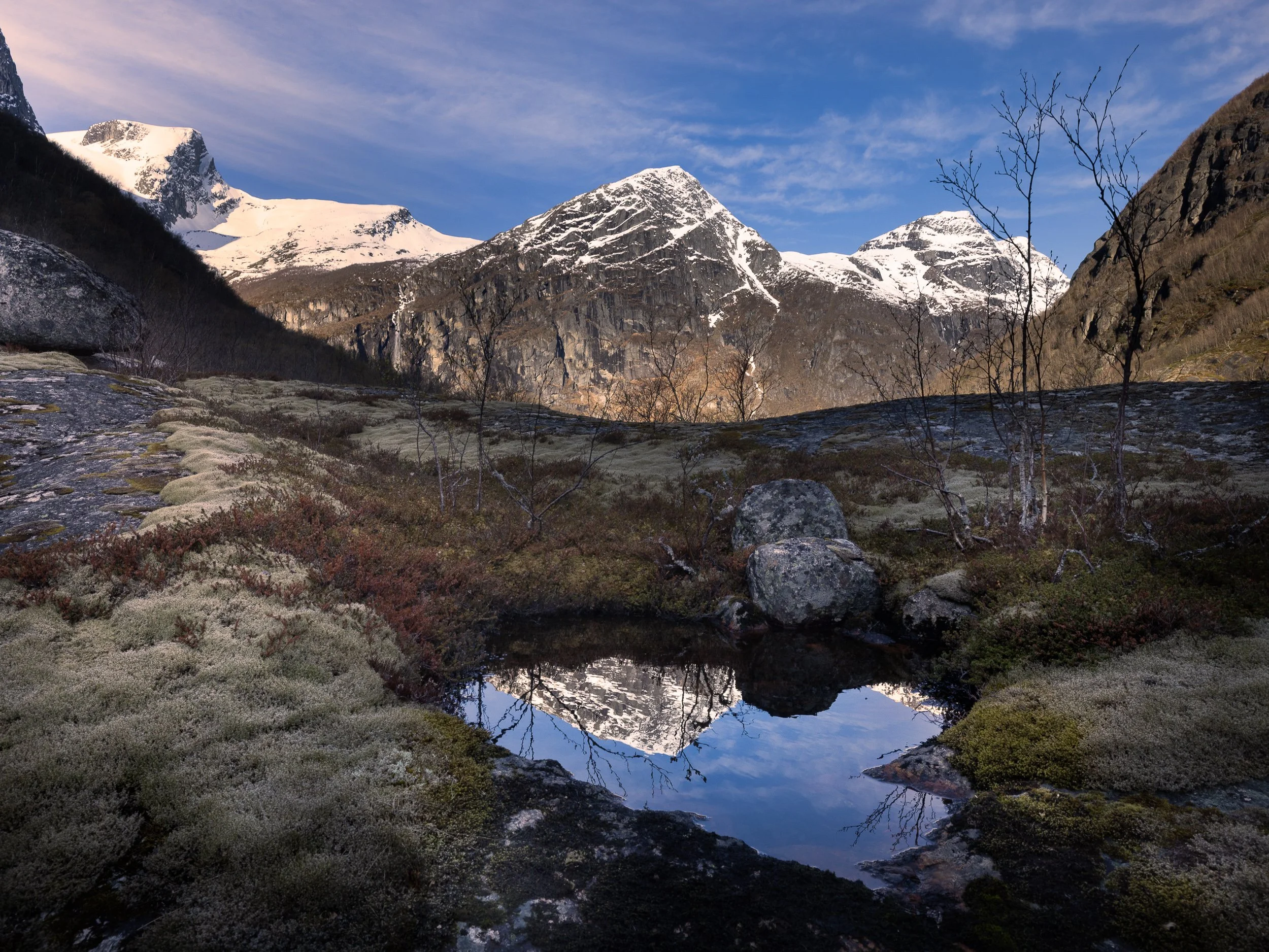
Reflections from Briksdal Glacier
Along the route, markers show how dramatically the glacier has retreated over the centuries. By the time I reached the lake at the head of the valley, I found myself wondering exactly where the glacier was supposed to be. Compared with the historic photographs displayed along the path, very little ice remained visible from the viewing area. After all the anticipation, I have to admit I felt rather underwhelmed.
The real surprise came when I turned around and began the walk back down the valley.
Suddenly the light transformed the landscape. The rising sun illuminated the mountains behind me while the river carved its way through the valley floor below. Looking back down the route I had just climbed revealed a completely different perspective. The sweeping curves of the river, the rugged snow-capped mountainsides and the fresh spring colours combined to create far stronger compositions than I had found at the glacier itself.
As is often the case in landscape photography, the image I thought I had travelled to capture was not the one that ultimately mattered. The disappointment at the head of the valley gave way to some of the most rewarding photography of the entire trip.
Sometimes the destination is not the photograph. The journey back can be where the real opportunities reveal themselves.
A Mystery Beneath the Fjord
I'll leave you with my favourite image from the entire Norway Road Trip.
As photographers, our favourite image is not always the most technically accomplished or the most spectacular landscape. Sometimes it is the image that raises the most questions. The image that encourages the viewer to stop, look a little longer and begin creating their own story.
This photograph was taken near the entrance to one of the fjord tunnels. I had stopped to photograph the reflections across the water, where the mountains were perfectly mirrored in the still surface of the fjord. The conditions were fleeting. The water had become completely calm and the low sun was catching the distant mountains beautifully.
Having taken the image I wanted, I was about to walk away.
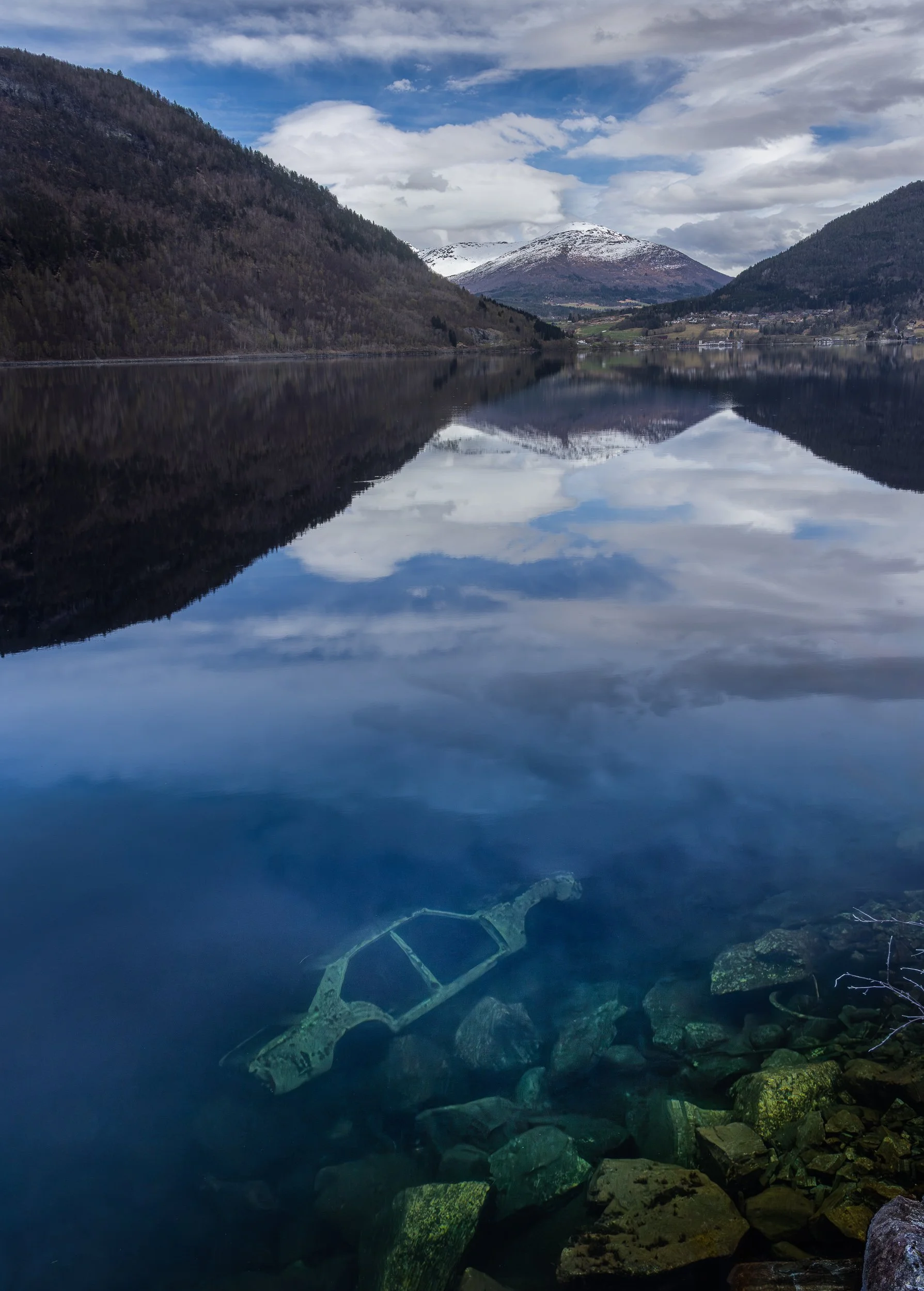
Norway Fjord and abandoned car
Then I happened to glance down at my feet.
Beneath the surface of the water, emerging from the green murky depths almost like a ghostly apparition, was a car lying on its side. The doors had long since disappeared, leaving only the shell of the vehicle resting on the fjord floor and pointing towards the mountains I had just been photographing.
The scene immediately transformed from a simple landscape into something altogether more intriguing.
I rushed back to set up the camera again. The slightest breath of wind would have destroyed the reflection on the surface and hidden the car beneath a pattern of ripples. Everything depended on the water remaining perfectly still.
Fortunately, I managed to capture the image just before the conditions changed and the apparition disappeared for the day. It was all gone within 5 minutes!
What draws me to this photograph is not simply the composition but the questions it raises. Did the car fly out of the tunnel exit? What happened to the occupants? A driver having had one too many beers who swam to shore, or was there a more tragic story behind it? The viewer is left to fill in the gaps.
For me, the image also carries an environmental undertone. Against the backdrop of one of the world's most beautiful landscapes sits an unmistakable reminder of human activity. The contrast between the pristine fjord and the forgotten vehicle beneath the surface creates a tension that makes the photograph more than just a scenic view.
Initially I felt that the photo was not really working that well. I realise that this is the point now. The juxtaposition between the beauty of the fjord and the crashed car is unsettling in itself, and that is precisely the point of the image. It is not created to make harmony for the viewer.
Whether it does well in competitions remains to be seen. Sometimes judges connect with these images, and sometimes they don't. Regardless of the outcome, this is the photograph that stays with me long after returning home.
I'd be interested to hear your thoughts in the comments below.
After all, there is one question that inevitably comes to mind when looking at the image:
What happened to the people in the car? If you were the driver please feel free to comment!