
Norway in Winter: A Photographer’s Journey by Campervan
From the UK to the Fjords – chasing winter light
There’s something deeply appealing about setting off for Norway in early spring with a campervan fully stocked for winter. The plan was simple: head north, follow the light and photograph whatever the landscape offered on this Norway road trip.
This is the story so far, of my journey through Norway in pictures.
The reality, as it turned out, was very different. I had not factored in just how difficult it is to navigate these snow-filled mountains even at this late time of year. I was used to Scottish mountain snow but this was at another level.
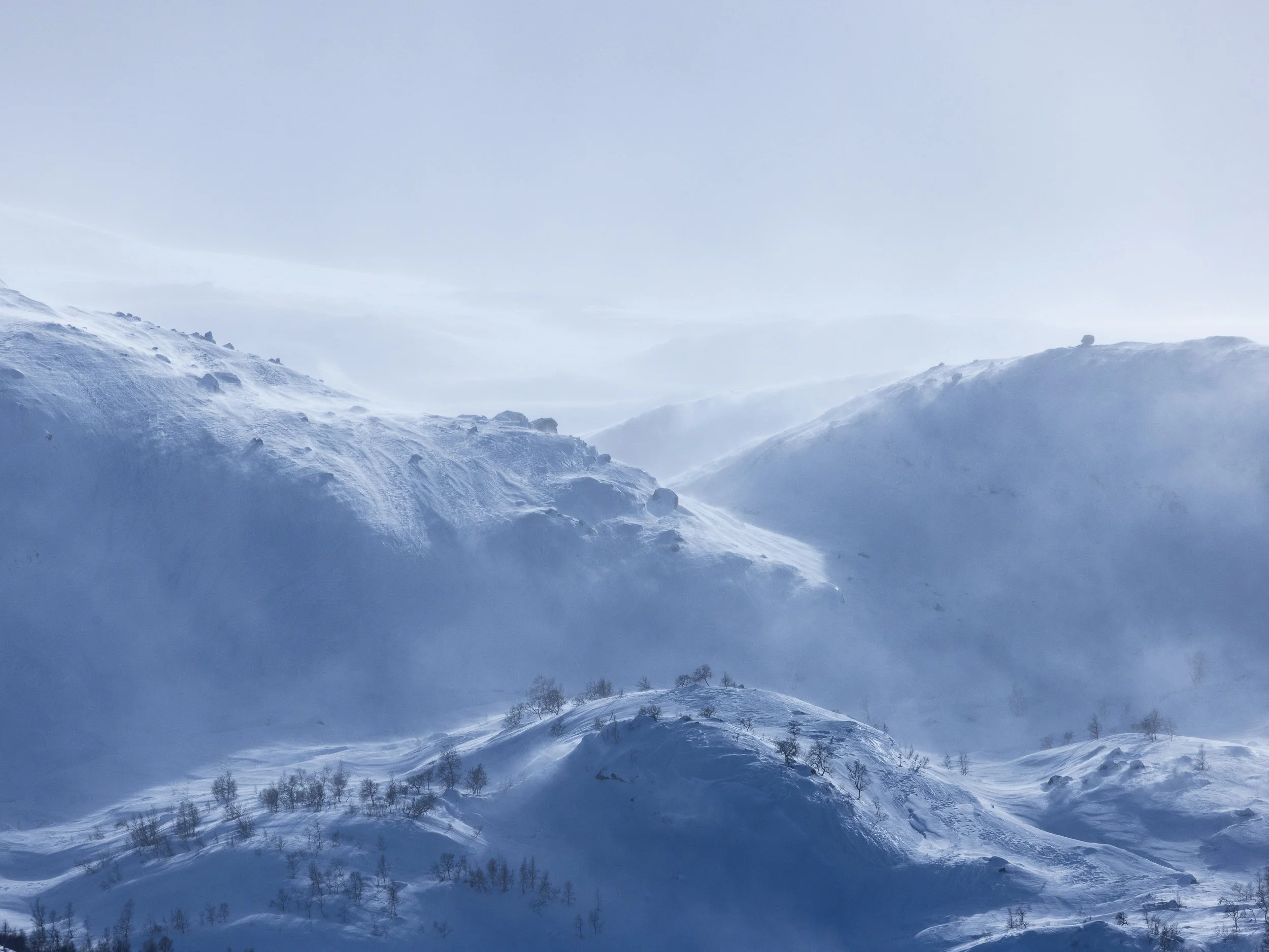
Struggling through the snow thrown at me by Storm Dave
I began the journey from Harwich, crossing into the Netherlands before driving through Holland, Germany and Denmark over three steady days. It’s a long haul but having your own vehicle in Norway gives you complete freedom. However, this means there are many decisions to be made along the way, each of which can have a profound impact on how successful the trip is.
From Hirtshals in the far north of Denmark, I took the ferry to Kristiansand, the true starting point of the Norwegian leg of the journey. Hirtshals is a strange edge-of-the-world location where the main pastime of the residents seems to be going outside in the most appalling weather to buy ice creams, sit on the beach and eat them.
As I was leaving the UK, war was breaking out in the Middle East yet again. I knew this would affect fuel costs, which was a concern considering Norway is such a vast country. A bonus was that the VW made it from Harwich to Norway on one tank of diesel, which was remarkable.
Straight into winter – Setesdal and Storm Dave
From Kristiansand, I headed north through the Setesdal Valley, cutting between Agder and Telemark. The alternative was along the coast as Storm Dave hit the southern part of Norway. This was probably my first wrong decision. A stormy coast would have been fantastic as the mountainous valley choice became a nail-biting drive with little opportunity to shoot images.
On the second day in the valley, Storm Dave arrived, bringing heavy snowfall and turning the drive into something far more serious than expected.
Luckily, I had camped overnight lower in the valley and taken a few shots along one of the lakes.
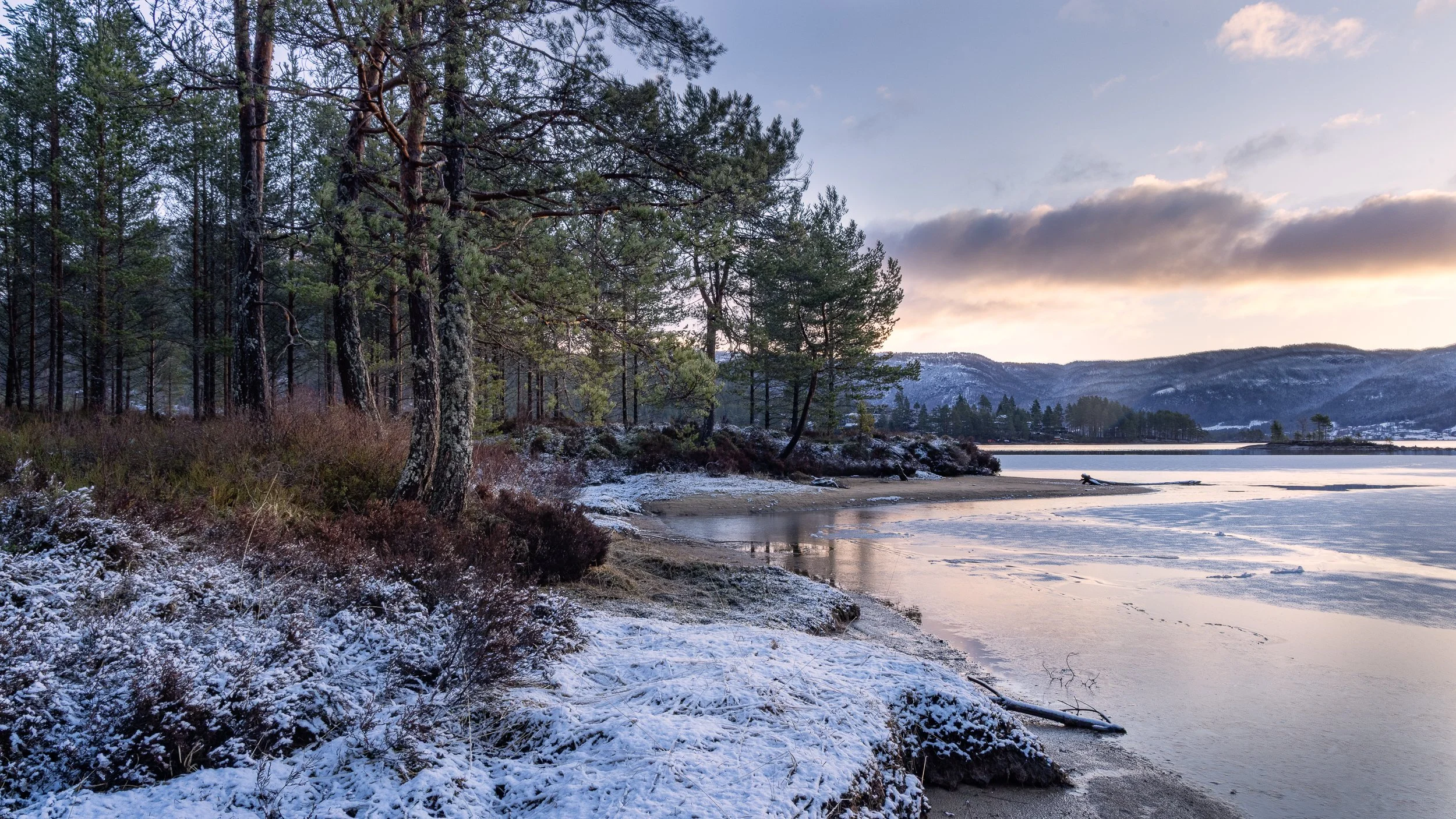
Winter in Setesdal Valley, South Norway
As I drove higher the following day, the snow became increasingly deep, really deep. Knee-deep in places off the roadside, even waist-deep. Walls of snow were ploughed to the side, blocking the view more often than not.
During the height of the snowstorm, I came across one of the amazing stave churches that Norway has to offer. The appalling conditions actually made it work.
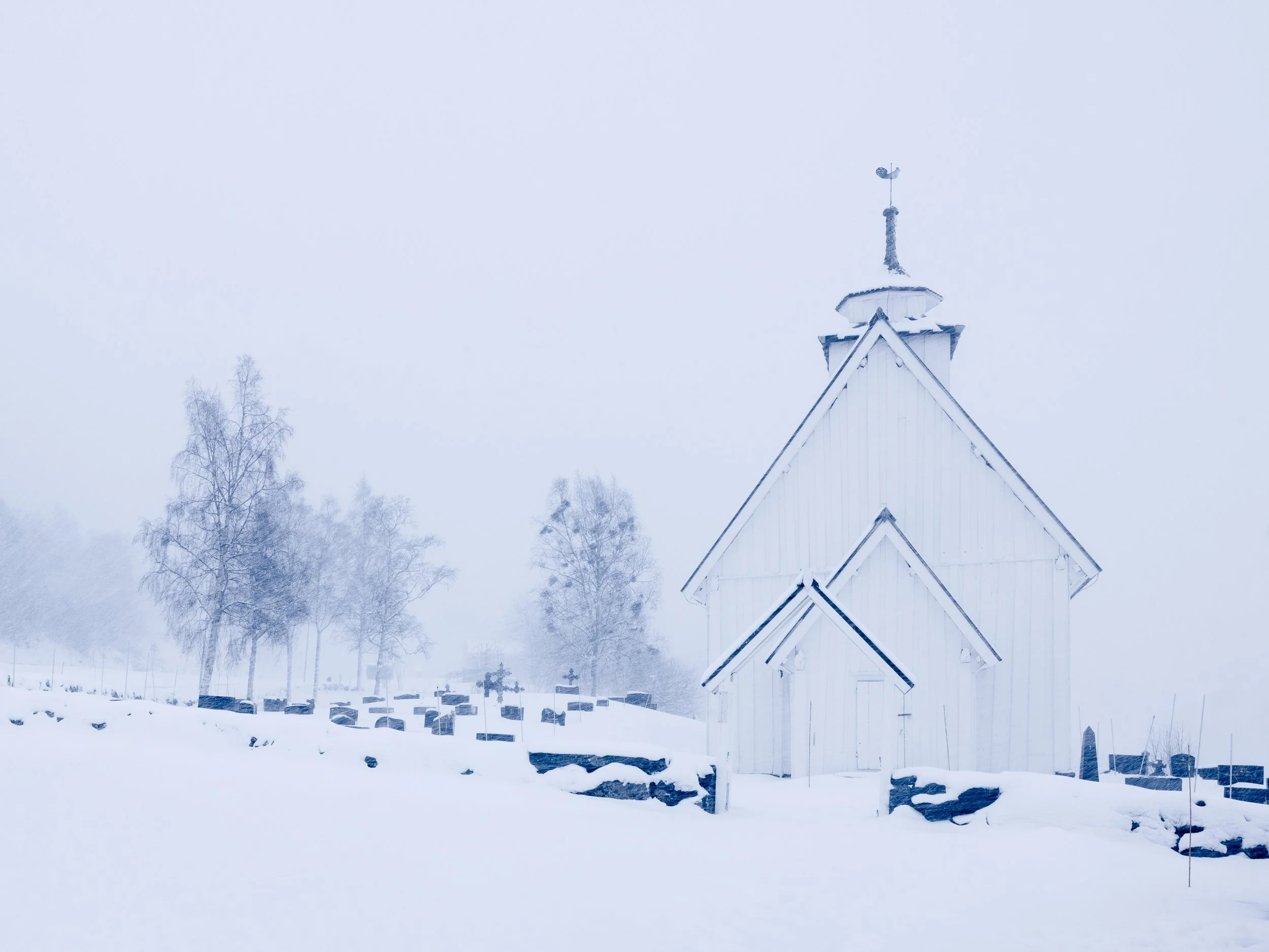
One of the surprising scenes during the storm.
For photography, that created real limitations by restricting me almost entirely to the road. All small laybys and access roads had disappeared under a continuous sheet of snow. Walking even short distances became hard work.
That’s a new lesson for me: winter photography isn’t just about atmosphere. It’s mostly about access.
Finding photography again near Voss
To escape the worst of the conditions, I made a determined push towards the Bergen region, eventually reaching Voss. This town is really just a ski resort. However, I did find some good images on one of the few side roads I could access. By the second day, when I tried to return, those roads had become impassable again.
More generally, instead of deep, impassable snow, I found accessible woodland and rivers just off the road. Now I was working with small rivers and streams, subtle waterfalls, evergreen fir trees, rock and water textures.
This felt much closer to the kind of photography I naturally gravitate towards, intimate landscapes with detail and structure, perfect for building a collection of Norway in pictures.
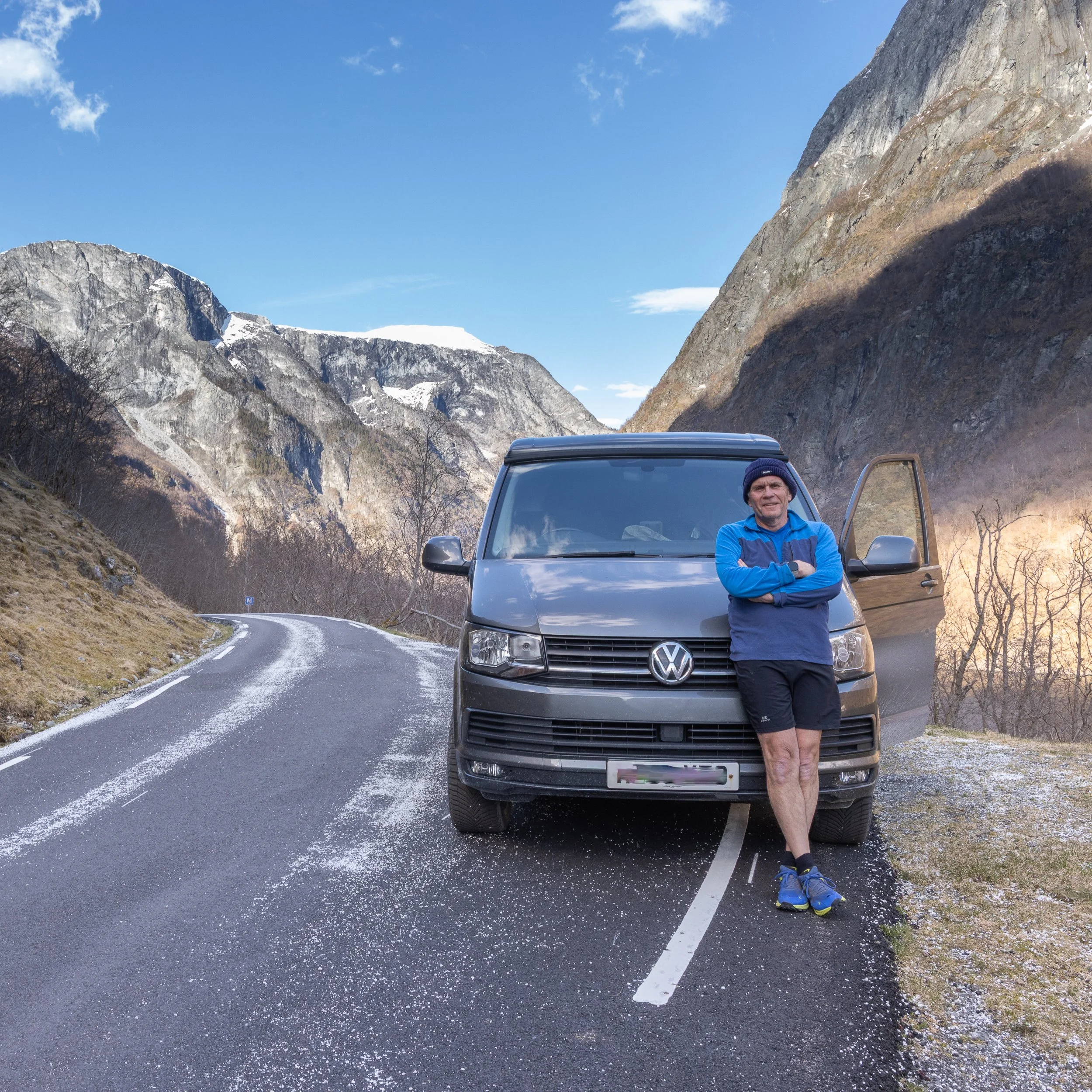
Running in the Viking Valley
Fjords, tunnels, and the scale of Norway
The city of Bergen was a short hop from Voss and I spent a couple of days there. It was more about culture and a bit of rest rather than photography, as the city was wet and bleak. That said, there is a great mountain hike above the city with a cable car back down. Norway is all mountains, even in the city.
From there, the journey opened up.
The route towards Gudvangen, often referred to as the “Valley of the Vikings,” showed great potential. I spent a night in one of the side valleys here that I managed to access before heading across to Flåm. This side valley was called Jordalan, which is a small part of the UNESCO area. Really quite tiring getting around here. I was exhausted trekking through the area without skis or snowshoes and the snow was knee-deep in places. I highly recommend this location as a detour at any time of the year if you can get into it. Accessed by the most freaky tunnel I have come across here so far. I suspect the toll is enforced by trolls. I certainly wouldn’t have been surprised if I had seen one running around in the tunnel, which goes up, down and around on a long, winding, dimly lit route for about 8 minutes.
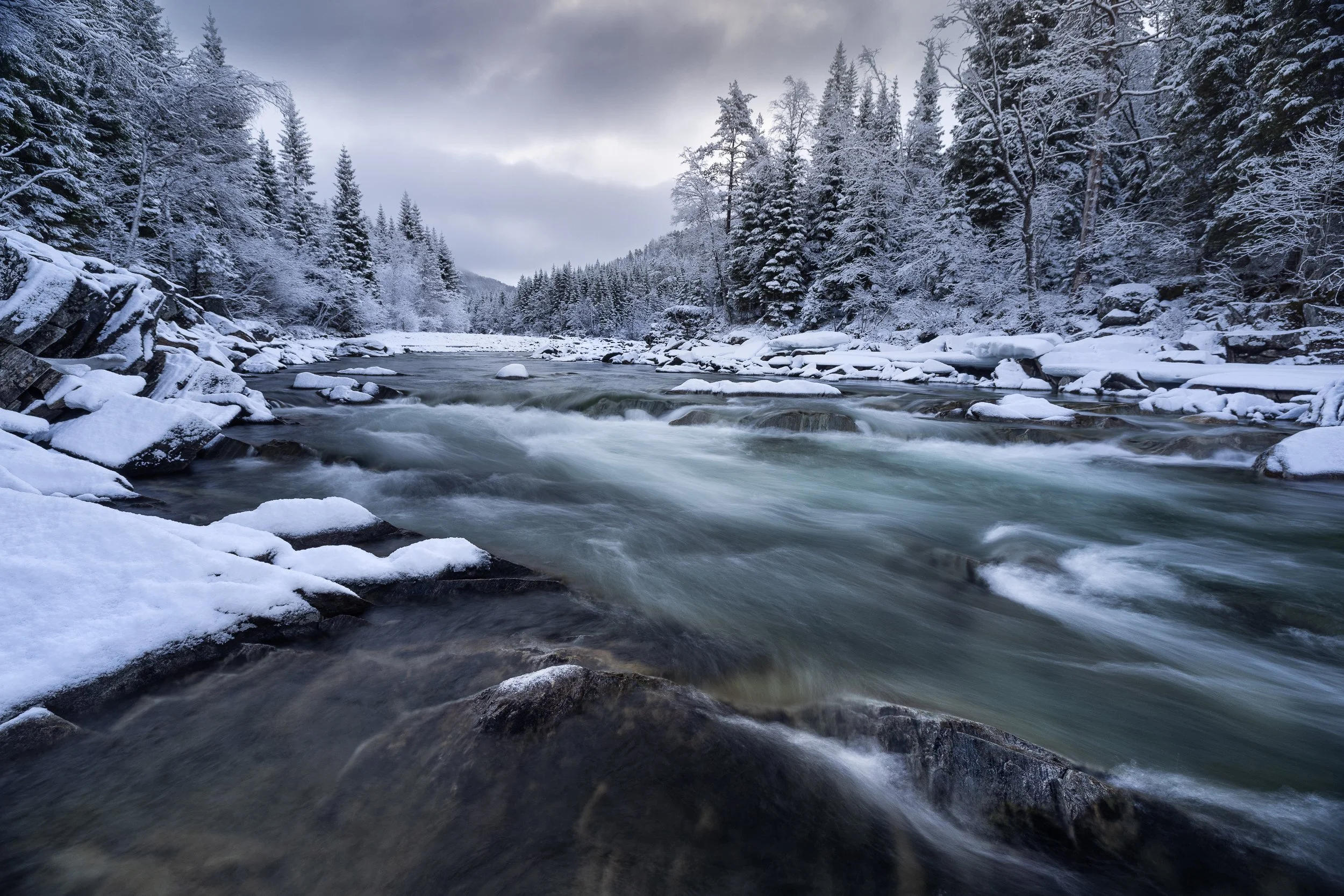
One of the (almost) accessible areas near Voss
Flåm itself didn’t quite deliver, but that’s likely seasonal. Without leaves on the trees, the landscape felt stripped back and you can sense it’s a place that comes alive later in the year. Even the cruise ships were avoiding the location at this time of the year.
One thing that defines travel in Norway is the tunnels.
Some of them, like the one near Flåm, stretch for 24.5 kilometres or more. It’s a mind-bending drive through that one. While they make travel efficient, they also mean you spend a surprising amount of time underground, sometimes more than above it. I do wonder how much of the scenery I am missing. Occasionally it’s worth stopping and walking down the old roads that peel of the side entrance before the tunnel was built.
And perhaps that explains Norway’s obsession with trolls, as they clearly spend half their lives commuting beneath the surface. Norwegians seem to see a mountain and simply punch a hole through it. All very logical in the long run. It makes you wonder about the HS2 contract nightmare in the UK. I am sure this is not being built by the Norwegians.
Fjords to glaciers – into Jostedalsbreen
From the fjords, I crossed towards Kaupanger and continued inland, eventually heading north into Jostedalsbreen National Park.
This was a highlight of the trip so far and one of the defining parts of this Norway road trip.
In particular, Nigardsbreen Glacier stood out. This glacier in Norway is an extraordinary, almost prehistoric place where blue ice meets dark rock and meltwater streams carve their way through the landscape. Nigardsbreen felt compact and raw at this time of year. Having personally trekked into the vast Grey Glacier in Chile, nothing quite compares in scale, but Nigardsbreen’s ecosystem is beautiful even in winter.
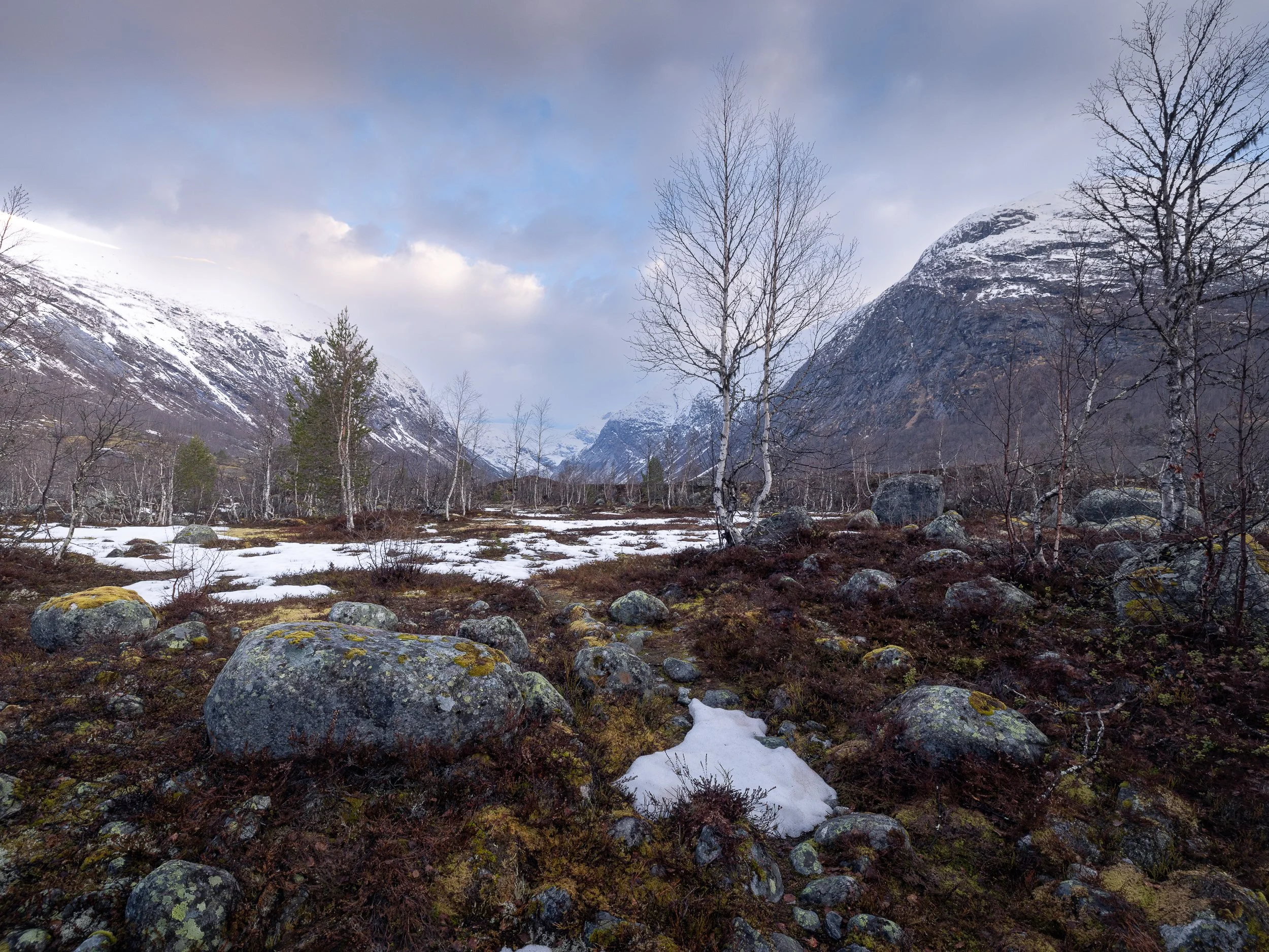
The Jostedalsbreen National Park
I spent two days here and could easily return.
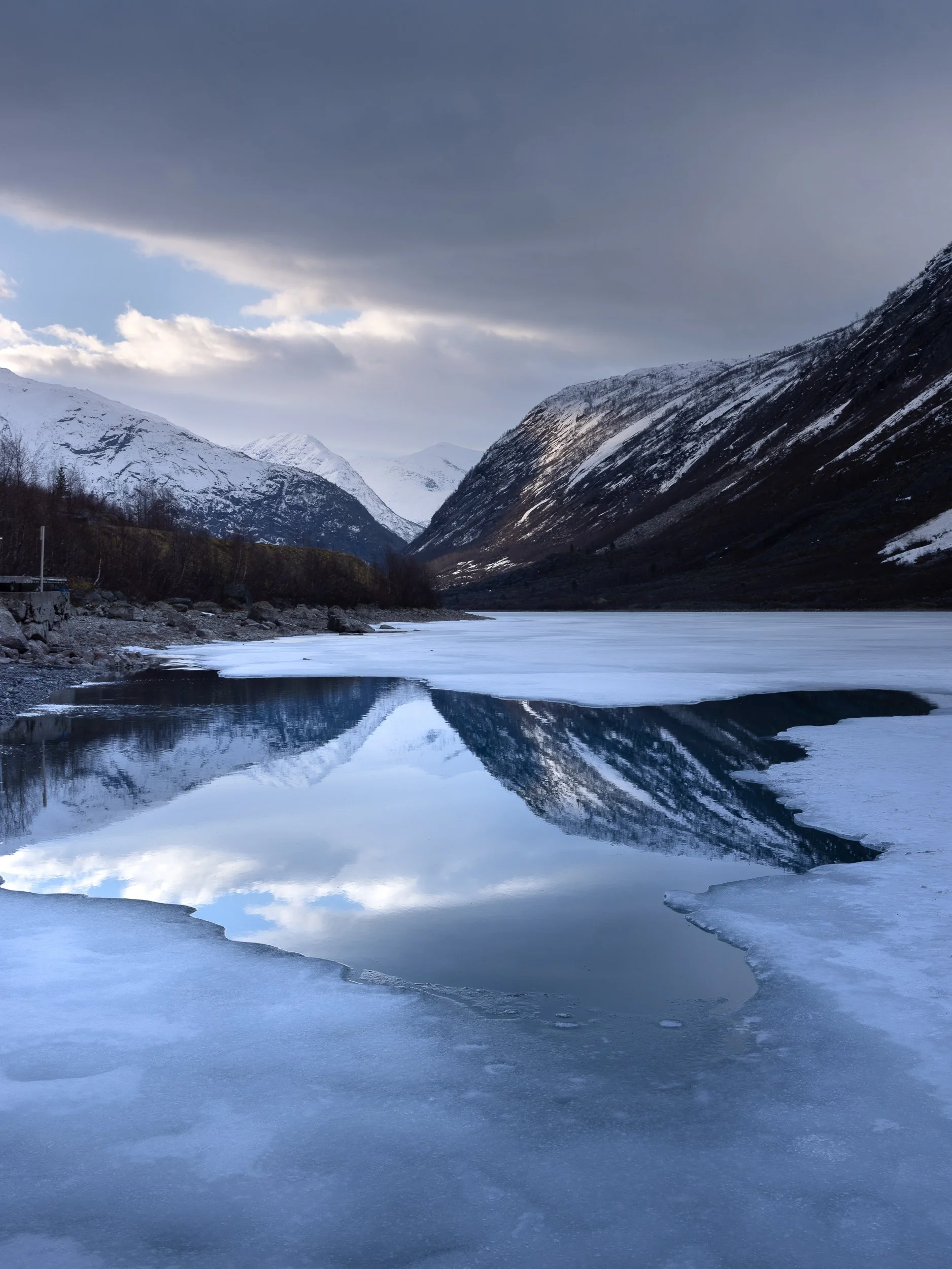
Ice reflections in Jostedalsbreen
The approach itself is just as interesting, with sparse, almost desolate woodland leading to the glacier’s edge. These were mostly silver birch trees stripped of foliage (image above). The path then transitions to glacial debris and rock formations carved by meltwater flowing down towards the forest below.
This location had a real sense of isolation. I only saw two people over the two days I was there. Everything in the small village was closed and the season wouldn’t start for another month.
Photographically, it offers something very different to woodland work. It is simpler, more graphic and incredibly powerful.
Olden, Loen, and changing conditions
Moving further north, I reached the Olden and Loen area.
This is a busier region and with the weather turning dull and overcast, photography became more challenging again.
It quickly became much busier. A cruise ship arrived and disgorged thousands of passengers… I promptly left for somewhere much wilder and more isolated. That’s for the next blog post.
Unexpected highlights – Norway’s stave churches
A real surprise on the trip has been Norway’s stave churches.
Even without a religious interest, these structures are fascinating. Made entirely of wood with deep historical roots, they feel older, somehow more ancient, than many equivalents in the UK. They work beautifully photographically, particularly in black and white or infrared.
Shooting, editing, and life in the van
This has been a fully self-sufficient trip.
I’ve mostly been camping off-grid, using smaller side roads and locations found via Park4Night, which has been invaluable.
Every four or five days, I stop at a campsite:
Hot shower
Laundry
Reliable electricity
WiFi for editing and emails
At around £30–£35 per night, they’re not cheap, but they’re worth it and boost morale.
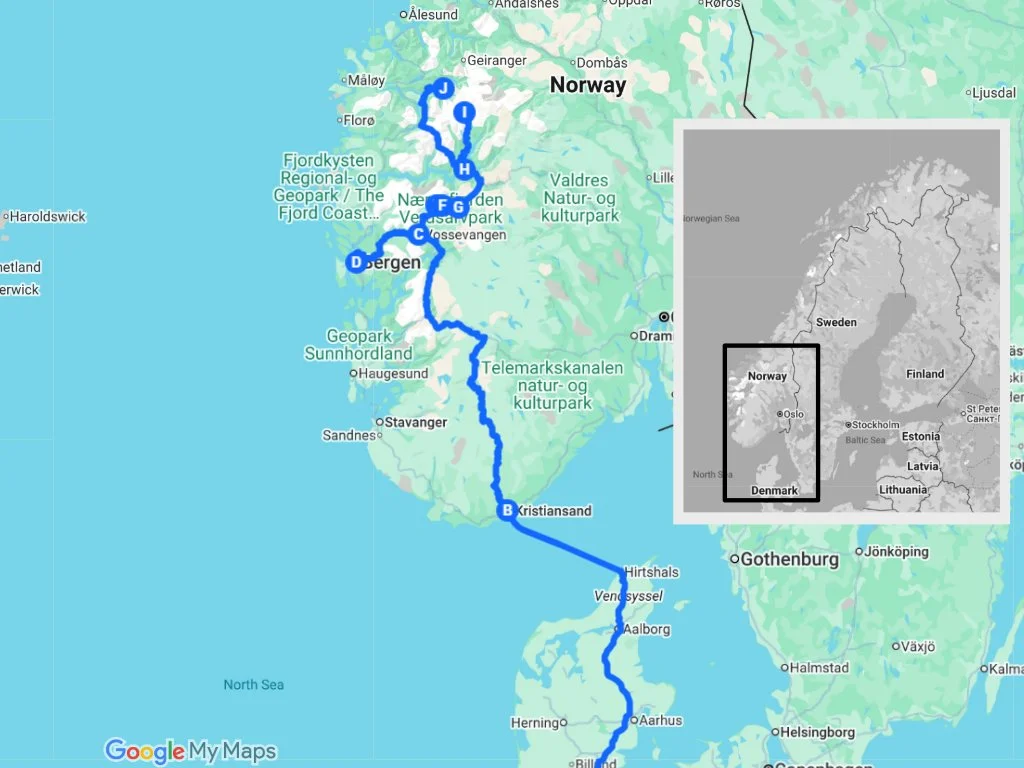
Journey so far…….
Norway has strict rules on grey water disposal, so I also needed to stop at camper service areas from time to time to empty the tank.
Speed limits are strict. Most roads are around 80 km/h (50 mph), so cruise control is essential. I understand the fines are significant and will hurt.
Michelin Climate 2 all-year snow tyres are just amazing and essential. I also have snow socks/chains, but have not needed them so far. The tyres have done what was required.
There are tolls on many roads and I’ve signed up for Epass24, which bills automatically. I haven’t seen the total yet, but expect it to be around £200 for the four weeks.
Then there’s fuel. Around 24 NOK per litre—about £1.88. That’s going to be a hefty bill. For Dave, my American friend and fellow photographer, let me translate that… about $9 a gallon. I am not honking Dave! If prices hit this in the USA for Dave in his monster of an RV, it will be a nasty hit considering the distances he regularly travels to get to locations. (https://www.davidrothphotography.com/)
The van itself has performed brilliantly. The onboard diesel heater has kept things warm even in freezing conditions. I’ve probably just adapted to the cold…..I now wander around in a T-shirt without noticing it’s only a few degrees above freezing.
Photo editing has all been done in the van using Lightroom and DxO—more on DxO in a future post.
There was a debate over needing snowshoes before I left the UK. I didn’t take them—a poor decision with hindsight.
Filming solo – but not looking like it
If you’ve seen my recent YouTube video, you might think I’ve got someone travelling with me.
I haven’t.
This is entirely solo, but I’ve been using the DJI Neo 2 drone and it’s been a revelation.
Hand-activated. No controller needed. Gesture-controlled shooting. Tracking, circling and automated shots. I simply throw it in the air and it gets on with the job until I call it back.
If you’ve seen Blade Runner 2049, this is about as close as it gets. It feels properly sci-fi. I’m basically my own Ryan Gosling—just a bit older.
It’s made filming on my own incredibly easy and surprisingly effective.
The big decision – Press north or turn back?
Norway is vast.
Much bigger than I’d fully appreciated before this trip.
With a total journey time of around three to four weeks, the decision now is:
Push further north, committing to huge distances
Or turn back, revisiting and refining locations already passed
It’s the classic travel dilemma—and one I’m still working through.