
Capturing the Wilderness of the Western Scotland: A Tried-and-Tested Scotland Travel Itinerary
Welcome to this new guide to travel in Scotland. If you’re a landscape photographer, this Scotland travel itinerary is one I highly recommend. It’s a route I completed in October 2025 and is packed with adventure, highlights of the Scotland wilderness and photography opportunities.
If you’re new here, my name is Robin Dodd, and every time I head north from England with a camera and a pack, Scotland reminds me why it’s one of the world’s most rewarding places to photograph.
A Photographer’s Scotland Travel Plan & Itinerary
This particular Scotland travel itinerary took me from Glasgow up through Glencoe, onto the Isle of Skye, across the Outer Hebrides (Harris and Lewis), into the wild peaks of Assynt and finally onto the ancient forests of Glen Affric, bathing in the golden glow of an autumn dawn.
I camped on ridges, climbed mountains for the light, sheltered from 50mph winds in the van, and chased weather that changed in the blink of an eye. Summiting those peaks, wet, frozen and often exhausted - this is what makes you feel alive in Scotland.
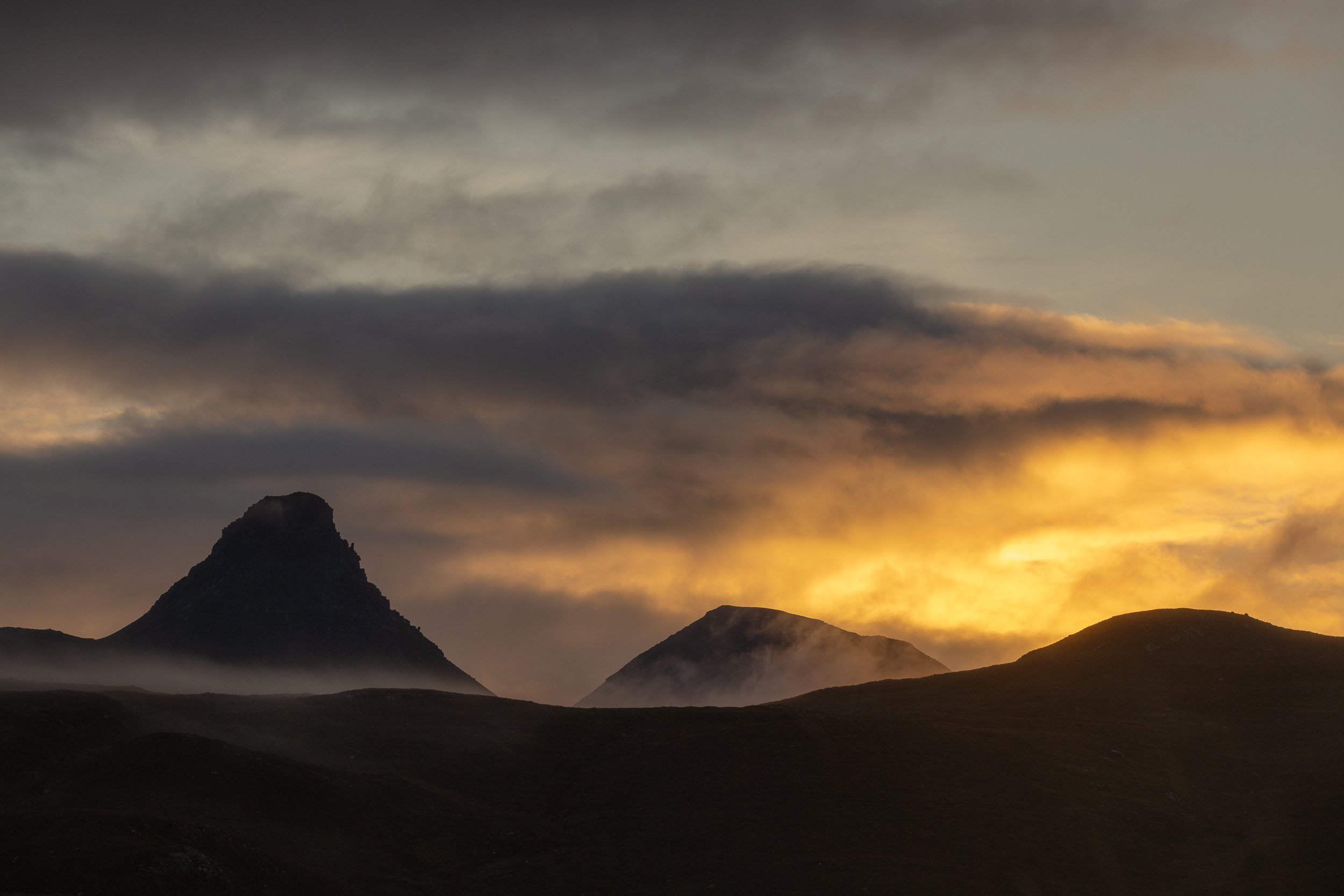
Stac Pollaidh at dawn
Landscape photos of Scotland’s West Coast
The goal was simple: have a Scotland adventure holiday and find original and captivating compositions by going deep into the Scottish landscape, where other photographers fear to tread. Ultimately, I wanted to create beautiful landscape photos of Scotland.
(You just have to use your mind to overcome the pain at my age! Grit your teeth, overlook the lack of sleep in a freezing tent, the numb hands and feet, and concentrate on shooting the scene unfolding below and beside you).
Sometimes you only have seconds to get it right in that fleeting light. However, sometimes in those Scottish mountains, you need to know when you are beaten. Discretion is the better part of valour in this unforgiving environment. The mountains of Scotland only give glory to those landscape photographers who try and try again
Glencoe: Landscape Photos of Scotland’s Most Iconic Mountain Valley
Glencoe is where the trip really began. I normally hit this location in the VW camper late at night after a hard day's drive from my home in the Southeast of England. I wanted something more than the classic roadside shots of Buachaille Etive Mòr, so I climbed Beinn a' Chrulaiste. This is the lower mountain opposite the Buachaille that gives you the best vantage line across the glen.
Up high, the compositions open out: ridges cut across the scene, cloud shadows slide over Rannoch Moor, and the Buachaille looks even more sculptural from above as the dawn light pours in from your left side. (I have always shot this at dawn. I don’t think it will work at sunset, but please comment below if you have experience doing this at sunset. I would love to hear what you think.)
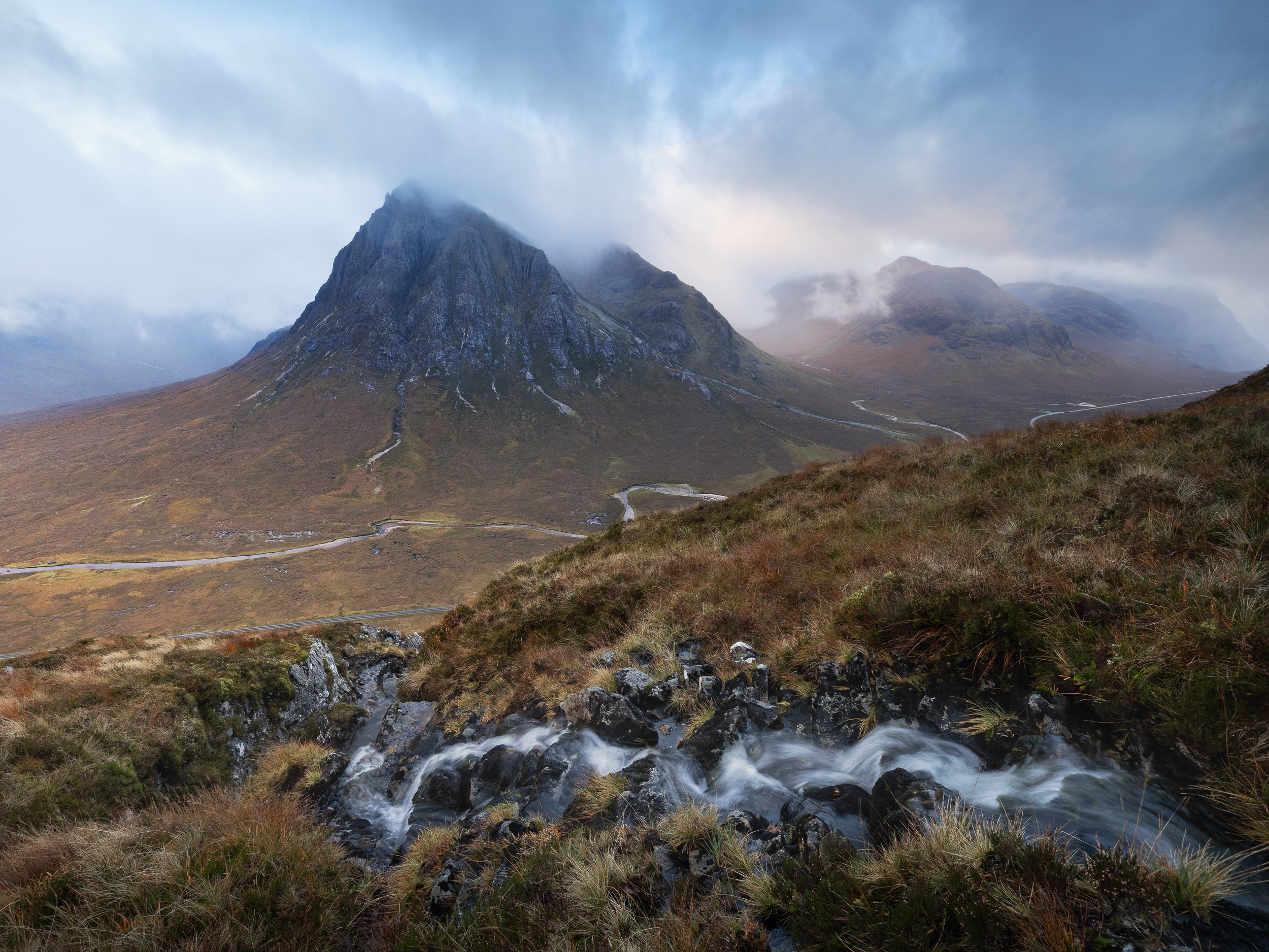
Buachaille Etive Mòr seen from Beinn a' Chrulaiste
A Memorable Scotland Wilderness Walk
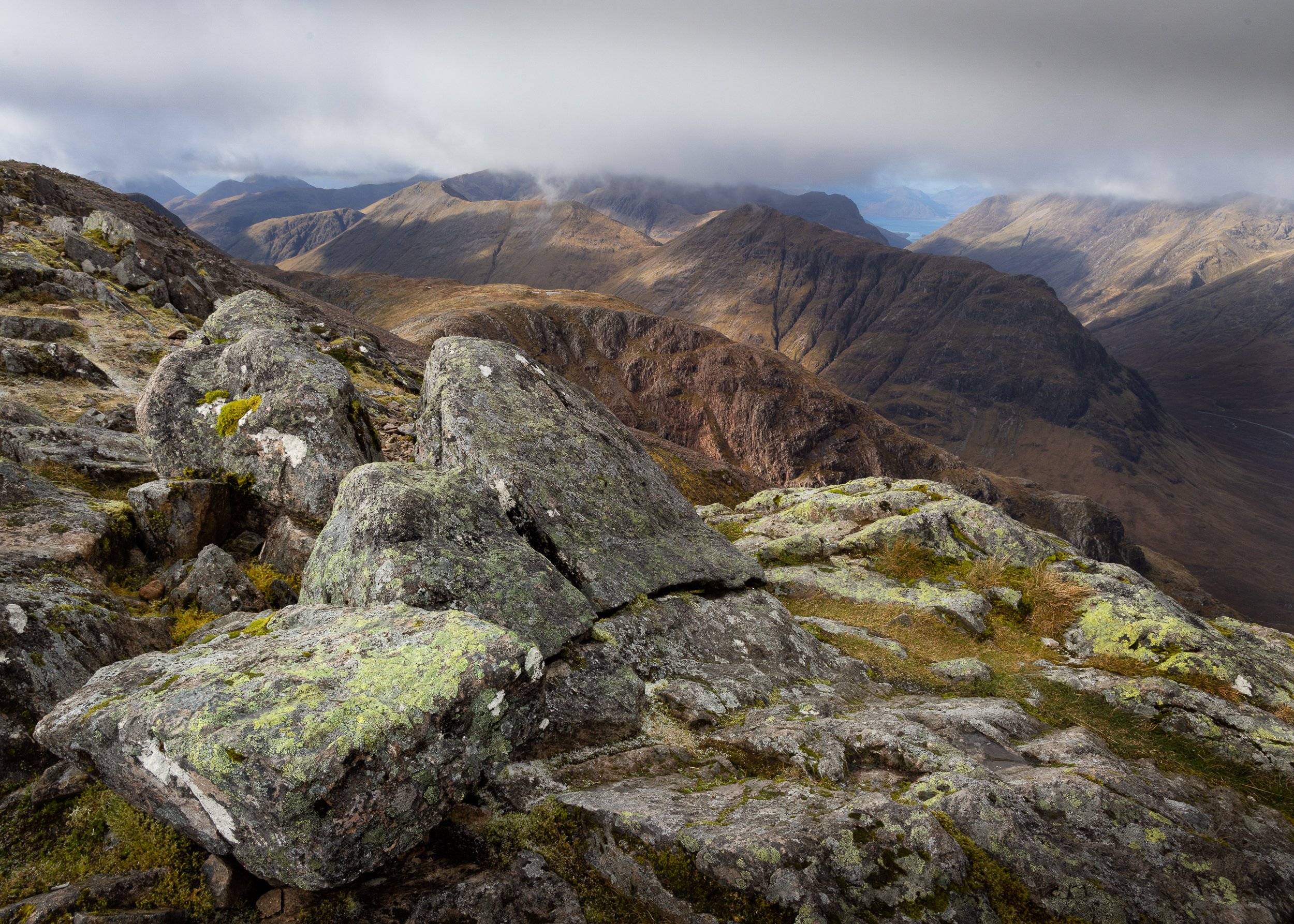
Summit ridge of Buachaille Etive Mòr
The climb isn’t difficult, but the higher you go, the better the images become. You need to be careful with the navigation in bad weather. Any hint of low cloud and you will need GPS unless you know the mountain well. A good tip is to use the widest lens you have for this. However, take a telephoto as there are great shots of the distant Ben Nevis mountain range to be isolated on the other side Beinn a' Chrulaiste as the sun rises.
On a later day, I climbed the Buachaille itself, shooting rivers, ice patches, and pockets of light breaking through the heavy billowing cloud which just skimmed over these 1000-meter peaks. Scotland made me work for the good shots, but that’s half the point; the images mean more when you’ve earned the height and maybe bagged a Munro.
From the summit ridges, the view across Glencoe was everything I hoped for: wintry mist gathering over the Ben Nevis area in the distance , crystalline air, and that unmistakable Highland drama, while dark-eyed ravens were eyeing me up as I shot and then threatened to rob me of my lunch.
Isle of Skye: Scotland Photos Highlands in Moody Autumn Weather
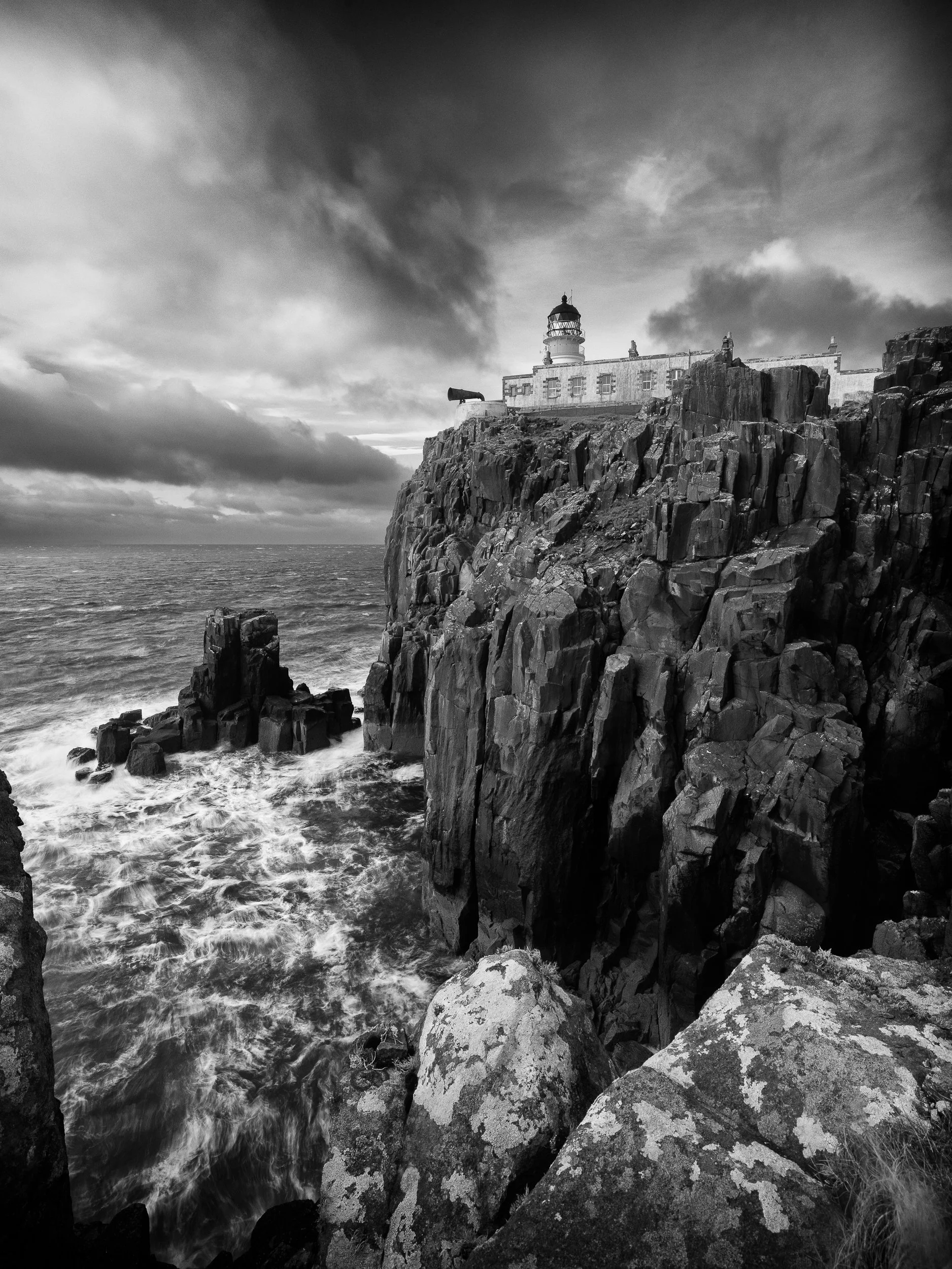
Neist Point Lighthouse
Leaving Glencoe, I pushed on to the Isle of Skye, which is basically a photographer’s playground with a temper. The van was violently rocking in the 50 mph winds the night I camped near Neist Point, the lighthouse cliffs hammered by gusts that turned the place monochrome before I even took the shot.
I do get nervous with these high winds in the van or tent. The previous year, we had the pop-top roof torn off the VW camper, even though it was locked down flat. It’s often best to keep a low profile in these conditions. You can truly get a sense of the struggle some of these passing sailors may feel as they drift too close toward Neist Point in weather like this.
I knew the scene would be strong in black and white, long exposures, deep contrast, the sea smashing into the cliffs. So that became the creative plan for the shoot. 50mph winds and long exposures? It limits your angles and viewpoints considerably as one fights for what little shelter there is. But you get nothing without trying. 60% of these lighthouse shots became unusable through camera shake on the tripod and sea spray on the lens.
A Wilderness Walk up Scotland’s Blue Mountain
At Elgol, a rainbow swept across the bay with Bla Bheinn sitting behind it. That mountain, whose name means “Blue Mountain,” is just under 1,000m, and climbing it gives you a deeper sense of Skye’s volcanic terrain. I’d been up before, but every ascent reveals something new: shifting cloud textures, razor ridges, sudden visibility that lasts seconds.
This time the wind had dropped to manageable levels for a mountain climb. Sadly, by the time I was at the summit, the scene shut down as the cloud enveloped this silent mountain. I never even got the camera out of the bag. I descended before dark as our courageous and superhumanly fit mountain rescue teams started to ascend past me in search of a lost soul on the upper slopes. No helicopters to assist them in this weather.
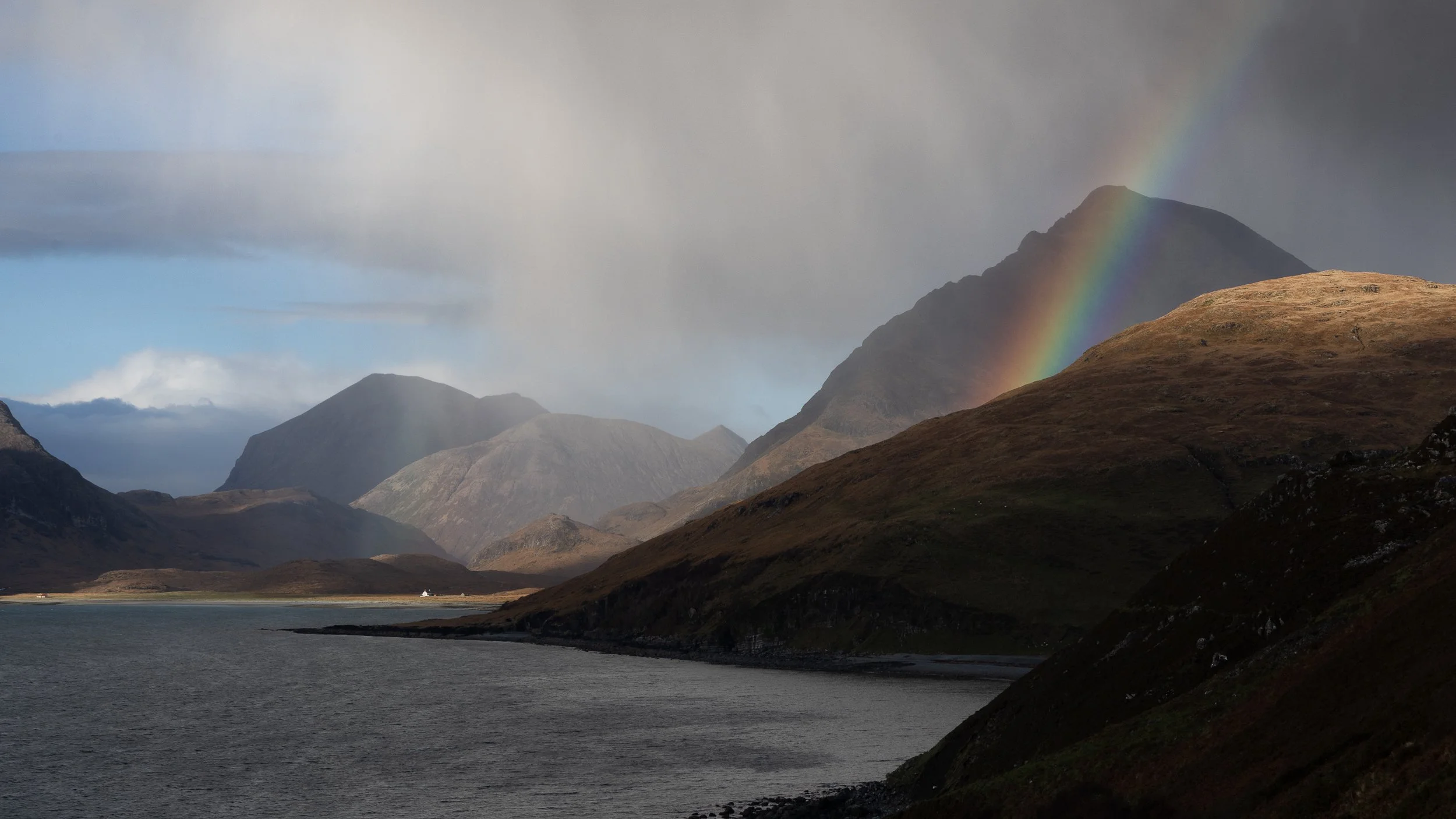
Elgol, towards Bla Bheinn
When the weather is this bad up top, the coastal path from Elgol to the mountain bothy at Camasunary can give stunning images in the afternoon with the Black Cuillin mountains as a dramatic backdrop.
Outer Hebrides: A Scotland Travel Itinerary for Photographers
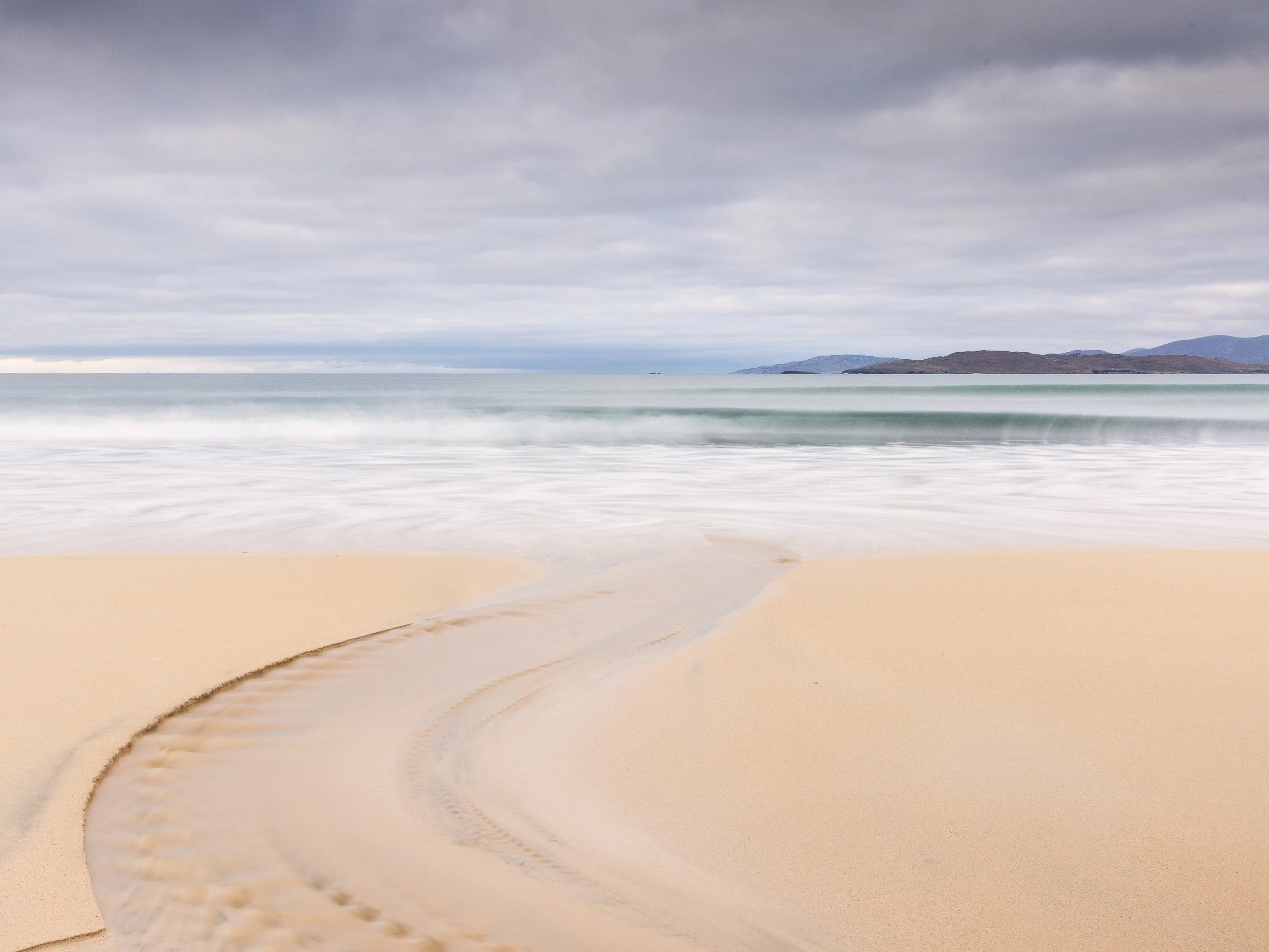
Isle of Harris
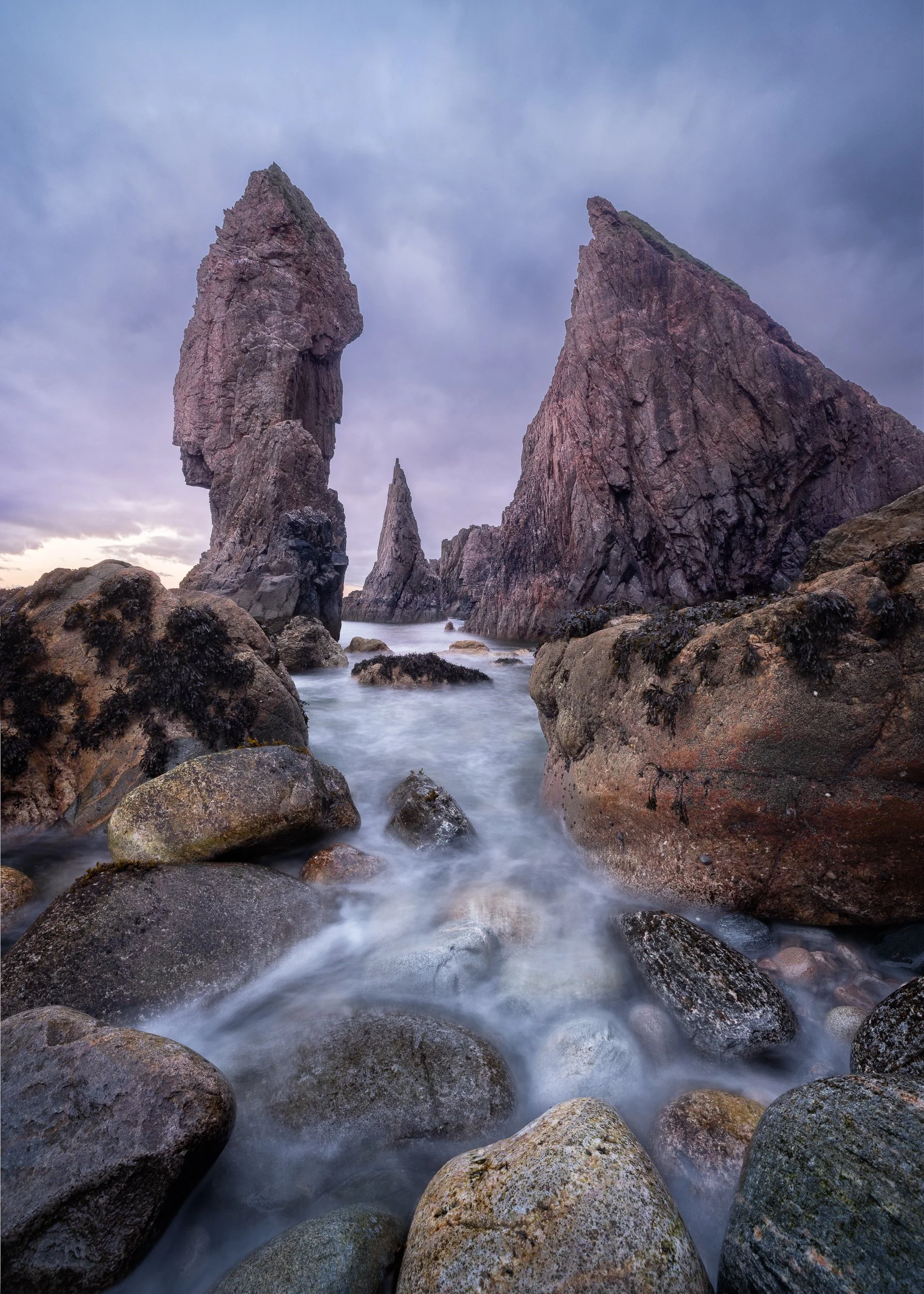
Isle of Lewis Mangersta Sea Stacks from the shore
A ferry crossing took me to the Outer Hebrides, where Harris and Lewis feel like a different country altogether. Clean Atlantic light, pale beaches, wide dunes, and mountains set far back behind the shoreline.
Harris is iconic with sweeping white sands, clear water, and curves of coastline perfect for minimalist and ICM landscape images. The south of the island is a complex area of sea inlets, teaming with wildlife and local fishermen. I camped in the VW close to the shore to shoot evening and morning light without having to race across the island.
Two of my close hill walking buddies parachuted in for a few days' company. As a result, I missed shooting the Milky Way show above us and stuck to good company under the stars with a bottle of whisky, warmth and food.
Lewis, further north, completely shifts the mood. Rugged, exposed, and storm-fed. These are some of the wildest seascapes I’ve photographed. Jagged rocks, long swells, and that brilliant Hebridean gloom that simplifies compositions beautifully. These rocks on the
Northwest of Lewis are estimated to be 3 billion years old. This is truly a prehistoric landscape. I would not be remotely surprised if a dinosaur wandered past the VW at some point in the evening…. after the second bottle of single malt whisky!
If you are really looking for true adventure, then Mangersta and its cliffs are the ultimate hit. The walk along the cliff tops is pure exhilaration. The shore below seems remote and inaccessible. However, with a bit of careful thought and planning, a route can be found to the bottom. It is not for the faint-hearted and comes with the warning that this is a little dangerous due to loose rocks and a lack of a path down the cliff-side and onto the shore. However, it is currently possible, but remember that subsequent rock falls may change this potential access in future.
From this lower angle, the images captured can be unique and you will be one of the few to have achieved this perspective. If you do attempt, my hot tip is to mark the descent with items of bright clothing held in place with a boulder. The reason for this is that once you have reached the bottom, it can become confusing when finding the route back up because there is no path to follow. If you get it wrong on the return accent in fading light, you will be in serious trouble. The bright clothing will clearly show you the way back.
No trip to the Outer Hebrides feels complete without exploring these remote north-west edges of the Island. The scale, the emptiness, and the raw Atlantic make it a paradise for long-lens drama and moody wave shots. Nothing is out there until you get to the shores of the USA.

Isle of Lewis Mangersta Sea Stacks
Assynt: Sunrises Above an Ancient Landscape
My final stop was Assynt, a landscape cut from another age. Assynt is basically Scotland’s “other planet.” In the sunrise, you could be mistaken for thinking you were Matt Damon about to make a journey across Mars in the film “The Martian.” Of course, that is not very realistic… I am much better looking than Matt Damon.
On this visit, I wild-camped high on one of the ridges to shoot sunset and sunrise over mountains like Suilven, Canisp, The Fiddler and Stac Pollaidh. This is truly breathtaking and worthy of award-winning mountain images.
Sunset didn’t play ball for the mountains, but the Summer Isles below, with the Stornoway ferry crossing towards the Outer Hebrides, looked great. This was shot with the 100-400mm. A back-breaking, heavy piece of kit to carry with a tent, but essential for this kind of work on top of these mountains in Assynt.
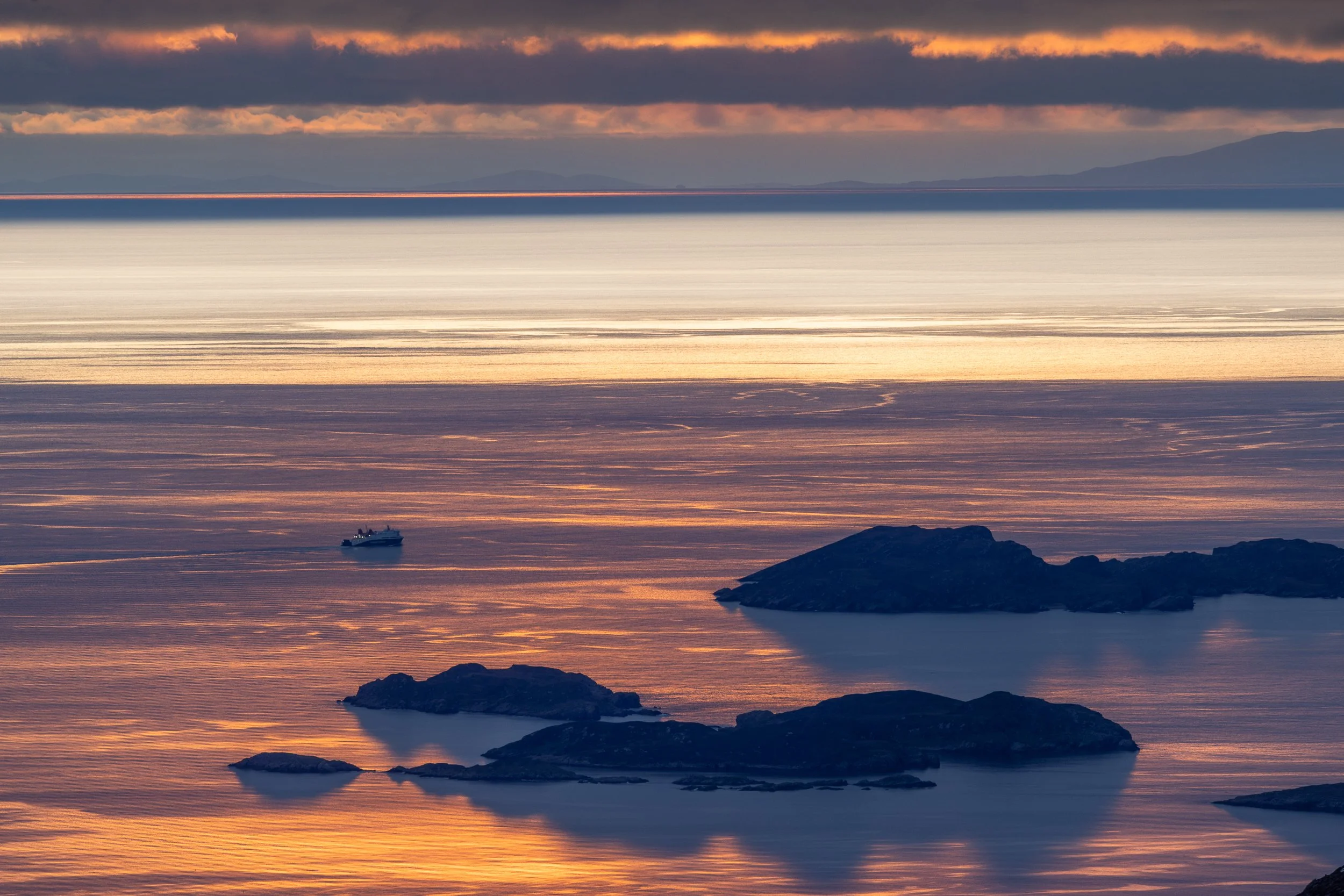
Summer Isles - Far North
As night fell, the rutting stags could be heard bellowing their Autumn call over the mountainsides.
Cold was my companion for the rest of the night as the temperature dipped to 0c.
Cold hands prevented breakfast, but the mind was soon distracted as the sun hit those Martian fields below me.
As the first light bounced warm red across the mountain, I switched between telephoto for distant compression to wide-angle for contextual foreground, using f/13–f/14 and focus stacking to hold everything sharp.
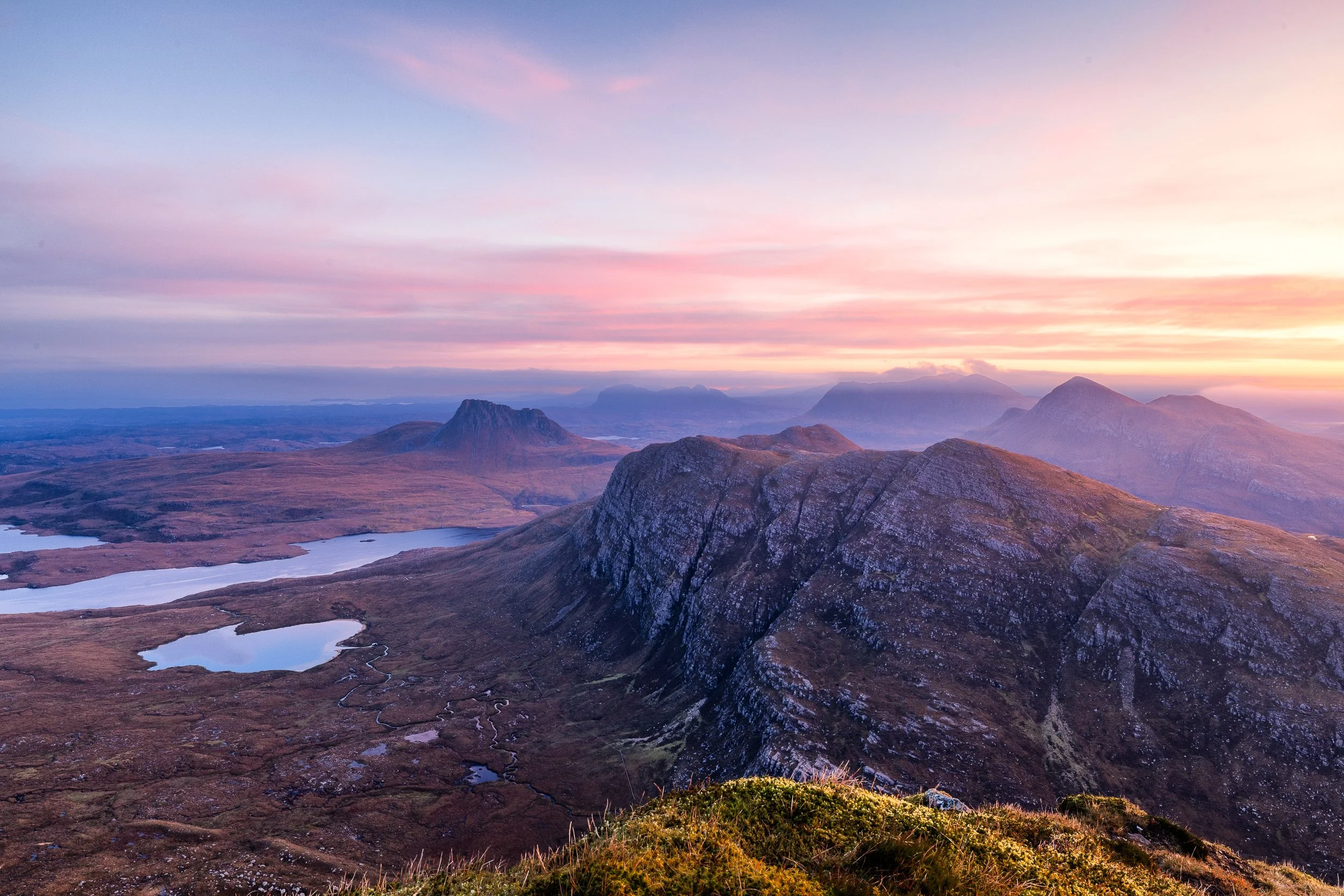
Sunrise of Assynt
It was calm, peaceful, and unbelievably beautiful, the sort of morning you hope for but never guarantee. Later in the morning, the still low light became ideal to shoot black and white images. I often shoot mono in the mountains an hour or two after sunrise as the light defines the rocks around me.
Glen Affric: Dawn Light Through an Ancient Forest
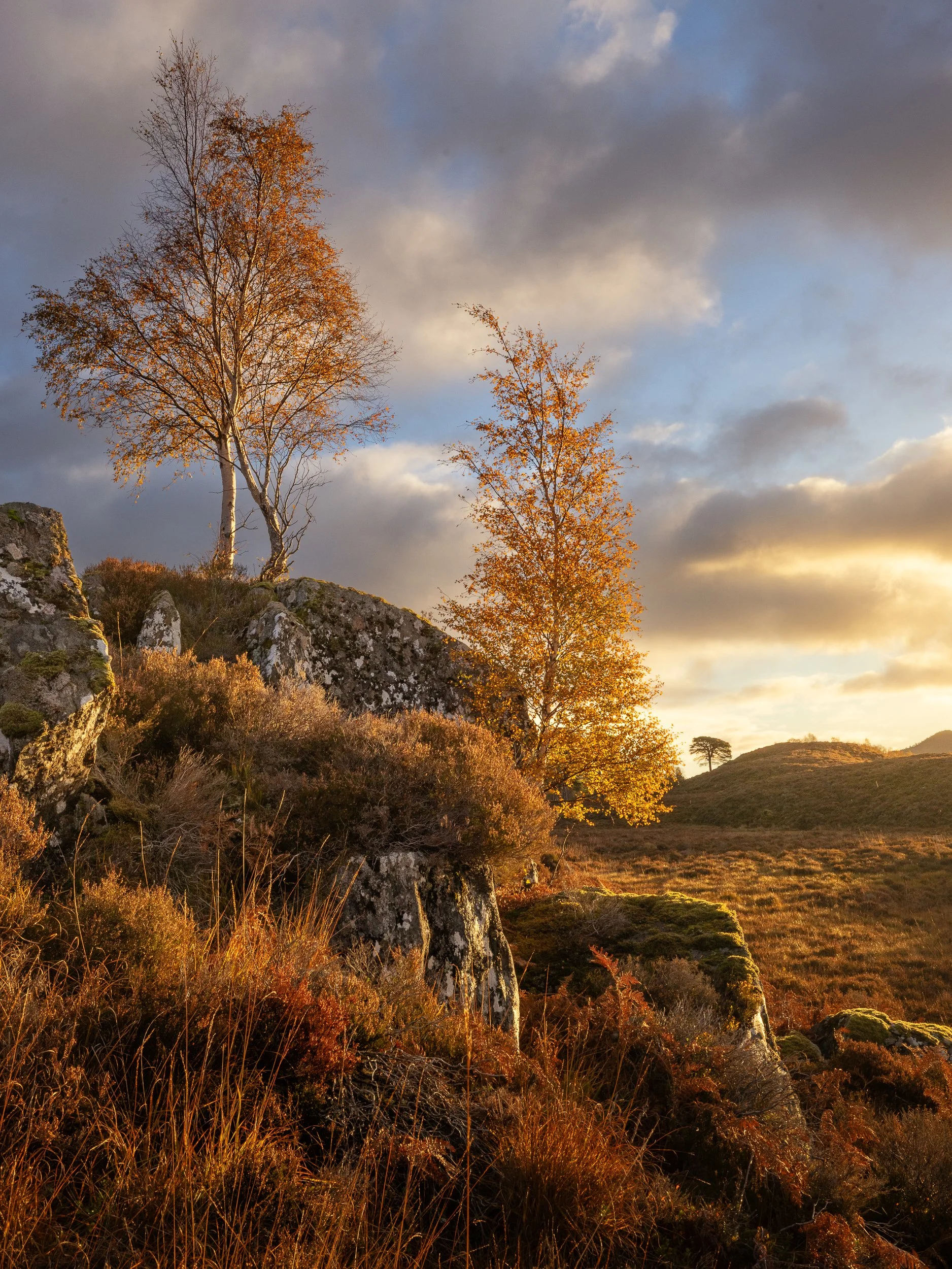
During the trip, I made a detour to Glen Affric due to the weather. A hot tip for Scotland is to let the weather dictate where you go and not have a predefined route or location.
Glen Affric feels like stepping into the memory of Scotland as a place where the landscape still holds its original shape. The ancient Caledonian pines stand like elders along the loch, their twisted trunks and copper bark glowing when the first light arrives from the east. These are all individual trees and yet at the same time they are one of the whole. Forest has a different meaning here. You have to see for yourself to feel this.
At dawn, the whole valley shifts mood: mist drifts low across the water, the hills catch a soft blush, and the pine needles pick up tiny flecks of gold, which in this season are complemented by the supporting golden autumnal birch trees.
Photographically, Glen Affric rewards early starts. When that eastern light pours down the length of the loch, it creates long, elegant diagonals that pull your eye deep into the frame. The mountains on either side feel quieter here, more rounded, almost protective — a natural amphitheatre for sunrise. And as the light grows, it slips between the old Scots pines, illuminating pockets of heather, bracken and moss in a way that feels almost enchanted.
(H4) Photographing Scottish Forests and Woodlands
On this occasion, I decided to shoot into the sun. This is technically very difficult to do and requires a lot of control in post-production. The shots were a risk, a gamble to get shots that take it beyond the best.
This is one of those rare Scottish locations where the foreground does half the work for you. Fallen branches, lichened bark, reflections across still water, silhouettes of the old pines, mountain peaks topped in mist or snow. Everything has character, even the bracken and grass.
But you need the light here. This was my second day. The first was a complete washout. Strangely, I teach that woodland photography should be done in subdued overcast light. Glen Affric is one of the exceptions to this rule. Glen Affric is “Light, Camera, Action!”
Whether you’re shooting wide to capture the sweep of the Glen or isolating single trees against a rising veil of colour, Glen Affric has a quiet drama all its own. It’s Scotland as it once was: ancient, atmospheric, and best experienced at first light.
The lack and rarity of these forests in Scotland is one of the saddest legacies of our history. I am not sure if this was man-made or just part of the environment as it developed. If you know, please comment on this observation below…so long as you don’t just blame the English! OK, I am sure we may have been responsible in some way.
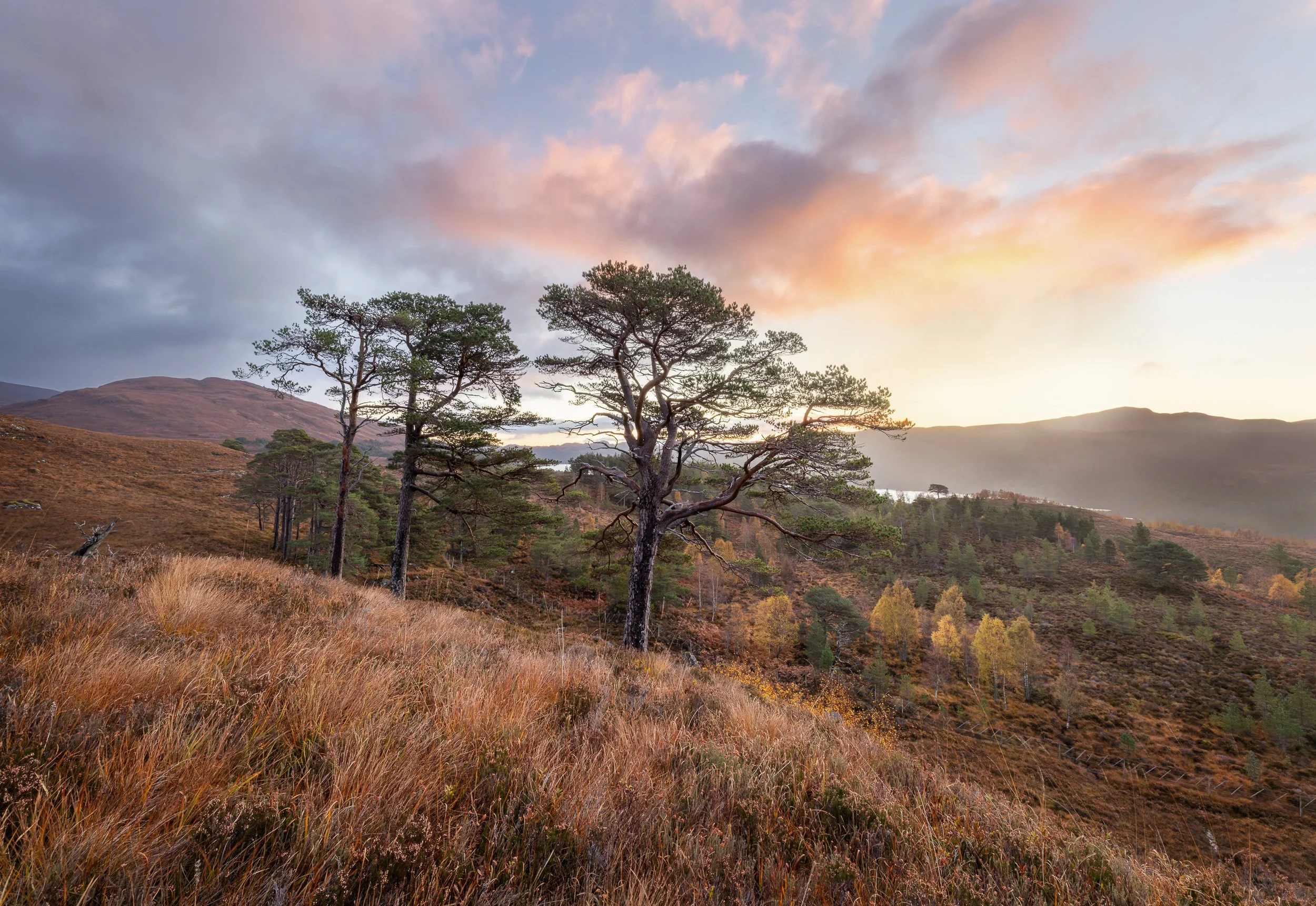
Glen Affric
(H2) A Photographer’s Journey Through Western Scotland
This journey through western Scotland was all about motion: moving through the landscape, climbing higher for better angles, sleeping close to the scenes I wanted to shoot, and letting the weather decide the mood of each photograph.
From Glencoe’s steep ridges to Skye’s cliffs, from the turquoise sands of Harris to the lonely giants of Assynt, every stop offered something different, and every climb opened a new perspective.
(H2) A Scotland Travel Itinerary for Photographers
If you’re planning your own photography tour of Scotland, I hope this travel itinerary and these images and experiences help you find your way into the country’s beautiful and wild places.
Want to know more about my photography trip to Scotland? Then check out my You Tube vlog below. Please comment, like and subscribe to my channel while you are there.