
The Same Place, a Different Photograph: Returning to the Landscape
The compelling reason to keep returning to a location
There is a temptation in landscape photography to keep looking for somewhere new. A new woodland. A new stretch of coastline. A new mountain. A new viewpoint.
I understand that temptation. Exploring somewhere for the first time is one of the great pleasures of photography. But some of my favourite photographs have come from doing almost the opposite. Many of my best images have come from returning to the same place, time and again. There is a deep sense of personal achievement when that persistence finally pays off.
Planning certainly works, but in a world where life moves quickly, Instagram posts have a fleeting existence and AI can increasingly transform a mediocre photograph into something rather more impressive, is all that effort really worthwhile?
For me, it absolutely is. I currently have the time, my life is relatively unrushed, and over the years I have slowly learnt the value of patience and mindfulness. I'm only going to live once, and I have no intention of rushing through life towards its inevitable conclusion.
When my time comes, will my photographs live on? In some small way, probably. My limited-edition archival prints should survive well into the next century, perhaps longer, provided they are cared for and the images themselves remain timeless. That is a rather satisfying thought.
(In a forthcoming blog, I'll explain how I create my archival photographic prints.)
As I write this, I'm sitting in my campervan in the Outer Hebrides, waiting for a particularly nasty storm to arrive. This is my third photographic visit to these islands, and the weather has been completely different each time. Will I get the photograph I'm hoping for tomorrow? Who knows? Read to the end and I'll reveal how this particular adventure turned out. But first, back to Devon.
On a recent trip to the southwest coast, I found myself returning to several photography locations I had visited before. In one case, I wanted a better tide. In another, I wanted to refine a composition that I already knew worked. Later, after darkness fell, I returned to a coastal location where I had previously photographed the Milky Way. None of this was about simply recreating an old photograph. The point of going back is that the landscape is never really the same. The light changes. The tide changes. The weather changes. The seasons change. And, perhaps most importantly, we change as photographers. Over many years, that change can be profound.
Sometimes the difference between an ordinary photograph and a very good one is simply being there when all those elements finally come together. This applies just as much to the landscape on our doorstep as it does to somewhere hundreds of miles away. Take the three photographs below, for example. These are of the same location, with Temple Island and its building as the subject. They are very different images, yet all were taken at this location close to my home near Henley-on-Thames. I have returned here countless times, and the possibilities never seem to disappear.
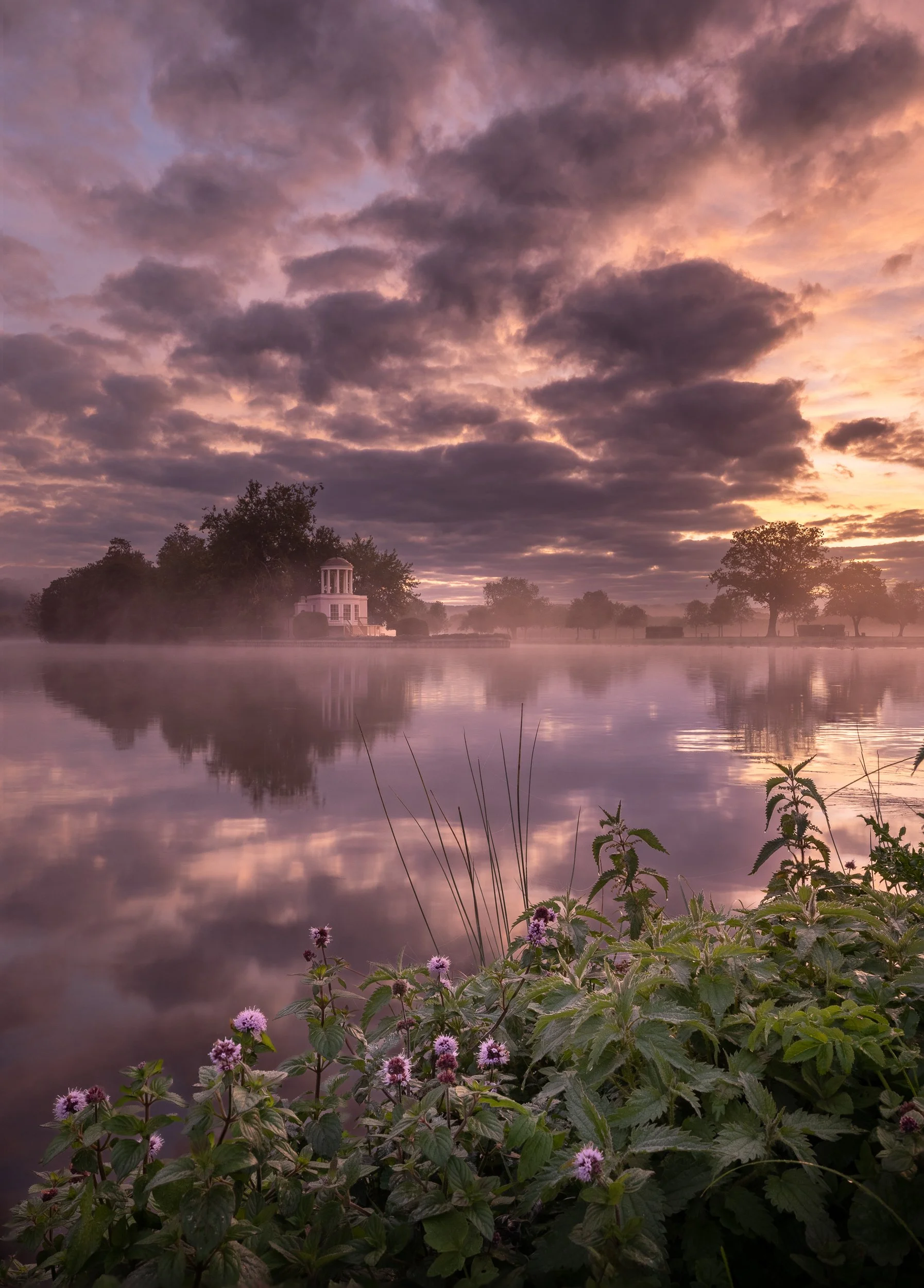
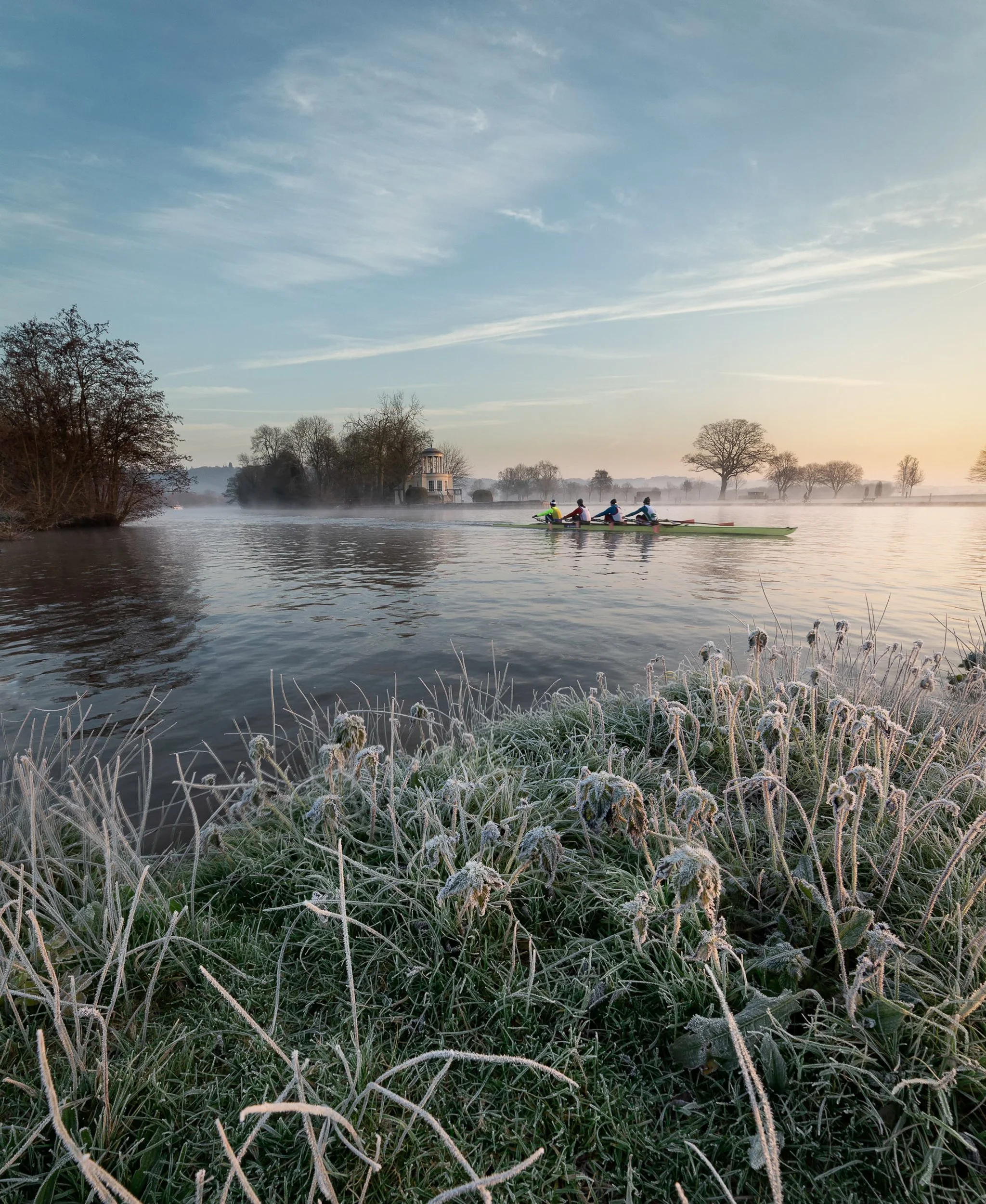
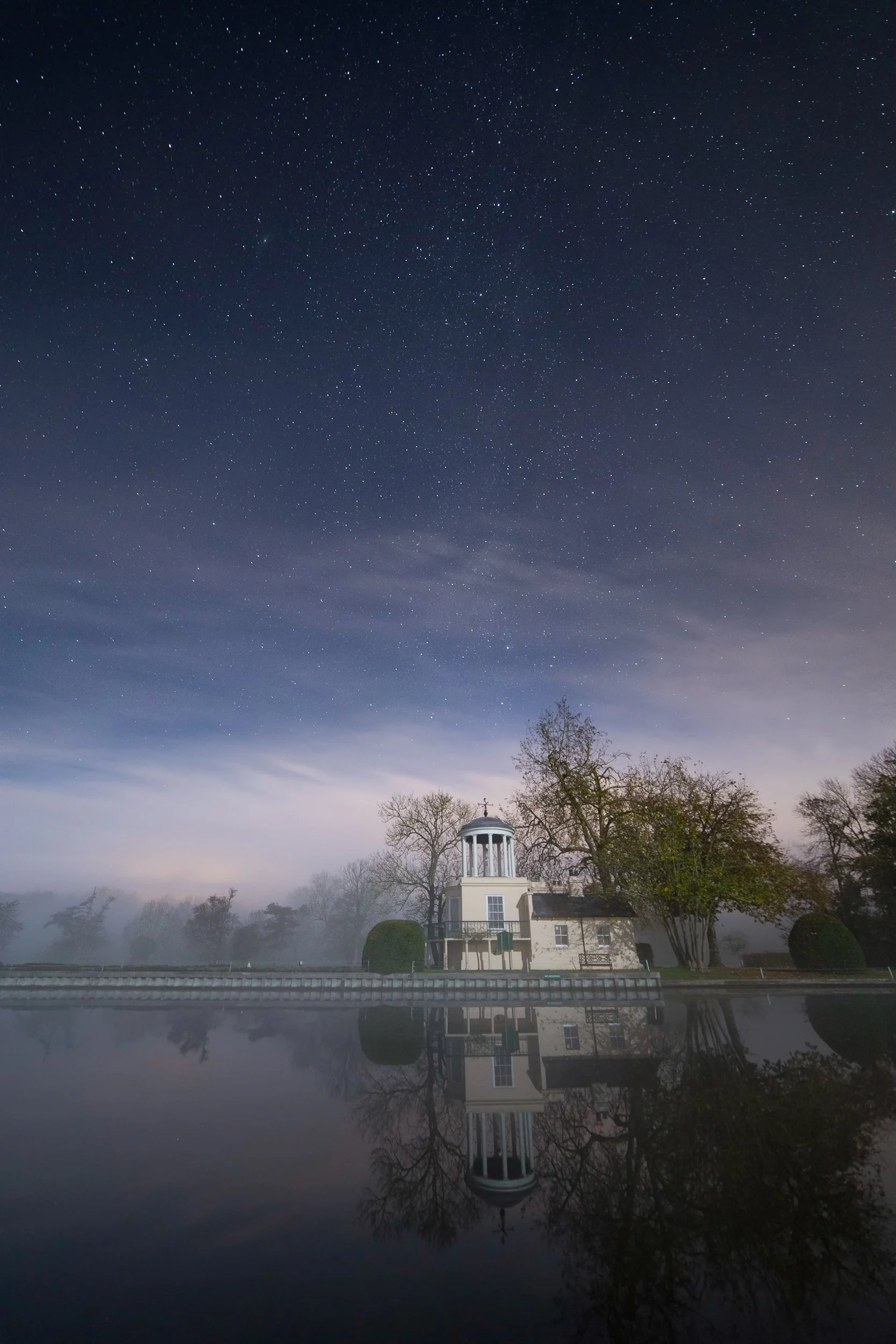
The first visit is often reconnaissance. I think we place far too much pressure on ourselves to produce a photograph every time we arrive somewhere. The first visit to a location is often far more valuable as reconnaissance.
Where does the sun rise? Which direction does the coast face? What happens as the tide comes in? Are there rocks or sea stacks that begin to line up if you move twenty metres in one direction? Is there somewhere safe to stand when the sea becomes rough? These are things that are difficult to appreciate fully from a map or photography guide.
I'm fairly laid-back about these things. Sometimes I'll visit a location without even taking a camera, although occasionally I regret that decision! Many of my woodland compositions are first discovered while I'm out running. I'll notice an interesting tree, a fallen trunk or a relationship between different elements of the woodland. I make a mental note, think about the conditions that might suit it, and return when the weather looks promising. It's a wonderfully relaxed way to approach landscape photography.
Even when I've researched a location beforehand, I normally learn much more from physically standing there and looking around. That was certainly the case on this part of the Devon coast. I had photographed the area previously, but the conditions had been very different. On that occasion it had been extremely windy. This time the tide was much closer to where I wanted it, and I already knew roughly where the compositions were. That immediately changes the way you work. Instead of wandering around looking for a photograph, you can concentrate on improving one you already know exists.
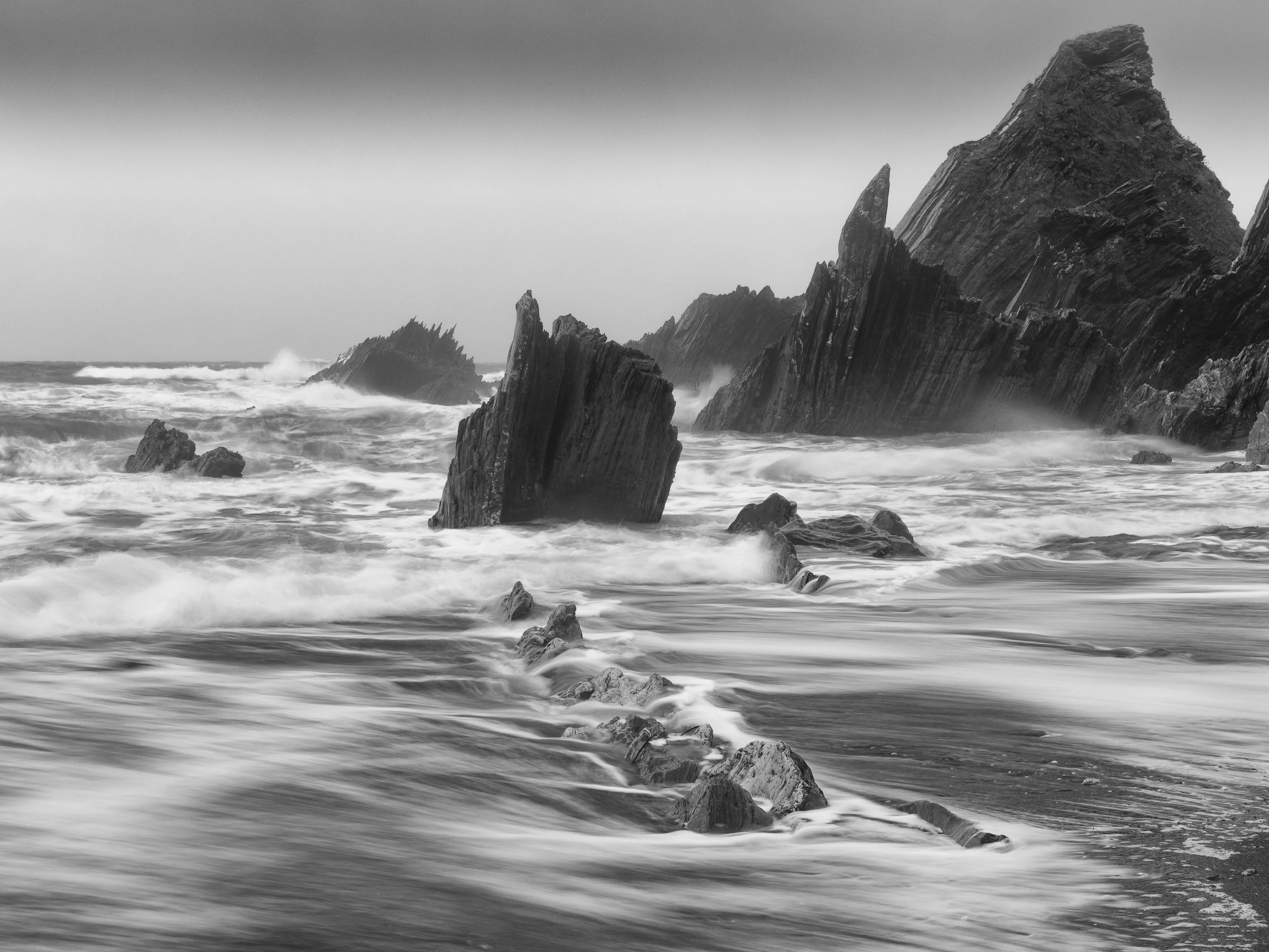
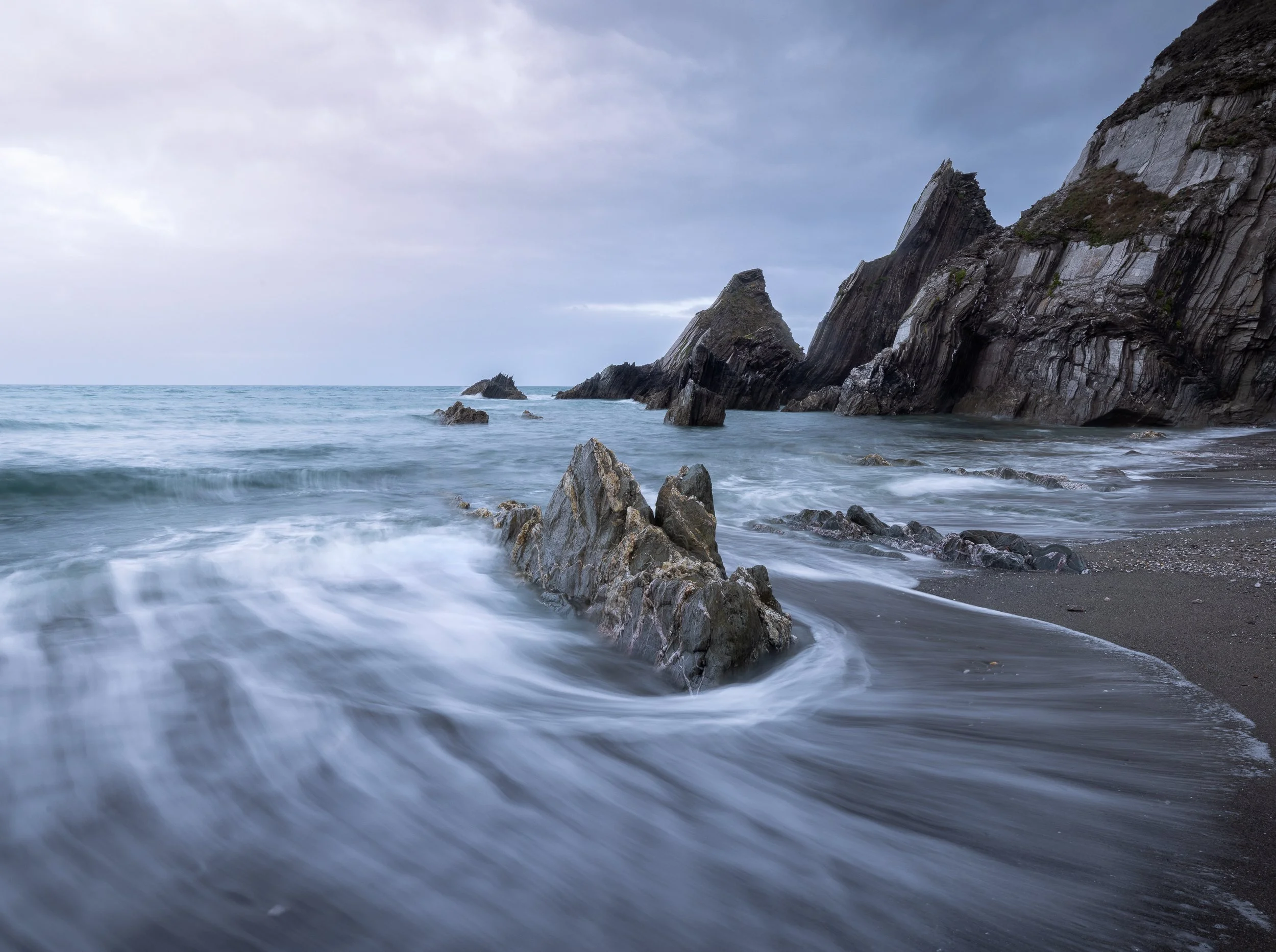
Returning doesn't mean repeating the same image One of the compositions involved a line of sea stacks running away along the coast.
They were already interesting subjects, but the photograph wasn't really about the individual rocks. It was about the relationship between them. The rocks created one set of lines. The sea created another set of leading lines.
At around a one-second exposure, the water rushing back from the shore began to leave streaks and curves pointing towards the stacks. By timing the exposure as the water receded, those lines could be used to pull the viewer through the foreground and towards the distant rocks. That sounds straightforward when written down. It wasn't.
The position of the water changed with every wave. The tide altered the shape of the foreground. The light changed. Occasionally, some colour appeared in the sky before disappearing again. This is exactly why returning to a location can be so valuable. Because of your previous visit, you are no longer trying to solve everything at once. You already know the broad composition. Now you can concentrate on the details.
I generally worked around f/16, changing the ISO between 100 and 400 when necessary to keep the shutter speed where I wanted it. A polariser helped remove some of the sheen from the wet rocks and also reduced the amount of light entering the lens. Sometimes I might use a neutral-density filter, but on these early morning visits there often isn't enough light to make one necessary. I often take a foreground focus shot as well so that I can focus stack if there are issues with foreground sharpness. That extra shot is a bit of a safety feature - just in case!
Then it was simply a case of waiting. Watch the wave. Watch where the water moves. Wait for it to begin running back. Press the shutter. (Top tip - Use a remote release rather than the timer to get the waves exactly right.) Sometimes photography really is that simple. The difficult part is putting yourself in the right place at the right time. On this occasion, I was all set up with the tripod, waiting for that perfect moment. The result will be different on any given day, sometimes dramatically so. And if I don't quite nail it, but believe the composition has potential, I'll return if I can.
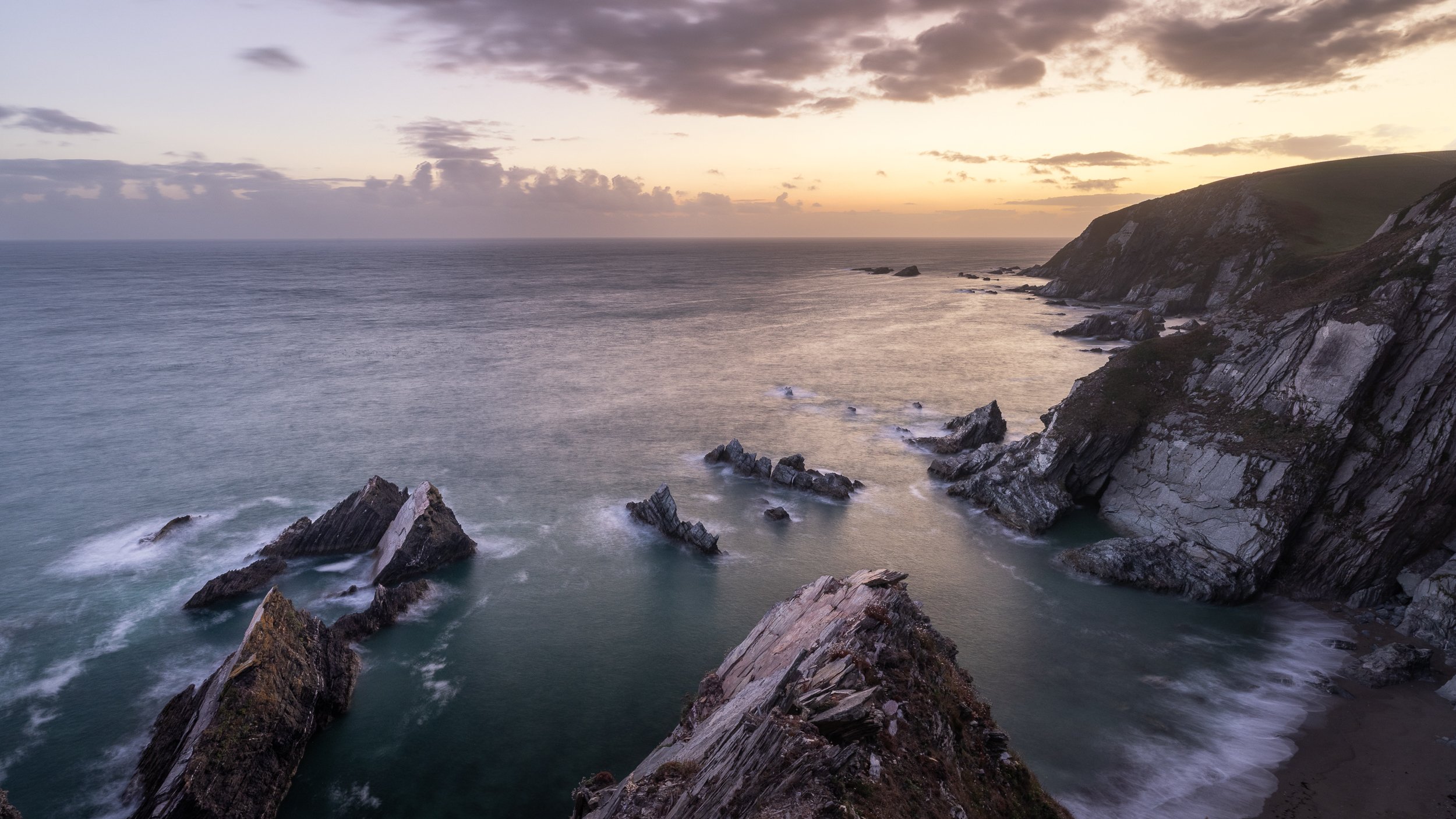
The missing ingredient is often light
We talk endlessly about composition in landscape photography. Quite rightly. But a composition that works perfectly in one set of conditions can look completely unremarkable in another. That is because composition organises the objects within the frame. Light tells us how to see them.
Light decides which objects separate from one another. It gives depth to a woodland. It reveals texture on a cliff face. It can make one rock important while allowing another to almost disappear. And, of course, we cannot control it. We can anticipate it, wait for it and put ourselves in the best possible position to use it. But ultimately, we have to find it.
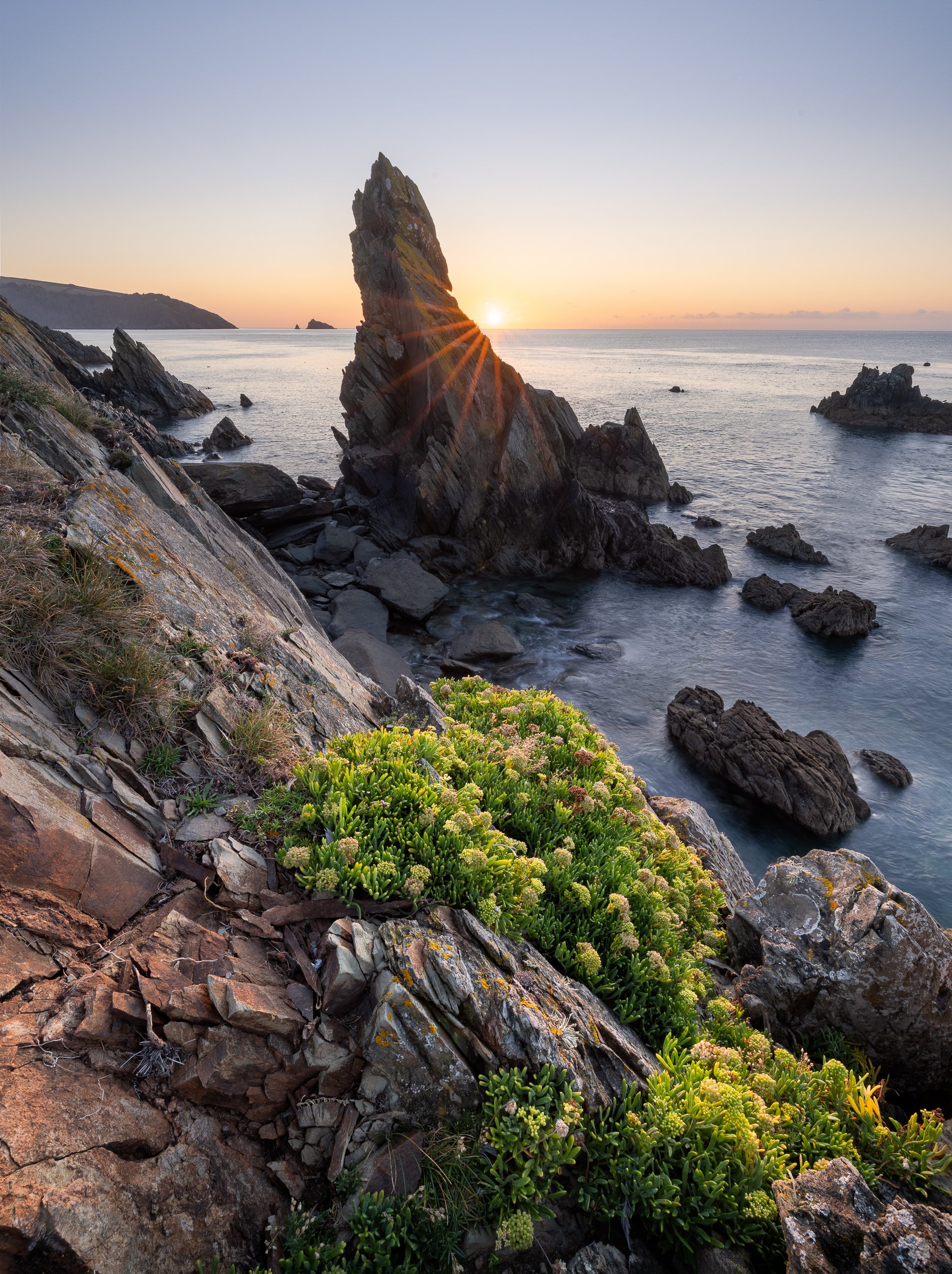
Good first attempt , but I am always looking for a better sky.
On my first day staying near Dartmouth, I revisited a location I had photographed the previous year without much success. This time the conditions were better, and I managed to capture a sunstar alongside one of the distinctive coastal pinnacles. It was a good photograph. But not quite perfect.
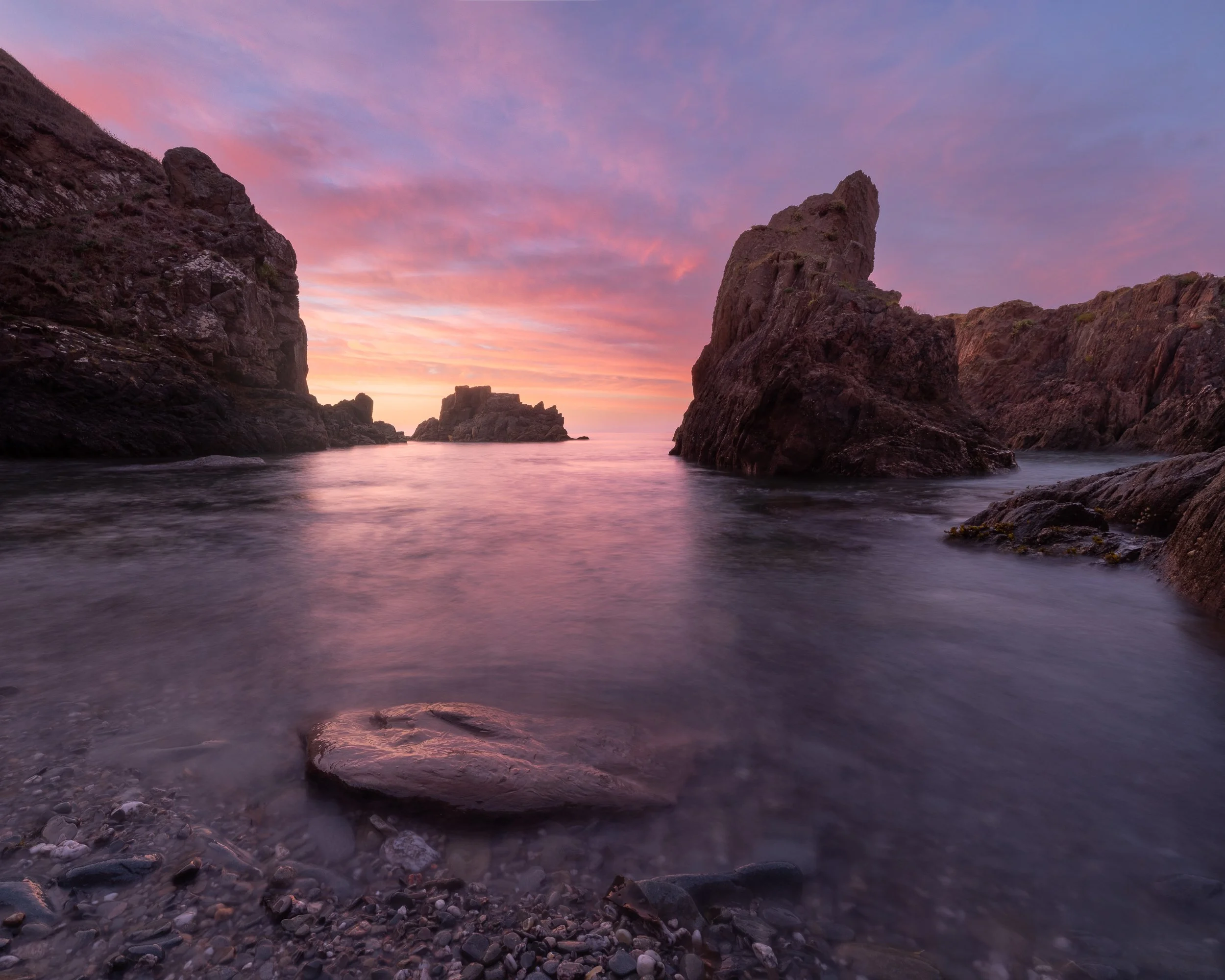
A few days later, the weather forecast suggested there might be some colour before sunrise, so I decided to return once again. As I approached the location, the pre-dawn light began changing rapidly. And I suddenly realised that the photograph I had planned wasn't the one I should be taking.
During my previous reconnaissance, I had discovered a small cove to the west. I had never experienced light quite like this on my earlier visits, but I knew immediately that the cove would be beautifully positioned for the conditions unfolding in front of me. There was only one problem. I wasn't in it!
So I changed the plan and ran like mad down towards the beach. The light was moving quickly, and I knew there was very little time to spare.
Did I get the photograph?
Well, you can judge for yourself below.
The tide wasn't quite where I wanted it, and the orientation of the bay wasn't ideal for the sunrise. But the light was extraordinary, and the earlier reconnaissance had allowed me to react quickly enough to capture it.
Without that previous visit, I probably wouldn't even have known the cove existed.
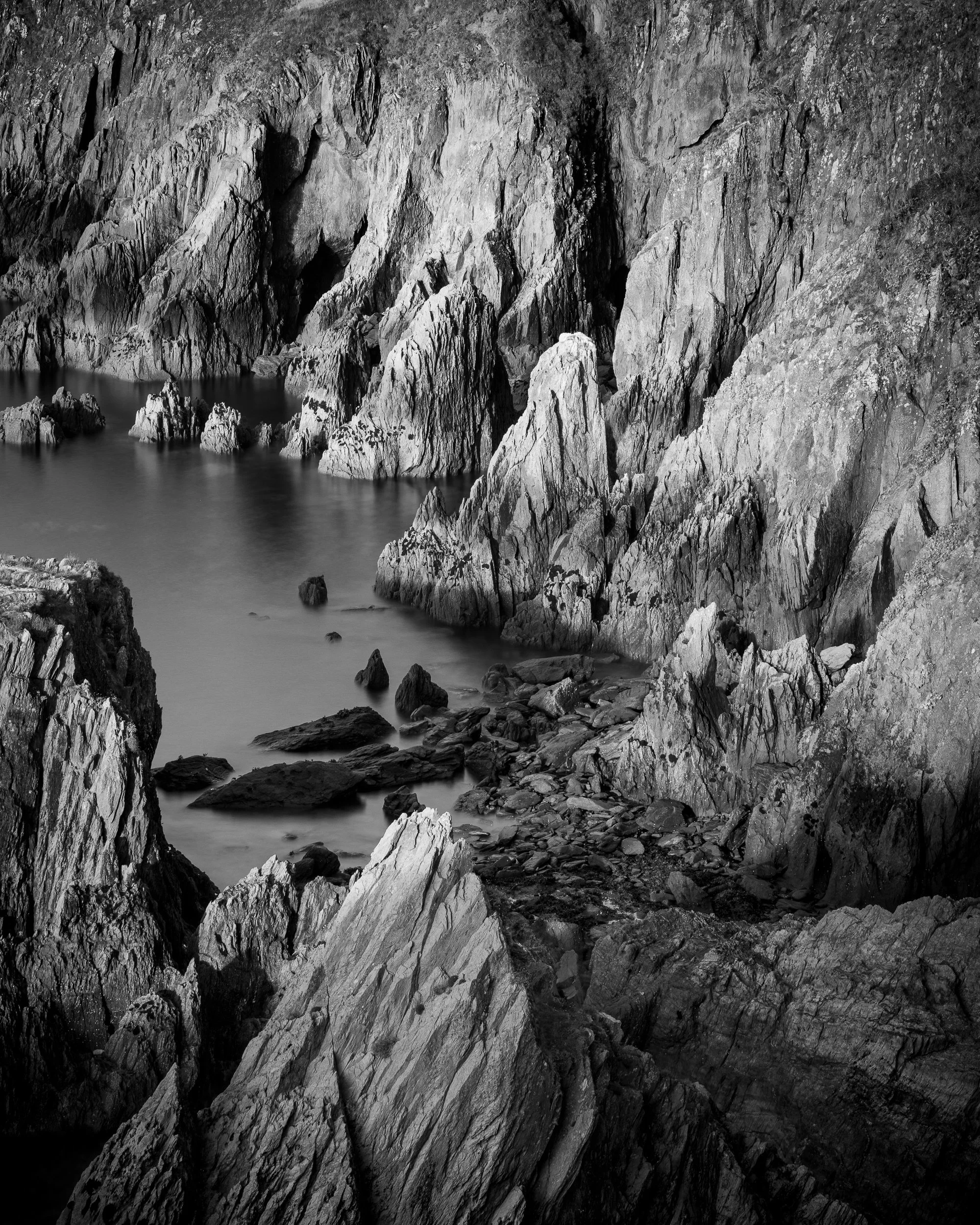
Cliffs bear Dartmouth, South Devon.
An hour later, the same stretch of coastline presented a completely different opportunity. The sun was now well above the horizon, illuminating the jagged cliffs and revealing wonderful textures in the rock. For me, this was an obvious black-and-white photograph. What a great morning!
Colour can sometimes become a distraction, while monochrome allows the shapes, textures and tonal relationships of the cliffs, rocks and water to do more of the work. I had actually been thinking about this possibility during the earlier visit when photographing the pinnacle and sunstar.
This time I used a ten-stop neutral-density filter, not to turn the sea into a completely featureless white surface, but to soften the water just enough to give it a slightly ethereal quality. Rather than deciding the morning was over once the sunrise had passed, I simply changed the type of photograph I was looking for. The location hadn't changed. The photograph had.
And perhaps that is the point. The mood and emotion of a landscape can change completely within an hour. For me, great landscape photography is about communicating that atmosphere and emotional response, rather than simply producing a physical record of a location.
The same place can tell a very different story depending on the light.
When the weather changes the plan
Weather is often described as good or bad for photography. I'm not sure it is quite that simple. Weather can certainly be wrong for the photograph you had planned. That is something entirely different.
I adapt what and how I photograph depending on the conditions. Colour, monochrome and infrared all have their place, and I'll often vary the style and type of photograph I'm looking for. In some respects, I allow myself to be blown along by the weather. During this Devon trip, there were periods when the coastal conditions simply weren't doing what I wanted. But there was mist around, so I headed into the woodland. Initially, that didn't look particularly promising either.
The upper part of the wood was relatively young, and I struggled to find anything that interested me. Further down, however, the character began to change. The trees became older and more twisted, and the woodland began to take on the appearance of the temperate rainforests found in this part of southwest England. And suddenly, the mist became important.
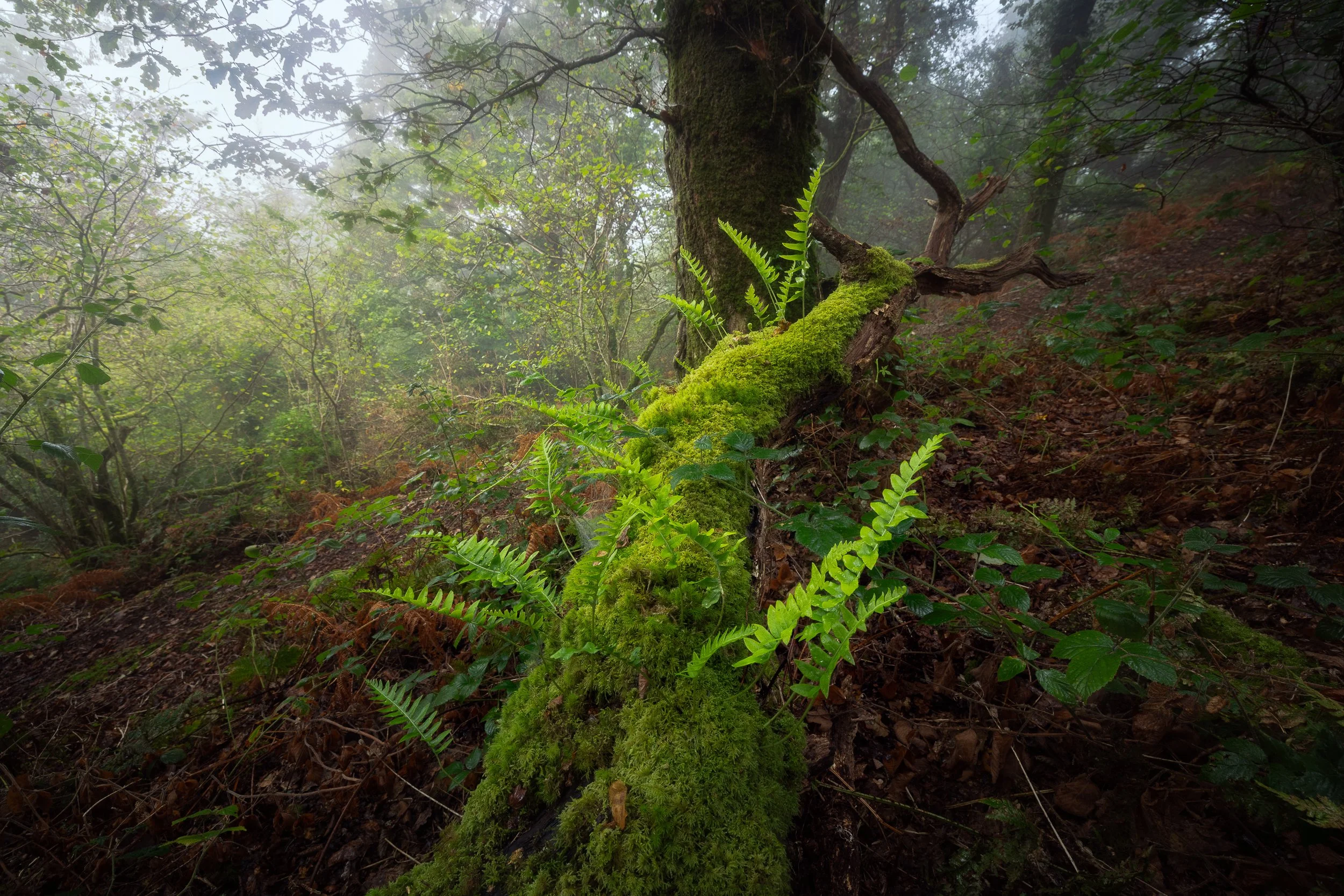
Temperate Rain Forest, South Devon
Eventually, I found a fallen tree with ferns growing across its decaying trunk. The foreground was full of lush green vegetation, while behind it the woodland disappeared gradually into the mist. There was a definite direction to the light, coming across the scene from one side. Normally, I'm careful about allowing bright areas of sky into a woodland photograph because they can pull the viewer's eye straight out of the frame. Here, however, the mist changed everything. It softened the bright sky and reduced the contrast. Instead of becoming a distraction, the pale background helped create separation between the different layers of woodland.
The composition worked because of the light and weather. The conditions that had been less than ideal for a coastal photograph had become exactly what I needed in the woods.
There is another woodland photograph worth mentioning.
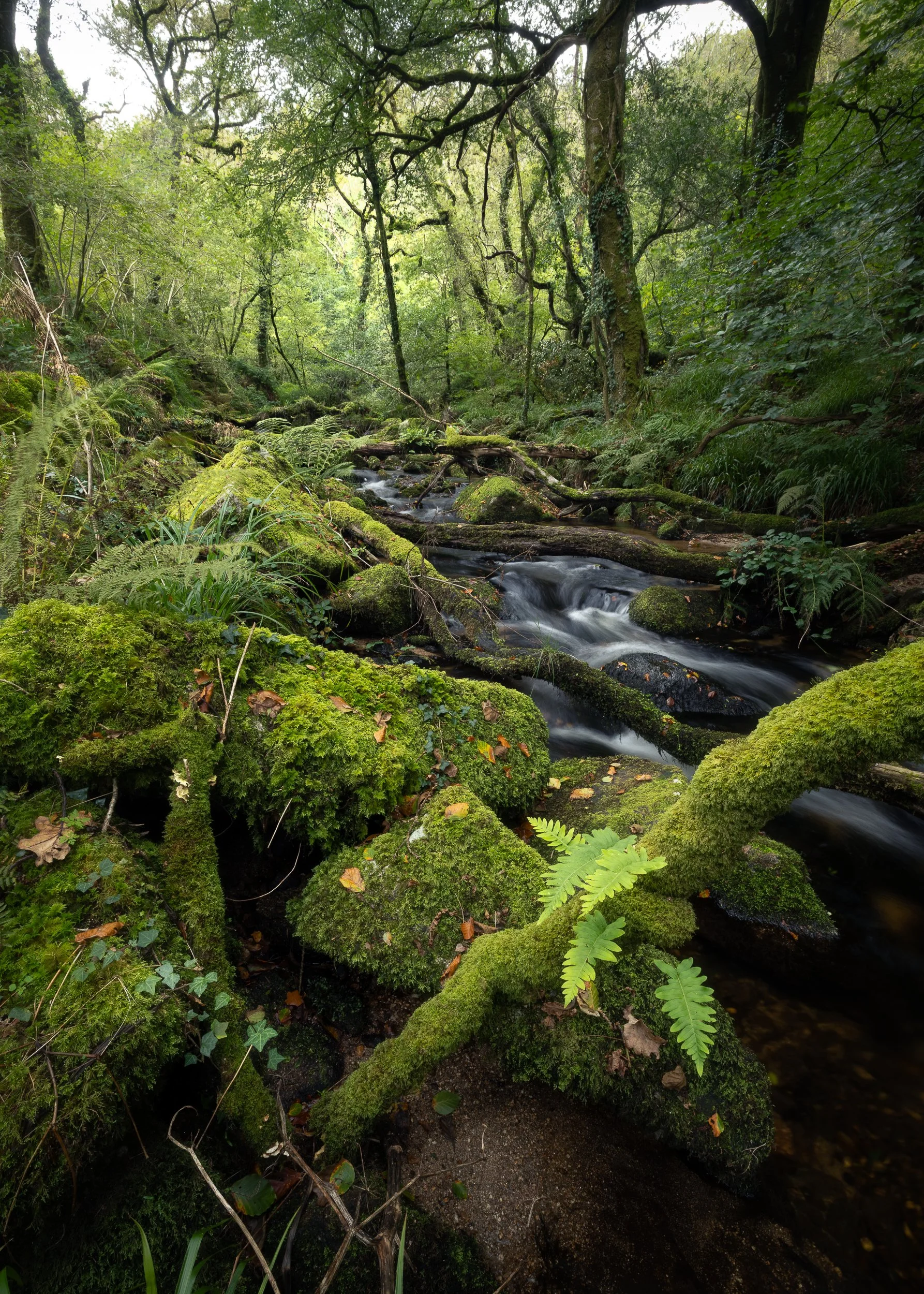
Thousand Year Project
The previous day, I had visited a nearby private temperate rainforest associated with the Thousand Year Trust , an organisation involved in research and conservation of these remarkable temperate rainforest habitats. I was there on other business, but naturally I couldn't resist looking for photographic opportunities. The woodland was wonderful. The light, however, wasn't. There was too much direct sunlight and insufficient mist to create the atmosphere I wanted.
As I was shown around, one thing became increasingly clear. I would have to return. There was no doubt about it. This was a location with enormous photographic potential, but not necessarily on that particular day.
In the meantime, I explored an area at the bottom of the forested valley and found a composition that worked reasonably well with the available light. It wasn't the photograph I had imagined, but it was the photograph the conditions allowed. And that is often enough - until I return.
(I'll be exploring this extraordinary woodland in more detail in a forthcoming YouTube video.)
When the weather doesn't cooperate, you can pack everything away and go home. Or you can ask a different question. What is this weather actually good for?
Going back after dark - Astrophotography
There was one particular photograph I especially wanted to revisit on this trip. It was another seascape, although this time much of the interest was going to be above the horizon.
The Milky Way.
I had photographed the location before. The previous image had actually done reasonably well. I entered it into a competition and, although it wasn't ultimately selected, I later spotted the print sitting on a judging table amongst the images being used in the competition's publicity. It was encouraging to see it there and know it had been a contender.
But the photograph wasn't quite right. It had been my first visit, and I knew that with the knowledge gained from that experience, a little more planning and perhaps some luck, I could do better. It is very easy to look at a photograph that nearly works and decide that it is finished. I could see things I wanted to improve. There were alternative perspectives, compositional changes and technical details I wanted to explore.
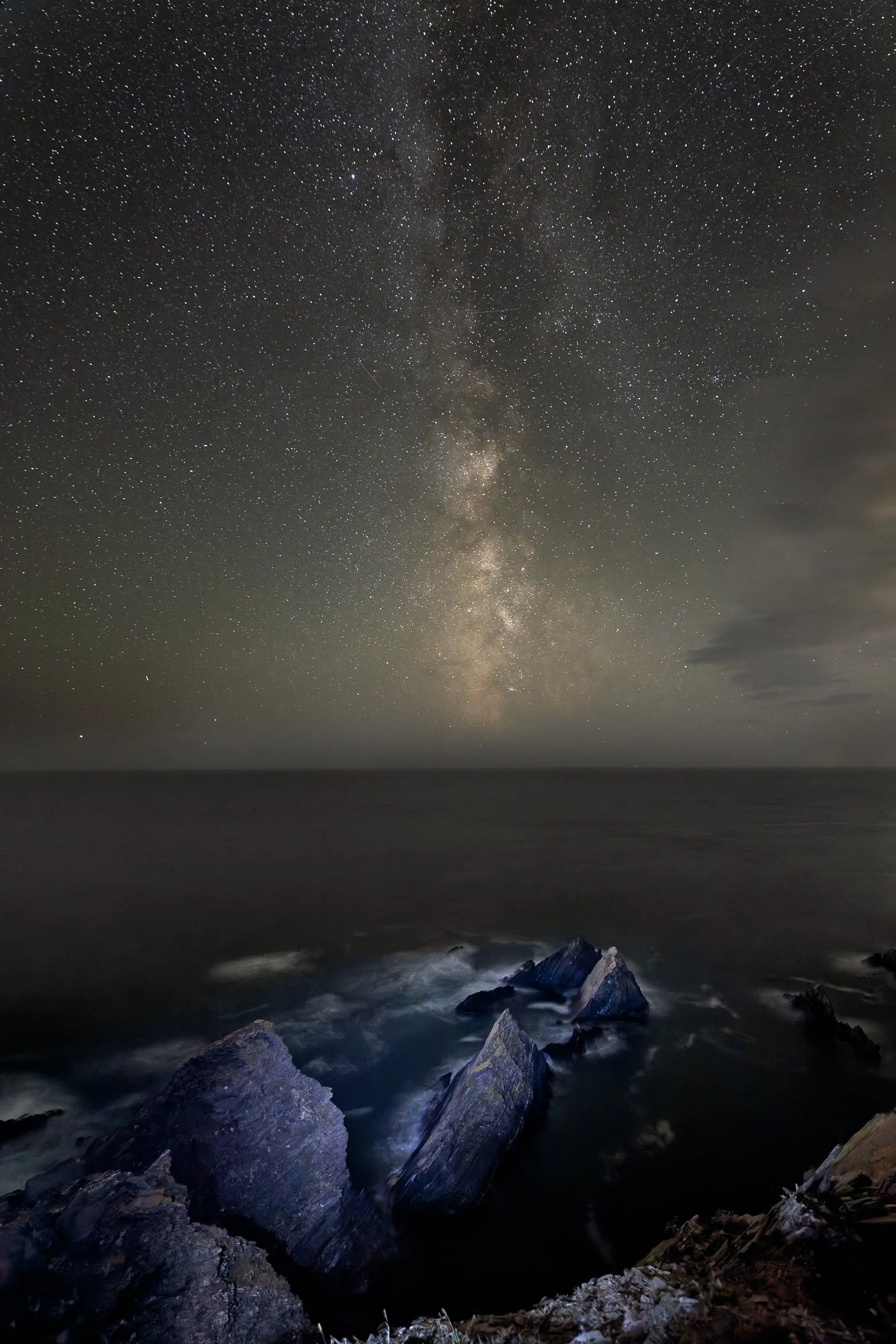
The recent image captured on the revisit to South Devon
So I went back.
I returned at almost exactly the same time the following year. That wasn't a coincidence. The position of the Milky Way changes throughout the year, and I wanted the galactic core to sit in approximately the right place above the sea stacks.
At that time of year, the core would only remain usefully positioned for around an hour before disappearing towards the horizon.vThere was also cloud moving through, and the Moon wasn't going to stay out of the way forever.
Time was going to be critical.
I couldn't afford to spend the night producing an elaborate sequence involving tracked skies, multiple foreground exposures and complicated blends.
I needed to get the photograph quickly and efficiently. Speed was the key.
On my previous visit, I had spent too much time experimenting, and the core had moved beyond its optimum position before I could properly refine the composition. This time I was determined not to repeat that mistake.
I used my Canon EOS R5 with the RF 15–35mm f/2.8 lens, set to approximately 17mm. The exposure was 15 seconds at f/2.8 and ISO 6400. An ISO of 6400 is obviously high, particularly when there is detail within the dark foreground, but photography is always a compromise.
I could have concentrated on producing the technically cleanest possible file, using a star tracker or multiple stacked images. But I would probably have come home with fewer compositions. Instead, I concentrated on getting the photographs while the sky was in the right position. Noise was something I could deal with later.
On this occasion, I planned to use DxO PureRAW 6 to process the high-ISO files, allowing me to work with single exposures rather than spending valuable time creating multiple images for stacking. New processing technology had now given me another option and allowed me to work more efficiently. The important thing was that the capture itself remained a single photograph. I could deal with the noise afterwards. A Milky Way that had disappeared below the horizon was rather harder to recover.
(You can see the full approach, including my editing workflow, in my upcoming Devon astrophotography YouTube video.)
Improving the photograph rather than recreating it
This is another reason I like returning to familiar photography locations. You don't have to copy what you did before. In fact, I think that largely defeats the object When I return to a location, I normally have some idea of what worked previously and, more importantly, what didn't. Perhaps the camera needed to move slightly. Perhaps the foreground was too dominant. Perhaps I needed a higher tide, less wind or light arriving from a different direction. Or perhaps I simply hadn't understood the place properly the first time. That last point becomes increasingly important.
A photograph is about atmosphere to me. I'm not there merely to make a recording of what stands in front of the camera. I'm trying to communicate how the place felt. That can take time to understand. I often leave a newly printed photograph sitting on the rack in my studio for several weeks. As I work, I'll occasionally look across at it and consider what might have been better. Sometimes the improvements are technical. Perhaps the balance between foreground and background isn't quite right. Other times it's something much less tangible. The photograph might be technically excellent but lack the emotional quality I was hoping for. Over time, these thoughts begin to shape how I might approach the location again.
Familiarity allows you to simplify. You start to recognise which elements matter and which don't. By the time I return, a new plan has often formed almost subconsciously. That is one of the great advantages of producing physical prints rather than allowing all our landscape photography photos to remain hidden away on a hard drive. Living with a photograph gives you time to understand it. And sometimes, looking at what isn't quite right is as valuable as admiring what is.
The immense value of failure
I want to finish with an example from Scotland, because it was actually this experience that prompted me to write the blog. The photograph below was taken only a few days ago on Blà Bheinn, also known as Blaven, on the Isle of Skye.
It is a wonderful mountain, rising to around 929 metres, with dramatic views across the surrounding landscape. I had climbed it the previous year, almost to the day. On that occasion, the weather became extremely unpredictable, as it often does in Scotland, even with the best planning. Visibility deteriorated dramatically. The mist became so dense that I could barely see more than a few metres ahead.
Tragically, another person lost their life on the mountain that day, and I witnessed a major mountain rescue operation unfolding as I made my descent. I returned empty-handed. I hadn't even taken my camera out of the bag. It was a sobering experience and an important reminder that no photograph is worth taking unnecessary risks for.
But the journey wasn't wasted. Far from it. I had learnt a great deal about the mountain, the route and how quickly conditions could change. A few days ago, I returned. This time the weather forecast was more promising, and I had a much better understanding of the route from my previous attempt. That knowledge was enormously valuable.
I knew I needed to reach the cold summit approximately thirty minutes before sunrise, which meant climbing alone, by headtorch, in complete darkness. It wasn't a decision to take lightly, but the familiarity gained during the earlier visit helped me plan the ascent and understand the demands of the route.
On this occasion, the conditions came together. And I got the photograph.
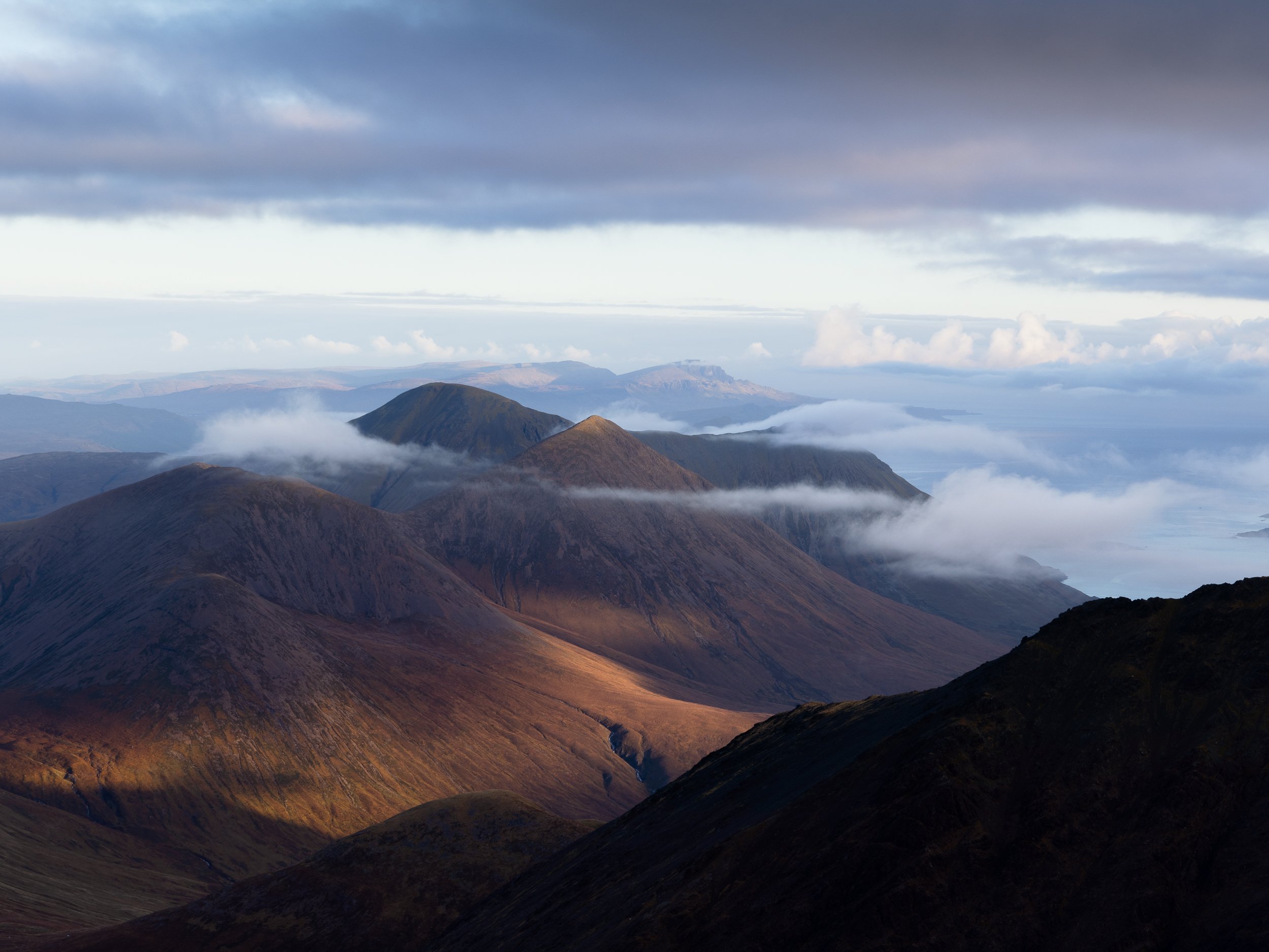
Second attempt the summit of Blà Bheinn (Blaven) - Well its not Everest!
Would I have achieved the same result without that earlier unsuccessful trip? Possibly, but I very much doubt it. The first visit, despite producing no photographs whatsoever, had provided the knowledge that made the second attempt possible. That is why I believe there is immense value in photographic failure. Sometimes you come home with nothing more than a better understanding of a place. And sometimes that turns out to be the most valuable thing you could have brought back.
(I'll be writing more about this Scottish adventure in my next blog, alongside a new YouTube film.)
The photograph may still be there
There is no particular prize for producing a wonderful photograph on your first visit. And there is certainly no shame in returning home without one. We tend to see the finished landscape photograph without seeing the hours, days, months or sometimes years that sit behind it. We don't see the unsuccessful visits. The missed sunrises. The wrong tides. The mornings when the mist never arrives. The occasions when the light is glorious but the composition simply doesn't work.
Yet all these experiences contribute to the photographs we eventually produce. I still love exploring new places, and I always will. But increasingly, I appreciate the value of having a collection of familiar locations that I can revisit when the conditions look promising. Somewhere I know how the tide behaves. Somewhere I understand where the light will appear. Somewhere I know which tree catches the mist or which sea stack might sit beneath the Milky Way.
Over time, you stop merely visiting the landscape and start building a relationship with it. And when you return, don't simply try to take the same again. Look at what has changed. Look at the sky. Look at the tide. Look at the light. Look at the weather. Then look again at the photograph you made last time and ask yourself what could be better. Because sometimes the photograph you are looking for isn't somewhere new.
It's waiting for you in a place you've already been.
And what of the storm in the Outer Hebrides?
Well, not perfect - A battle with cancelled ferries, resulting in missed tides and 85mph winds recorded when I took this shot, tended to push me to the limits. I will be back and can do better. I now have the knowledge to do better the second time around. In fact, I do have one image taken about 15 minutes before, slightly further back, which I think is much better, but that will be revealed on my Scottish YouTube and blog, which will be released once I have recovered my wits from this trip, so remember to subscribe if you are interested.
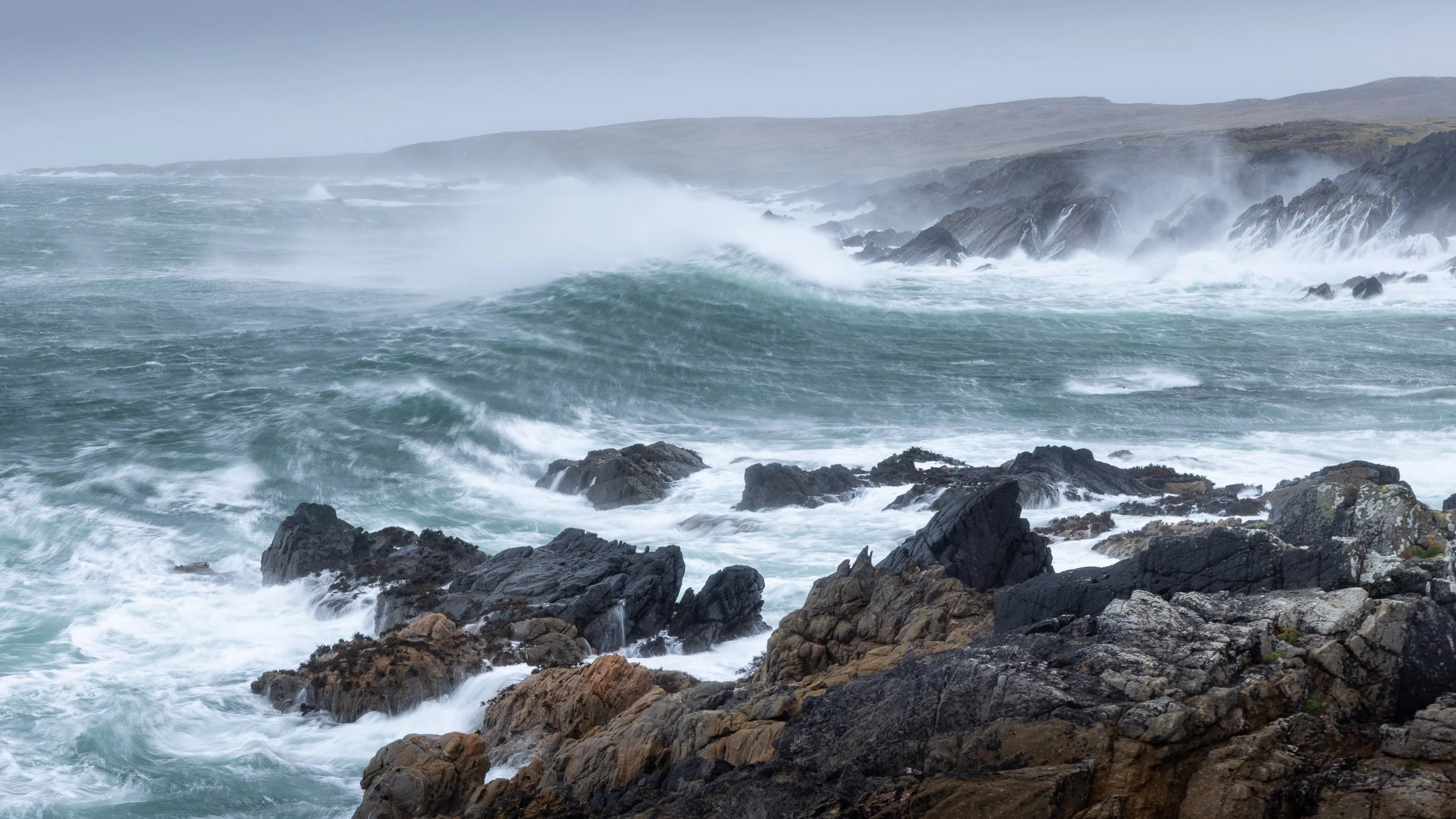
Gales and 80 mph winds hit the North Uist coast, Scotland