
This year, I started my autumn photography in Scotland in October and extended the season as I drove south, where autumn colours appear two or three weeks later. It is late November and we still have those autumn colours here at home.
As someone who spends a considerable amount of time photographing woodlands, autumn is inevitably one of my favourite times of the year. The changing colours, the soft light and the transformation of familiar locations provide an abundance of photographic opportunities.
However, looking back through my portfolio of autumn photography, I was beginning to feel that many of my photographs were becoming rather similar. Individually, I was pleased with them, but collectively, I felt there was something missing.
I had developed a familiarity with photographing woodlands and, perhaps as a consequence, had become a little too comfortable with my approach.
There is nothing particularly wrong with developing a recognisable photographic style, but I felt I needed to think outside the box a little more. I wanted to create a broader portfolio of autumn images, exploring different subjects, perspectives and photographic techniques whilst still retaining my interest in the woodland environment.
This autumn has therefore been as much about experimentation and discovery as it has been about photographing the changing colours.
Seeing the wood from outside the trees
Much of my forest photography involves immersing myself in the environment, searching for compositions deep in the forest and trying to make sense of the inevitable chaos.
A recent visit to Cannock Chase provided an opportunity to approach things from an entirely different perspective.
Rather than photographing from within the woodland, I found myself looking across a valley at the woodland on the opposite hillside that I had just exited.
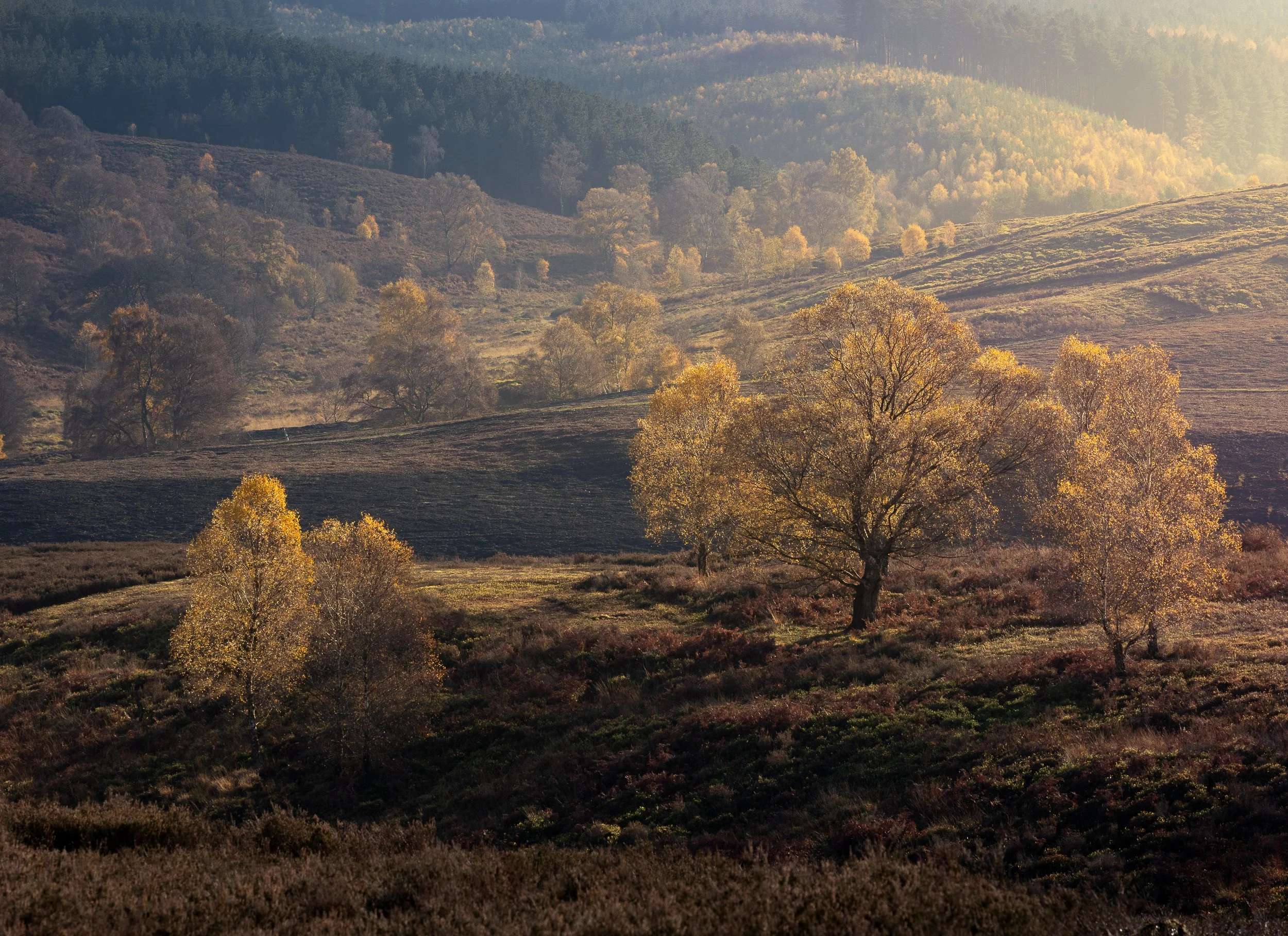
Winter sun on last of the silver birch trees in Cannock Chase, England
What appealed to me was the way in which the autumn colours were distributed across the landscape. Bright light from low in the winter sky to my right was backlighting the silver birch leaves. This gave the scene amazing depth. I had to run back to the van and grab the 100–400 mm lens for this one. Compressing the scene with the zoom lens made all the difference, in my view.
It was quite a contrast to the type of woodland photography I normally undertake. Instead of concentrating on the relationship between individual trees, I was looking at much larger areas of colour, texture and tone.
What I particularly liked about the resulting image was that it still captured the essence of an autumn woodland, but in a very different way from many of the photographs already in my portfolio.
It made me think about how rarely, as a woodland photographer, I step outside the woodland to look back at it. With this in mind, I couldn't resist capturing this classic scene as I passed through a village close to one of my favourite woodlands early one morning. Autumn leaves were falling beside the iconic red telephone box, whilst the morning fog gently enveloped the village and its surrounding woodland. What a wonderful start to the day. Excuse the pun, but with woodland photography you sometimes have to think outside the box.
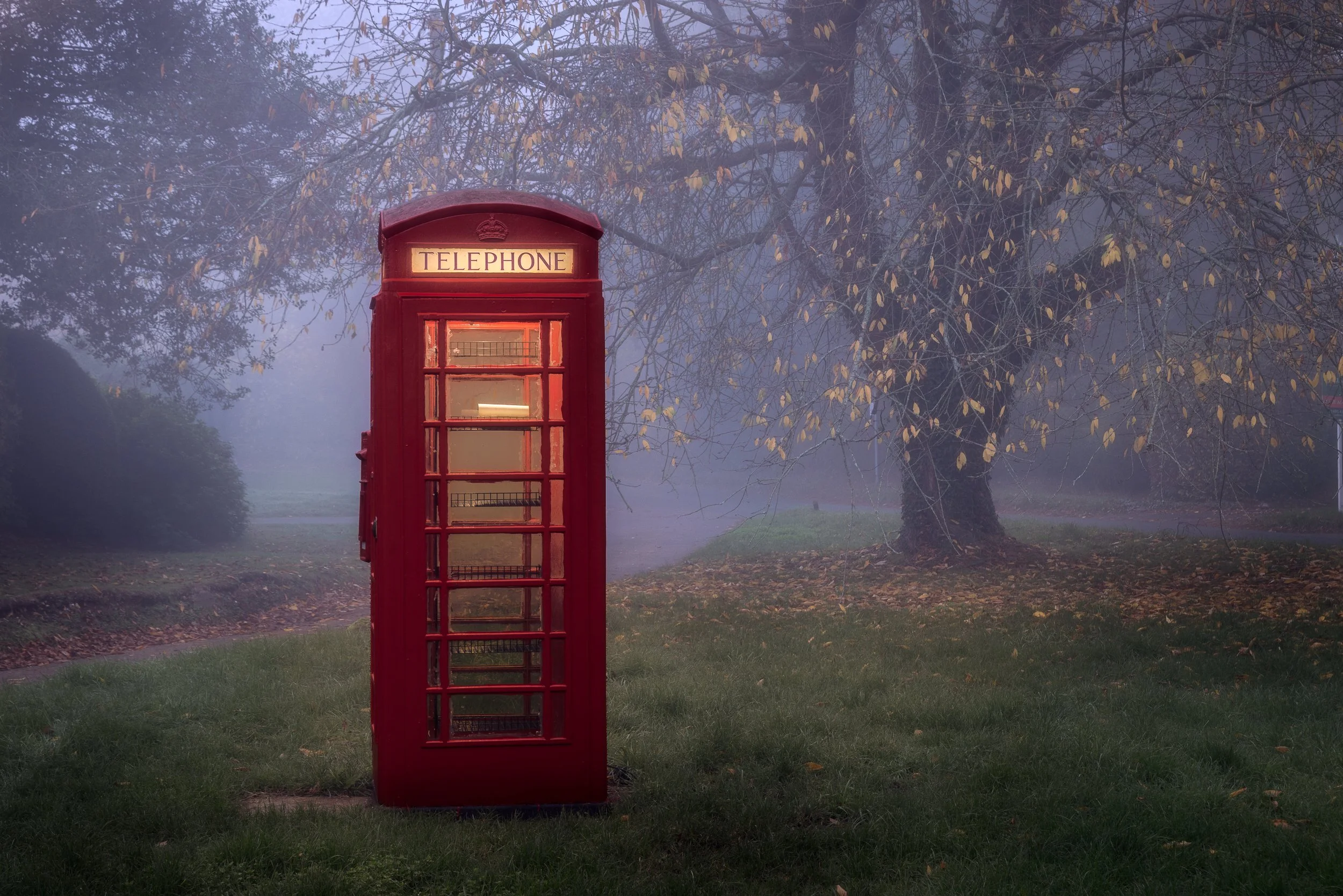
Local village in the Chiltern Hills. Classic England
Returning to the familiar
I certainly had no intention of abandoning my more traditional approach to woodland photography. It remains something I thoroughly enjoy, and there is always the excitement of discovering a new composition or seeing a familiar location transformed by different light and weather conditions.
However, I wanted these photographs to form just one part of my autumn portfolio rather than dominate it.
One of the difficulties I have found with photographing a subject over many years is that I naturally gravitate towards certain types of composition. I know what appeals to me and have developed an instinct for recognising those opportunities.
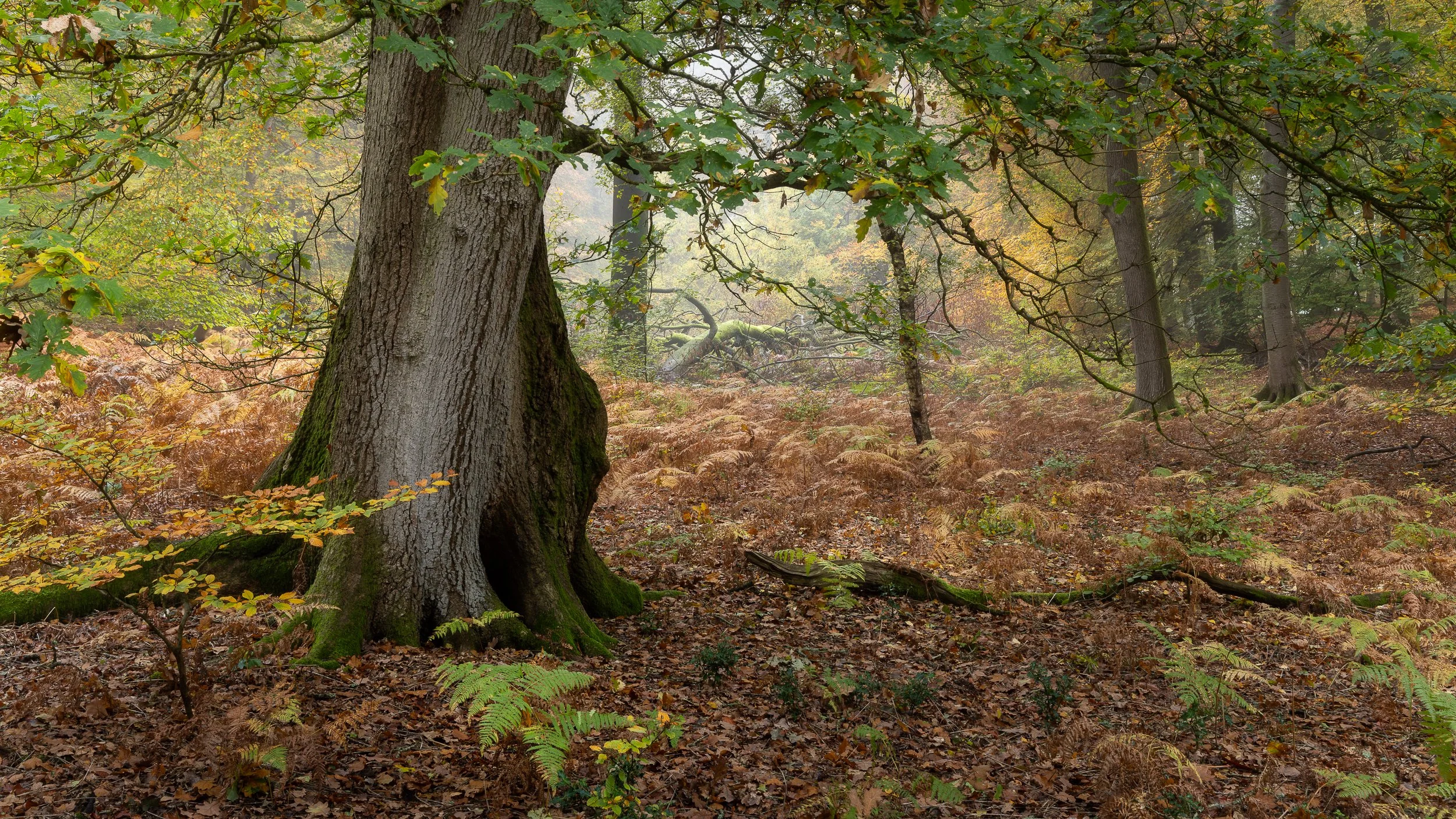
My standard fare for an autumn scene near where I live.
Whilst that experience is valuable, I wonder whether it can occasionally restrict my creativity. Am I overlooking other photographic opportunities simply because they do not fit with the type of image I am accustomed to looking for? I find the gentle curves of beech trees far easier to photograph than the rather undefined silver birch trees or the gnarly, chaotic oak forests I also visit. Maybe if I treated these harder subjects in a different way, I could make more of them?
It was something I wanted to explore a little further. I have recently been watching other photographers on YouTube and wondering whether I could emulate some of their macro photography skills.
A landscape within a leaf
One of the areas I wanted to experiment with was close-up and macro photography.
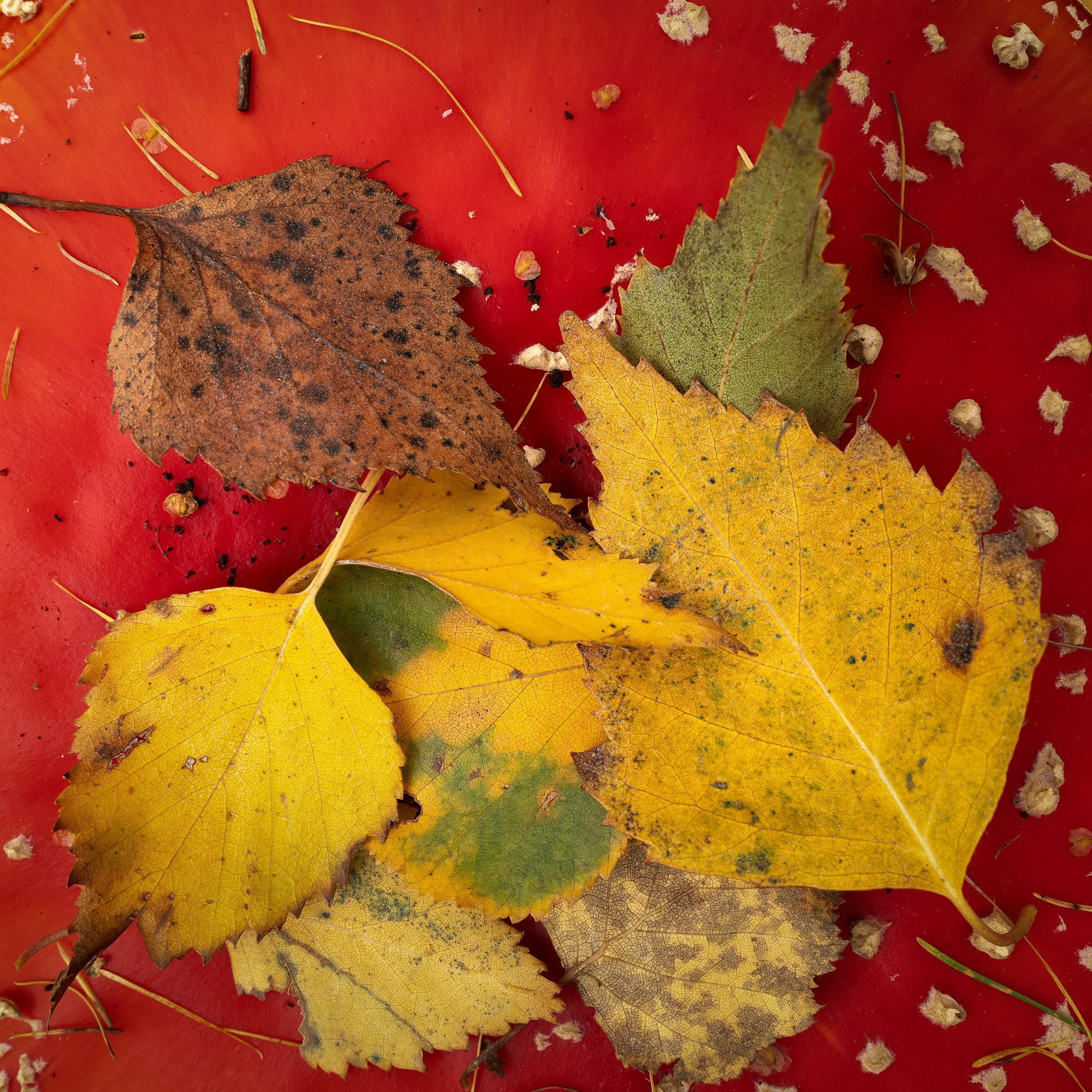
Autumn leaves fallen on top of Fly Agaric mushroom
The woodland floor in autumn is covered in potential photographic subjects, yet I suspect that, like many landscape photographers, I have walked past thousands of them whilst searching for compositions amongst the trees.
Looking more closely at individual leaves opened up a completely different world of colour, texture and pattern.
What fascinated me was how much variation there could be within a single leaf. The transition between colours, the intricate structure of the veins and the gradual deterioration of the leaf itself provided some surprisingly interesting photographic subjects.
Some of these details began to resemble miniature landscapes in their own right. These microworlds had the potential to show all of autumn in one compact image.
I also found myself becoming less concerned with photographing a recognisable object and more interested in the arrangement of colours, lines and textures within the frame.
It was a refreshing change from the complexities of conventional forest photography. Rather than trying to simplify a large and chaotic environment, I was discovering complexity within something very small.
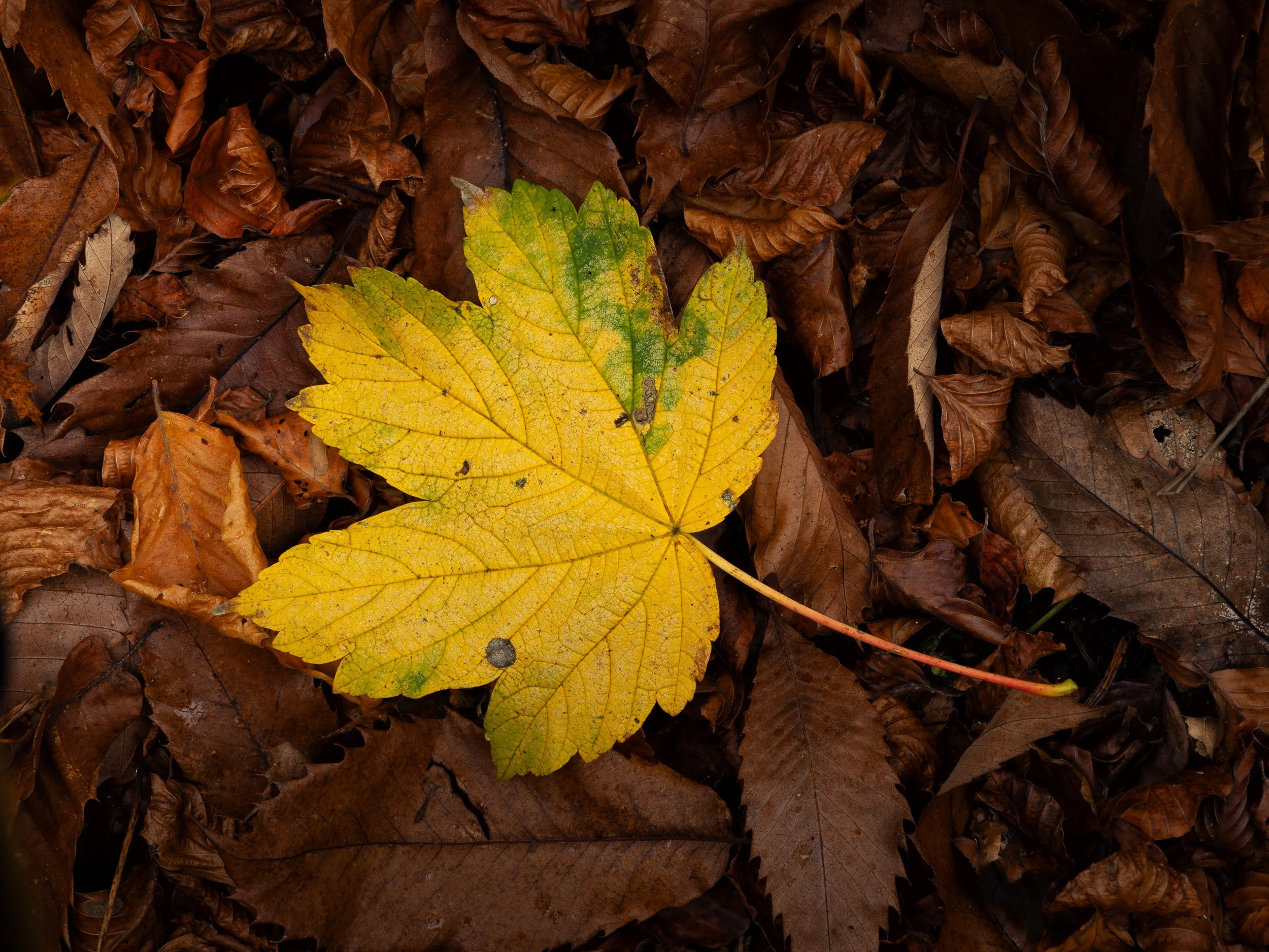
A simple scene found all around us in the forest. Just look down at your feet
Discovering the unusual world of fungi
One of the things that has really stood out for me this autumn has been the sheer abundance and diversity of fungi.
I cannot remember another autumn when I have encountered quite so many different shapes, sizes and colours during my woodland visits. As my woodland adventure has progressed in recent years, it may simply be that I have become more observant as part of my development.
Whilst I have photographed fungi in the past, they have generally been something of a distraction from my main reason for visiting a woodland. This year, however, they became a much more significant part of my photography.
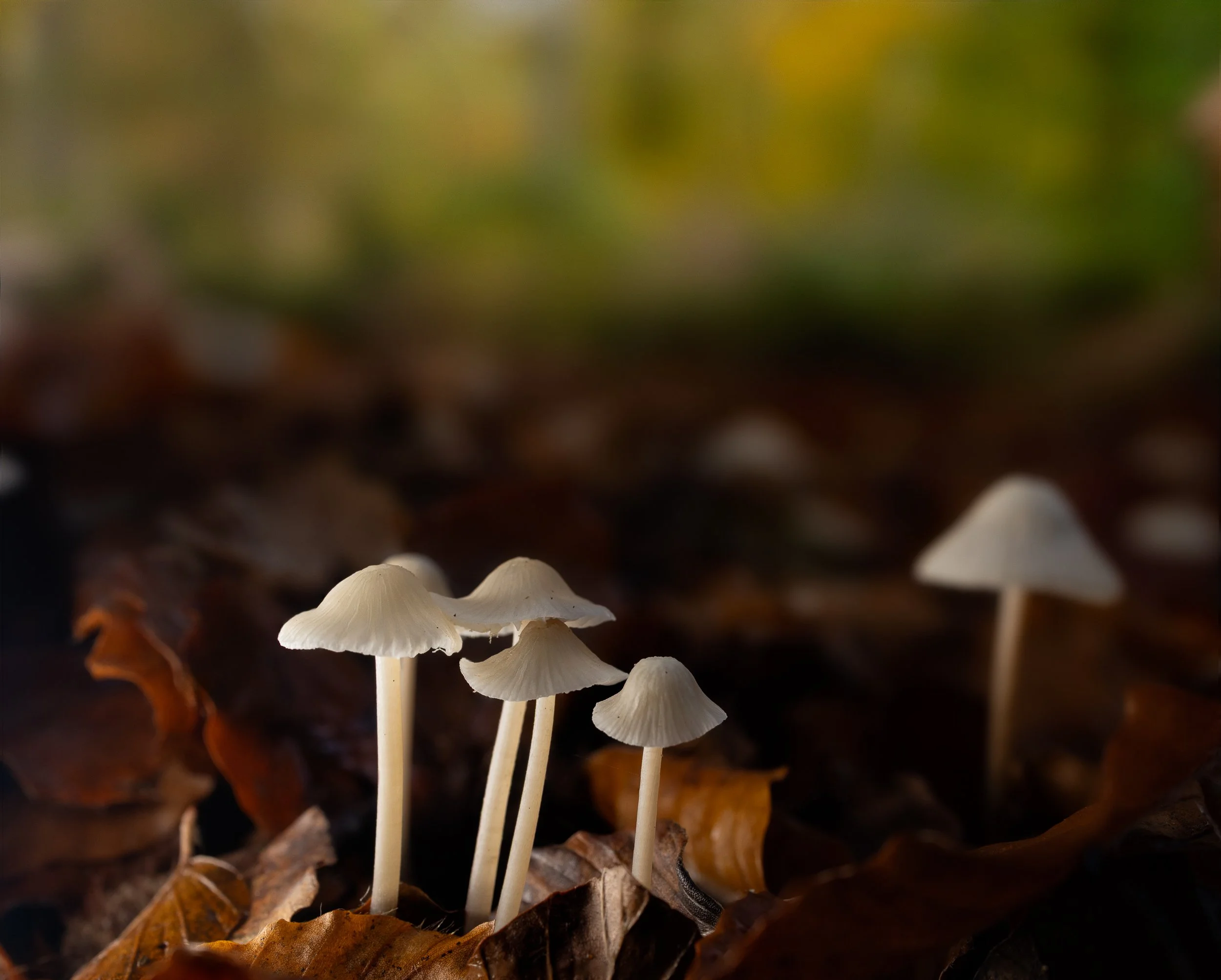
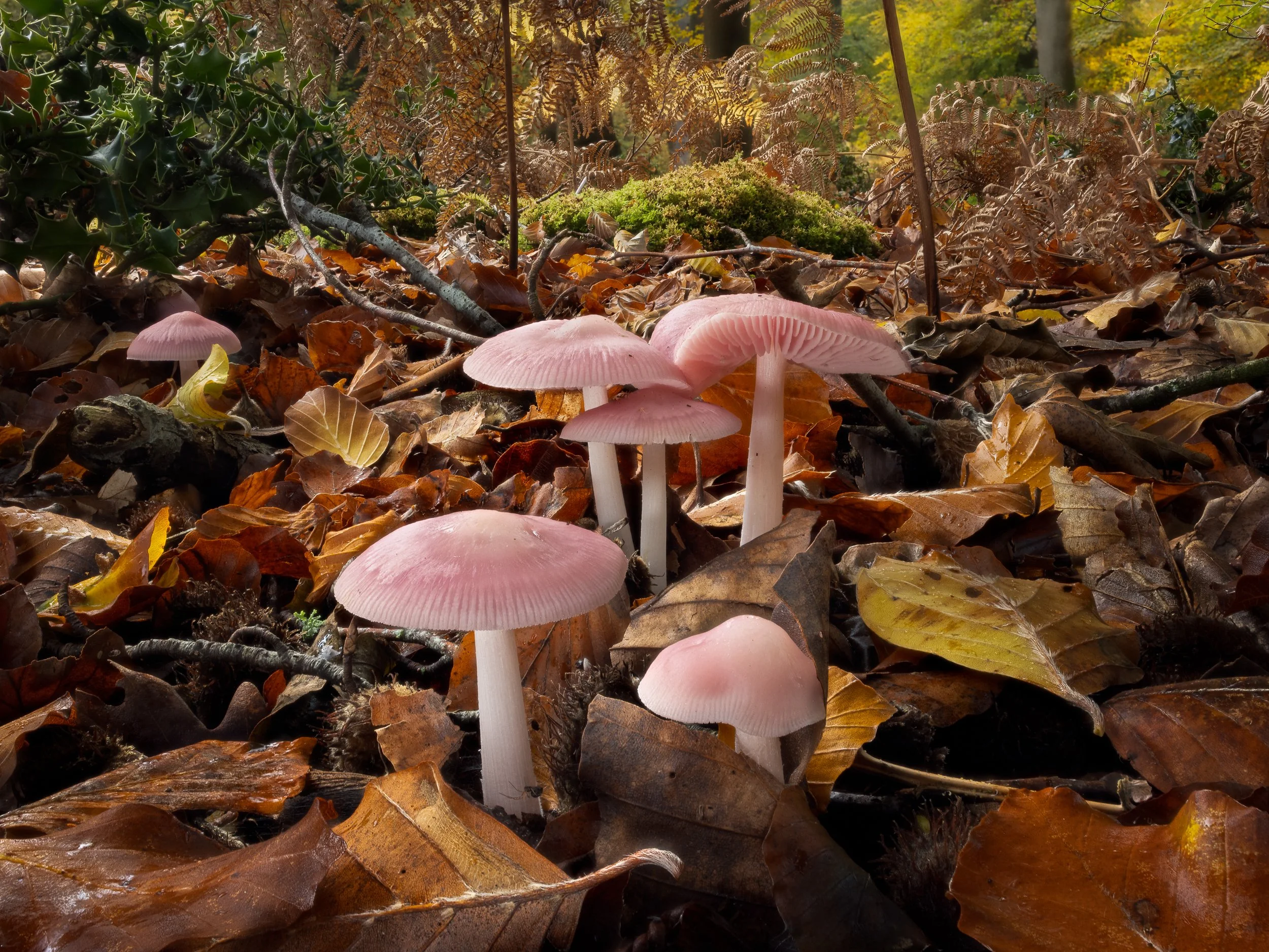
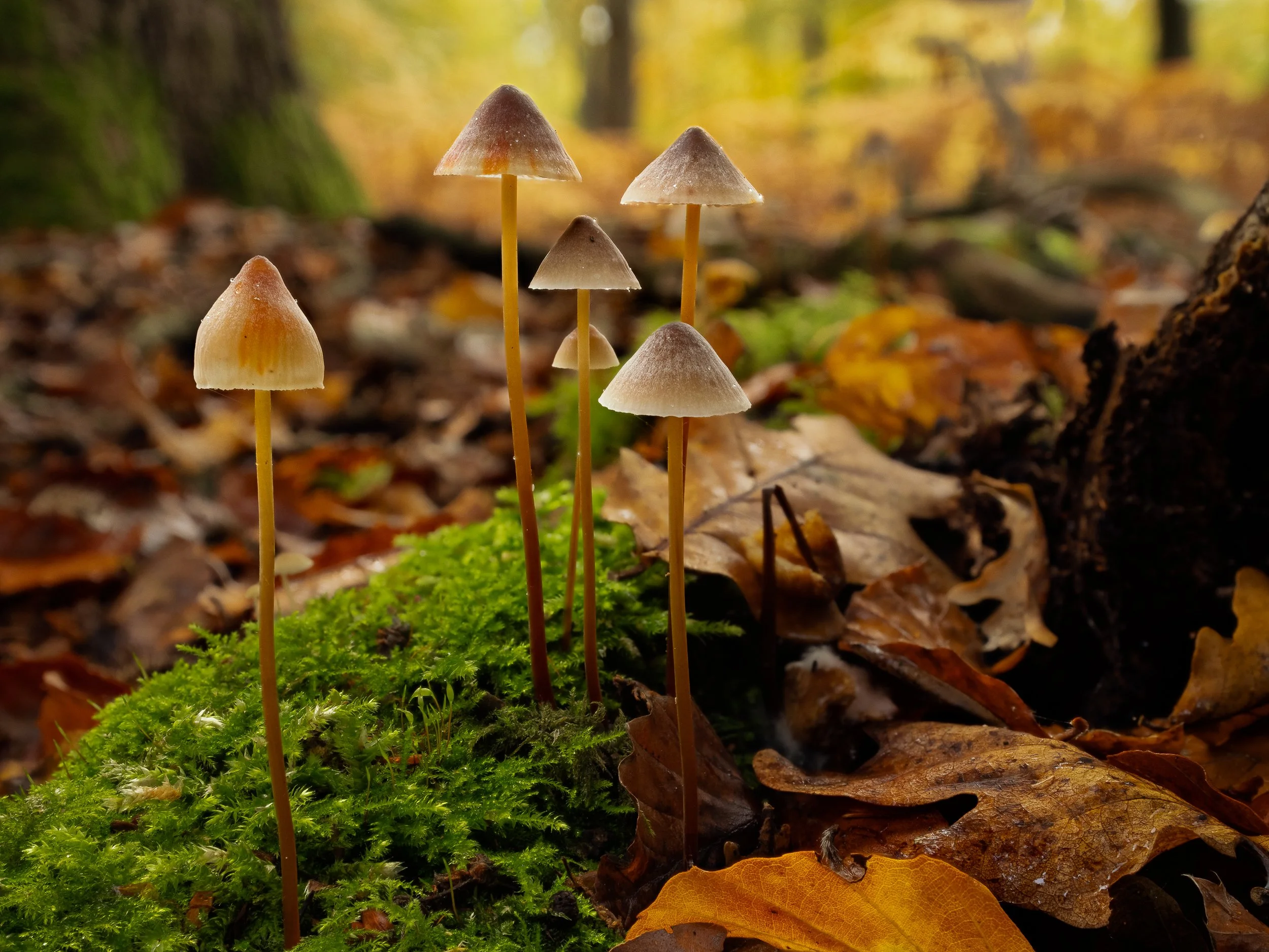
I was particularly drawn to some of the more unusual specimens. When I looked at them closely, there was something almost otherworldly about their appearance.
Photographing them also gave me an opportunity to experiment with different approaches to depth of field, lighting and composition.
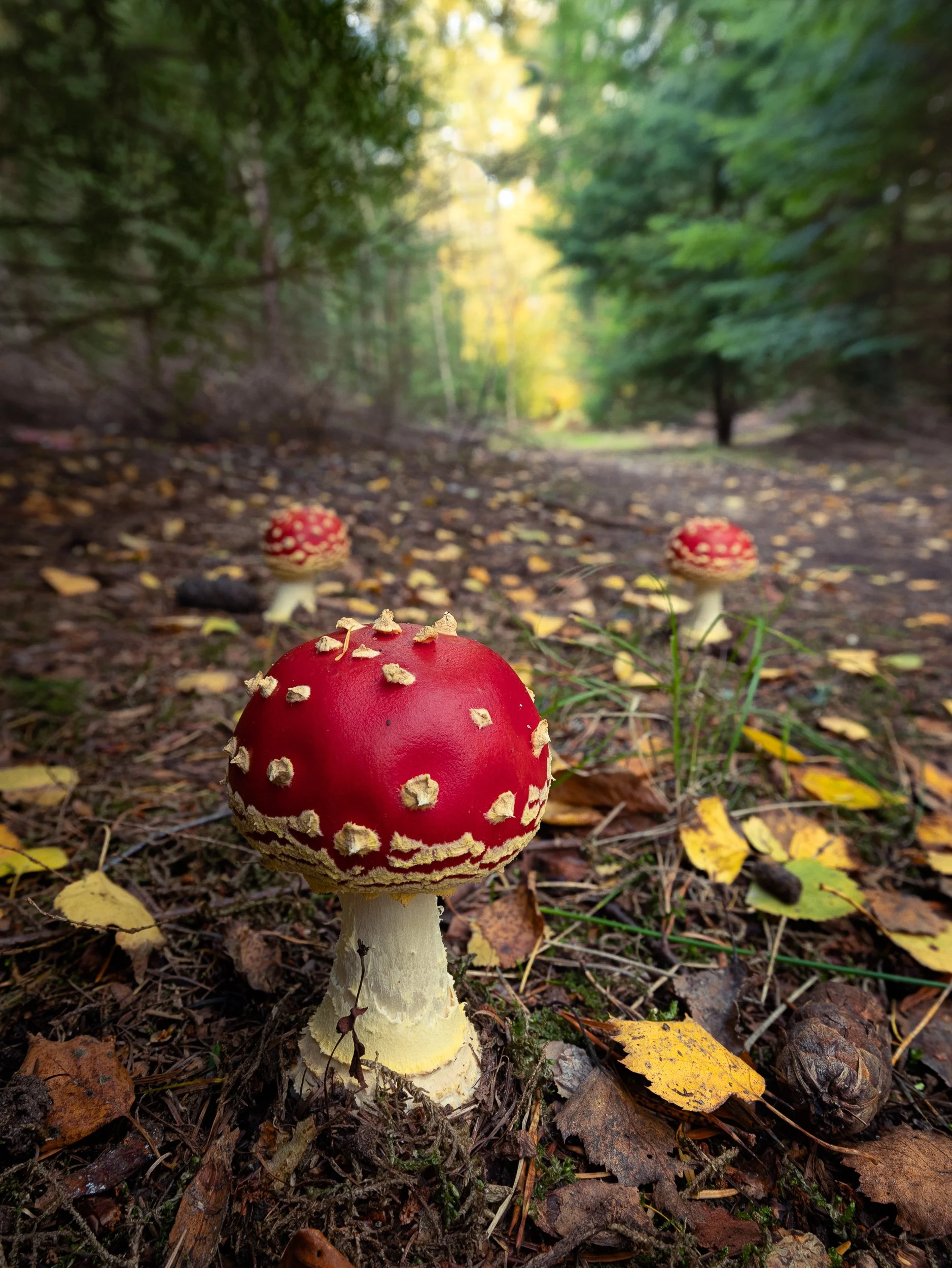
Amazing fly agaric in their woodlands
There were occasions when I wanted to reveal as much detail as possible, whilst on others I was more interested in creating a softer, more atmospheric image.
I enjoyed the fact that I did not necessarily have a preconceived idea of what the finished photograph should look like. Unlike in much of my woodland photography, I was exploring a subject for which I had fewer established habits.
There was a genuine sense of discovery, both in finding the fungi and in working out how I wanted to photograph them.
By the end of this autumn, I had made a firm commitment to ensuring that my fungi images would allude to the forest environment in which the fungi grew. For this, my Canon RF 15–35 mm f/2.8 and Canon RF 35 mm f/1.8 became my weapons of choice. These lenses allowed me to get in close and dirty whilst still showing the forest canopy in the background. I often made this background abstract through the use of a wide aperture and the resulting bokeh. I loved the fact that viewers needed to interpret this environment partly through their own imagination. This abstraction then set me off thinking about other techniques I could employ for the wider forest shots.
Exploring a more abstract autumn
At almost the opposite end of the spectrum from macro photography, I have also been experimenting with Intentional Camera Movement (ICM).
Having spent so much time photographing the intricate details of leaves and fungi, I found it interesting to explore what happened when I deliberately removed much of that detail.
[ICM woodland images]
Autumn photography offers a wonderful palette of colours to experiment with, and I was interested in seeing how those colours could be combined with the shapes and structures of the woodland to produce something more abstract.
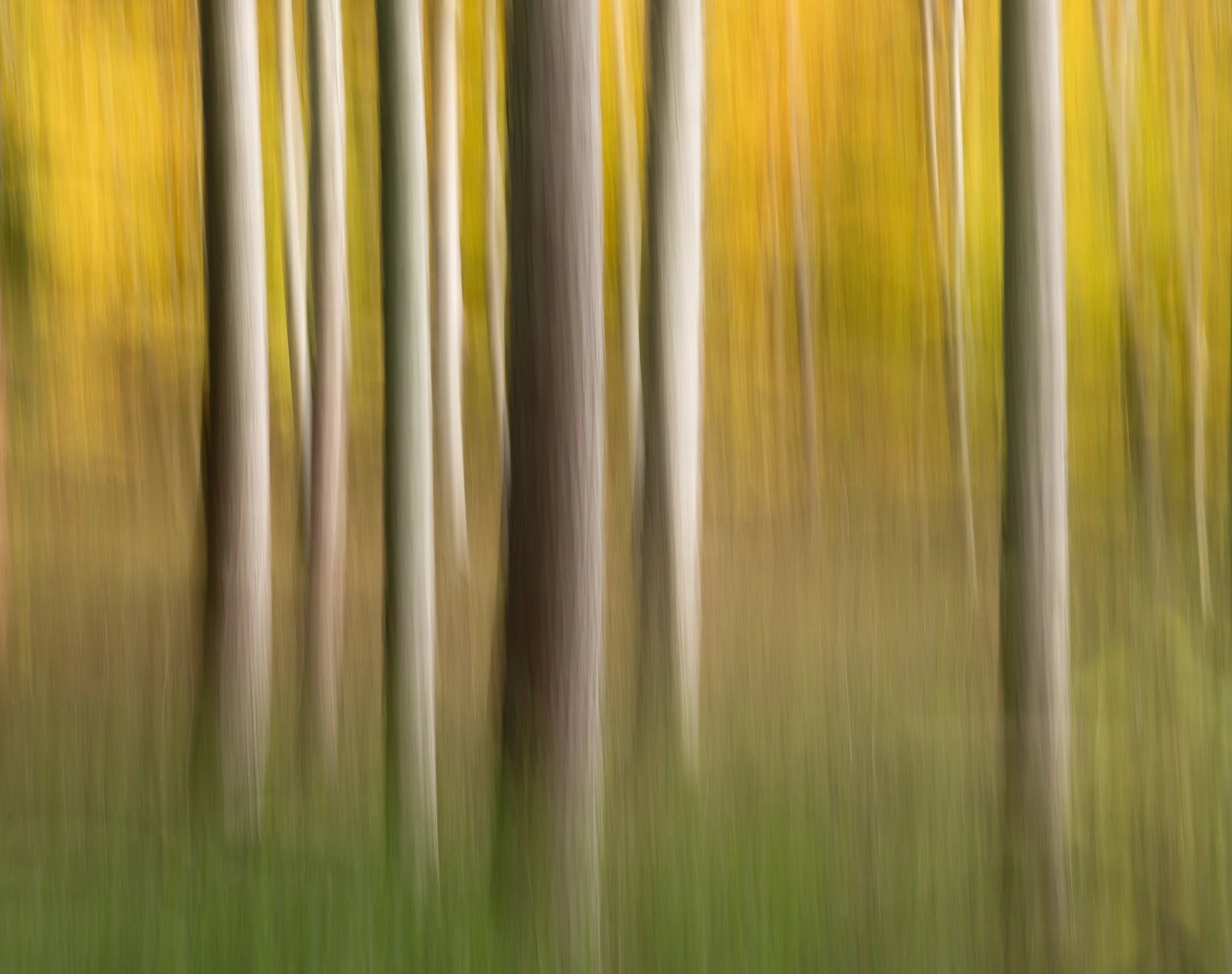
ICM image ½ second exposure. Vertical pan.
ICM is quite a departure from my normal approach. Much of my photography involves carefully considering a composition, controlling depth of field and paying close attention to detail.
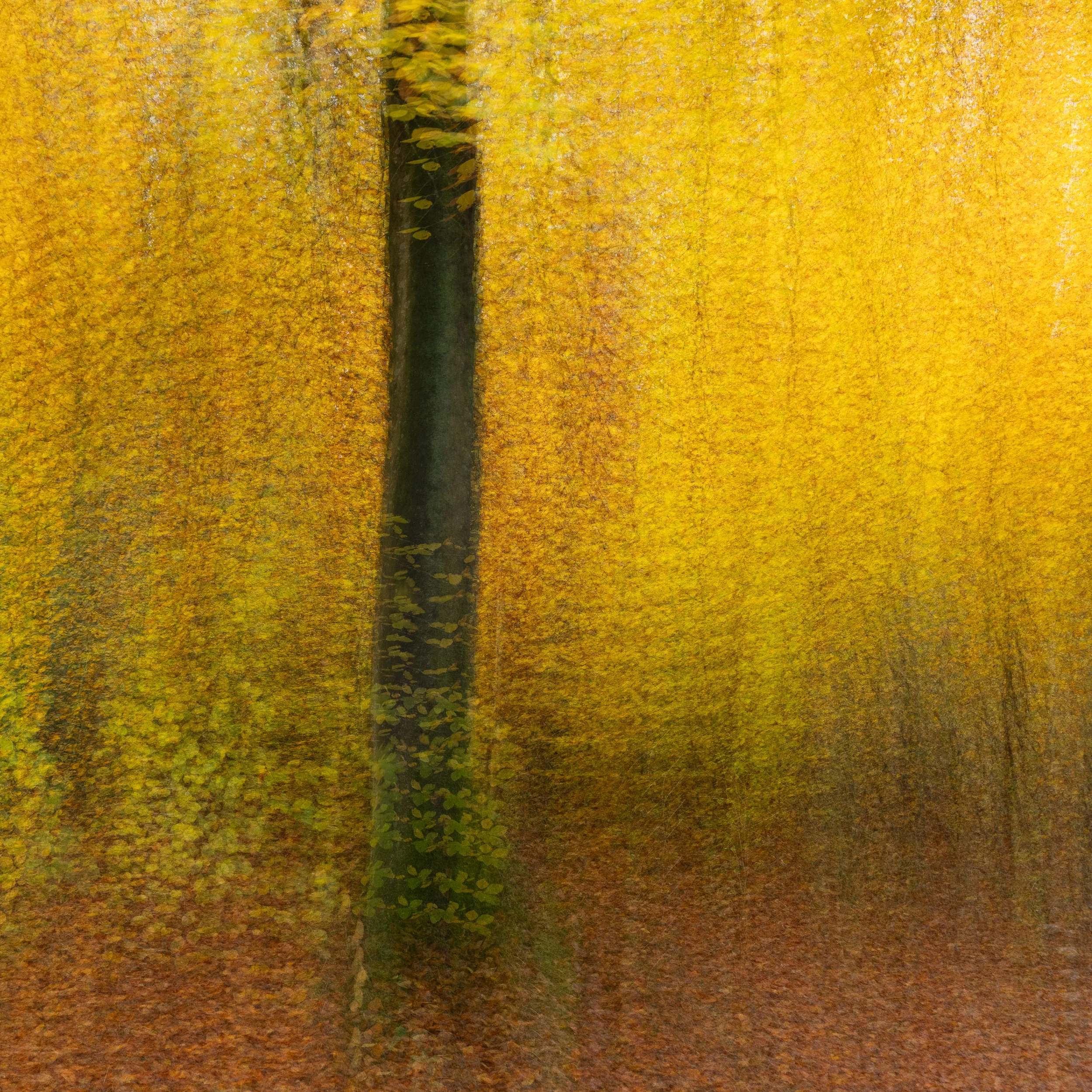
Multi exposure in-camera image with 9 exposures taken in Savernake Forest
With ICM, there is an element of relinquishing that control.
I found myself experimenting with different movements and exposures, often without really knowing what the resulting image would look like.
Not everything worked, but that was very much part of the appeal. The process of experimenting became almost as interesting as the resulting photographs.
What I particularly enjoyed was seeing familiar woodland subjects transformed into something that had quite a different character from my conventional images.
I used two techniques.
The first involved taking handheld shots with exposures of 1/5 to 1/2 second, panning vertically along the length of the trees whilst releasing the shutter. Lots of shots are needed, and it is just a question of choosing the right one at the end of the day.
The second technique was almost the opposite. I placed the camera on a tripod with a ball head. I had bought an incremental panning attachment (£20 from Amazon) for this, so that I could move the lens vertically in tiny, even increments. The camera was then placed in multiple-exposure mode and allowed to blend six to nine images in-camera. I then panned vertically, and the resulting image looks quite cool, I think. It is almost like Pep Ventosa’s method, but different. Adam Gibbs has recently made a YouTube video on this idea. I stole it from him!
Finding beauty in the imperfections
Another aspect of autumn that I have become increasingly interested in is the process of decay.
There is a tendency to associate autumn photography with trees at their peak of colour, but I found myself becoming equally interested in what happens afterwards.
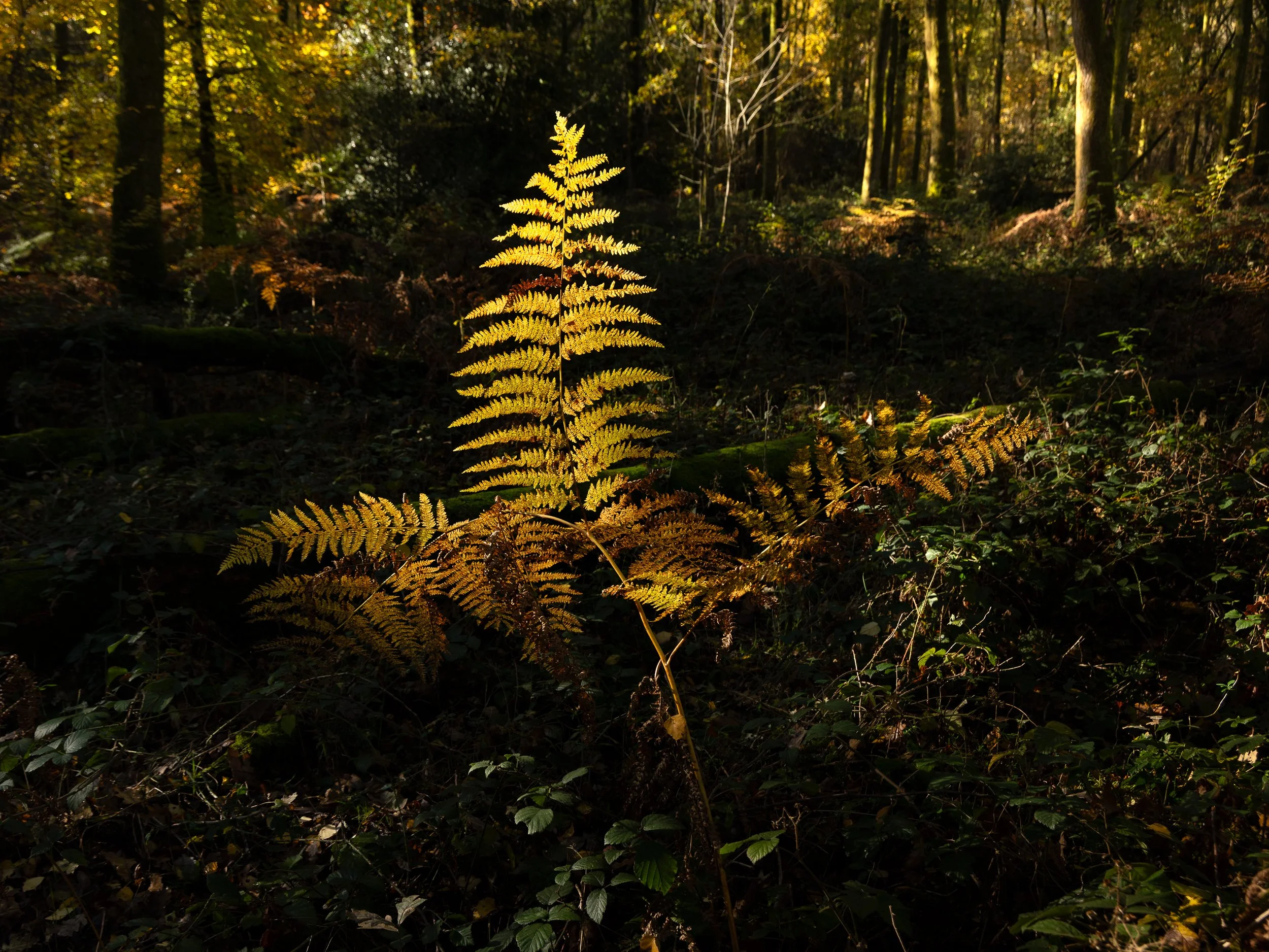
Dying fern in Savernake Forest bathes in the last of the autumn light
The damaged leaves, the deterioration of fungi and the gradual disappearance of colour all have their own photographic appeal.
Some of these subjects are things I would previously have dismissed, yet I found that looking beyond their obvious appearance often revealed something much more interesting.
Perhaps this is one of the benefits of deliberately setting out to photograph something different. It encourages me to reconsider what I regard as a worthwhile photographic subject.
Developing a broader portfolio
Looking back at my autumn photography this year, what pleases me most is the variety.
There are expansive landscapes, traditional woodland compositions, intimate details, macro photographs and abstract interpretations of the woodland.
Although the images are very different, they are all connected by the same environment and the same season.
I have not necessarily discovered any new photographic techniques, nor have I ventured particularly far from the subjects I have always enjoyed photographing. What has changed is my willingness to explore different ways of interpreting them.
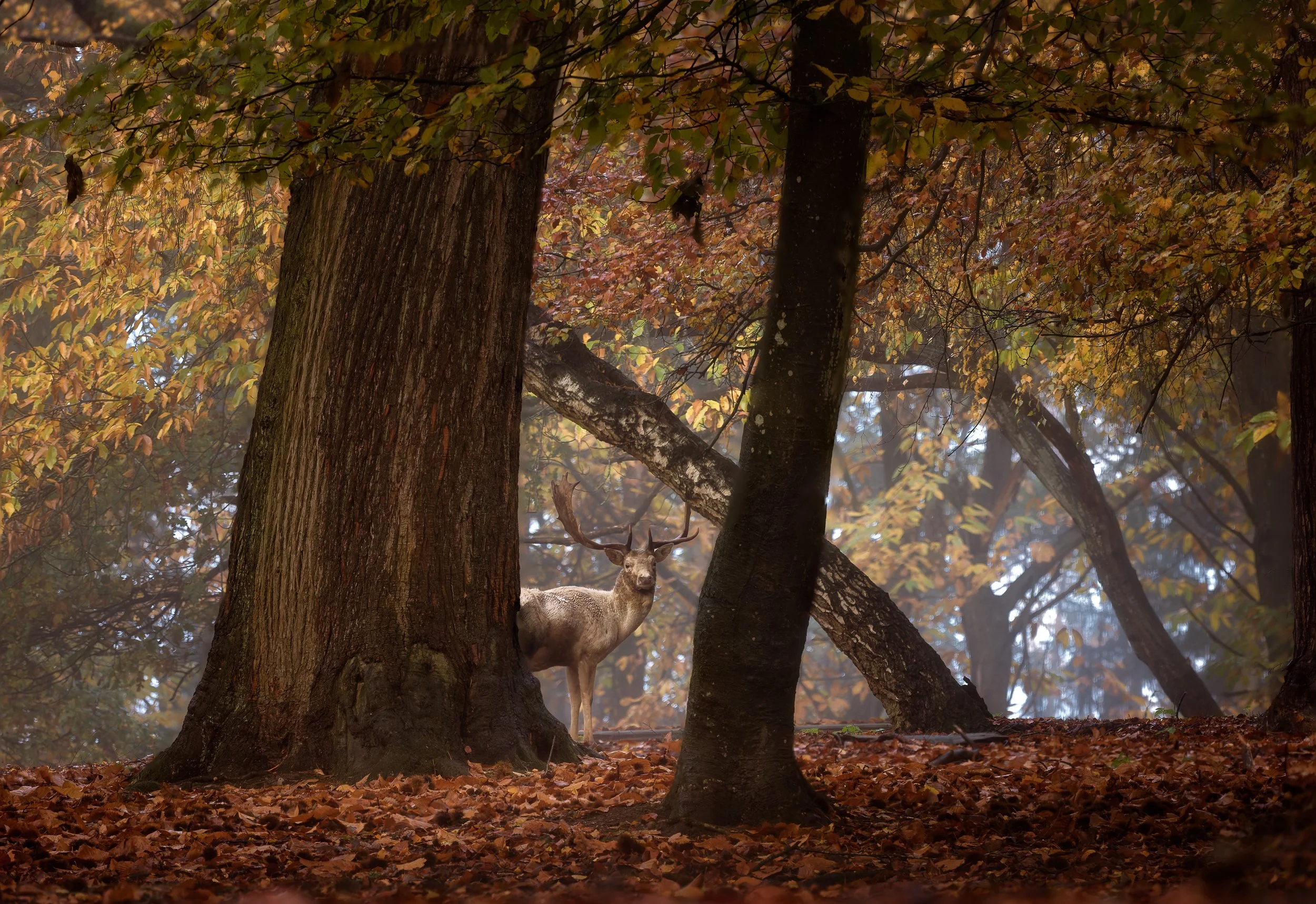
Photo bombed by a stag near my local woodlands in the South of England
I think there is a danger, particularly when we have been photographing for many years, of becoming comfortable with what we know works. Experimentation inevitably means producing photographs that are less successful, but it also provides an opportunity to discover something new.
I am not looking to change my photographic style completely. Instead, I want to broaden it, allowing myself a little more freedom to explore subjects and ideas that sit outside my usual approach.
Perhaps the most rewarding aspect of this autumn has been rediscovering that sense of curiosity in an environment I thought I already knew so well.
Don’t forget that my ebook on woodland photography techniques can be found on my shop page here.
Let me know what you think about any of the images and ideas. Do you love them? Hate them?