
Scotland is home to some of Britain's most spectacular mountain and coastal scenery, but choosing the best destinations in Scotland isn't always straightforward, particularly when the weather takes control.
Whether you're exploring Scotland by campervan, planning a holiday or travelling specifically for landscape photography, the Highlands, Isle of Skye and Outer Hebrides offer extraordinary scenery. Mountains, wild Atlantic seascapes, ancient woodlands and beautiful beaches provide endless opportunities to explore and take photographs.
After 40 years of photographing Scotland, I've learned that October is one of the most rewarding months to visit. The days are shorter, the sun is lower, and the weather can deliver everything from beautiful autumn light to ferocious Atlantic storms.
For this two-week journey, I wanted to concentrate on three subjects: mountains, woodlands and seascapes. My route would take me through Glencoe, west to Ardnamurchan, across Skye and into the Outer Hebrides.
I knew the weather would be unpredictable. That was part of the attraction. What I hadn't anticipated was quite how much it would change my plans.
A note on safety: The Scottish Highlands can be beautiful but dangerous, particularly in darkness or bad weather. Good navigation, suitable equipment and an understanding of mountain conditions are essential. I've covered this in more detail in last year’s YouTube video, which covers mountain safety towards the second half
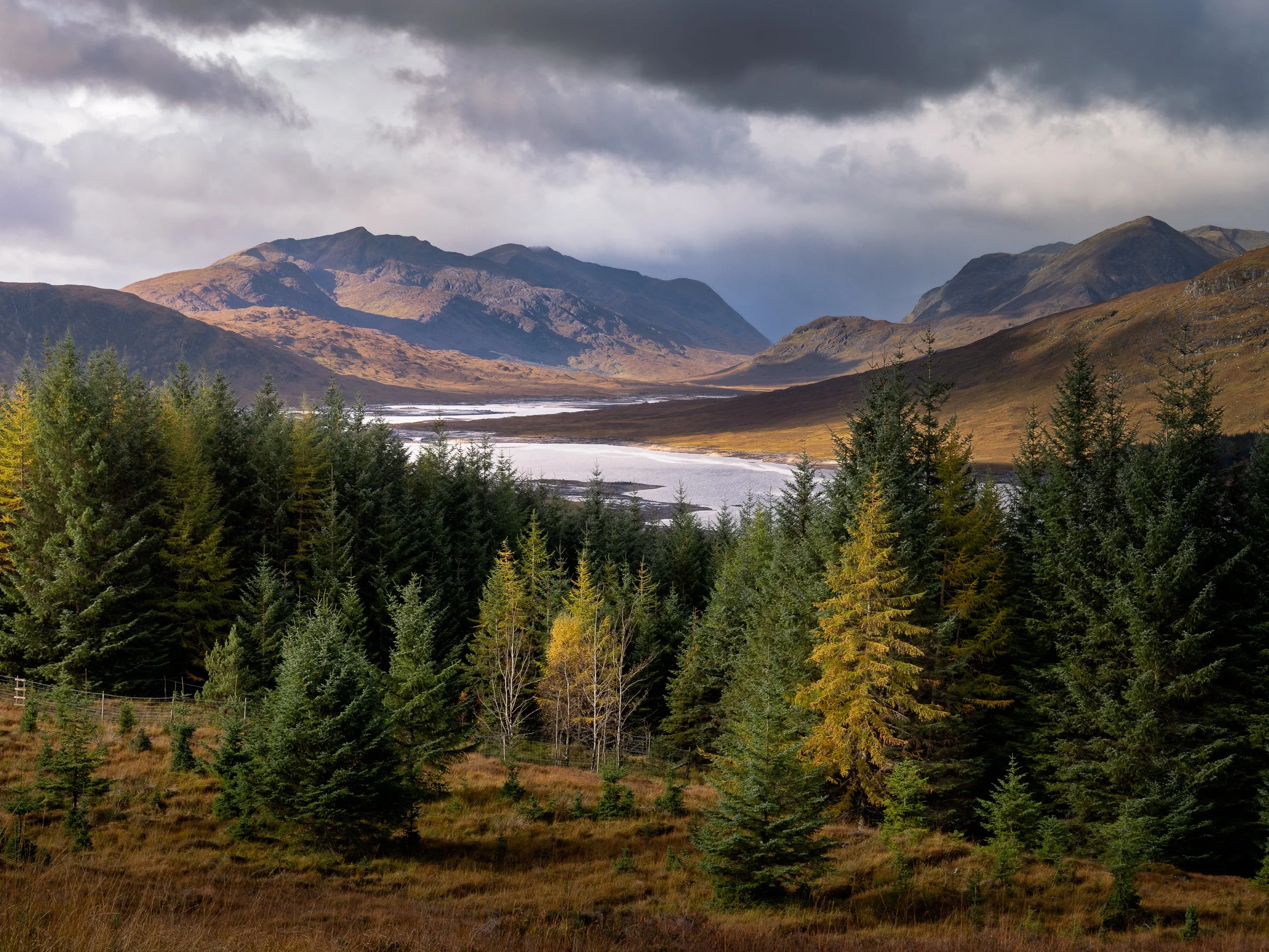
View across Loch Loyne near Fort Augustus, Scotland
Why October is one of the best times to visit Scotland
For me, October offers several advantages over summer, especially when it comes to enjoying and photographing the landscape.
The lower sun produces longer shadows and directional light that extends well beyond the traditional golden hours. Mountains reveal their shape through the contrast between illuminated ridges and deep valleys, while woodland benefits from softer light filtering between the trees.
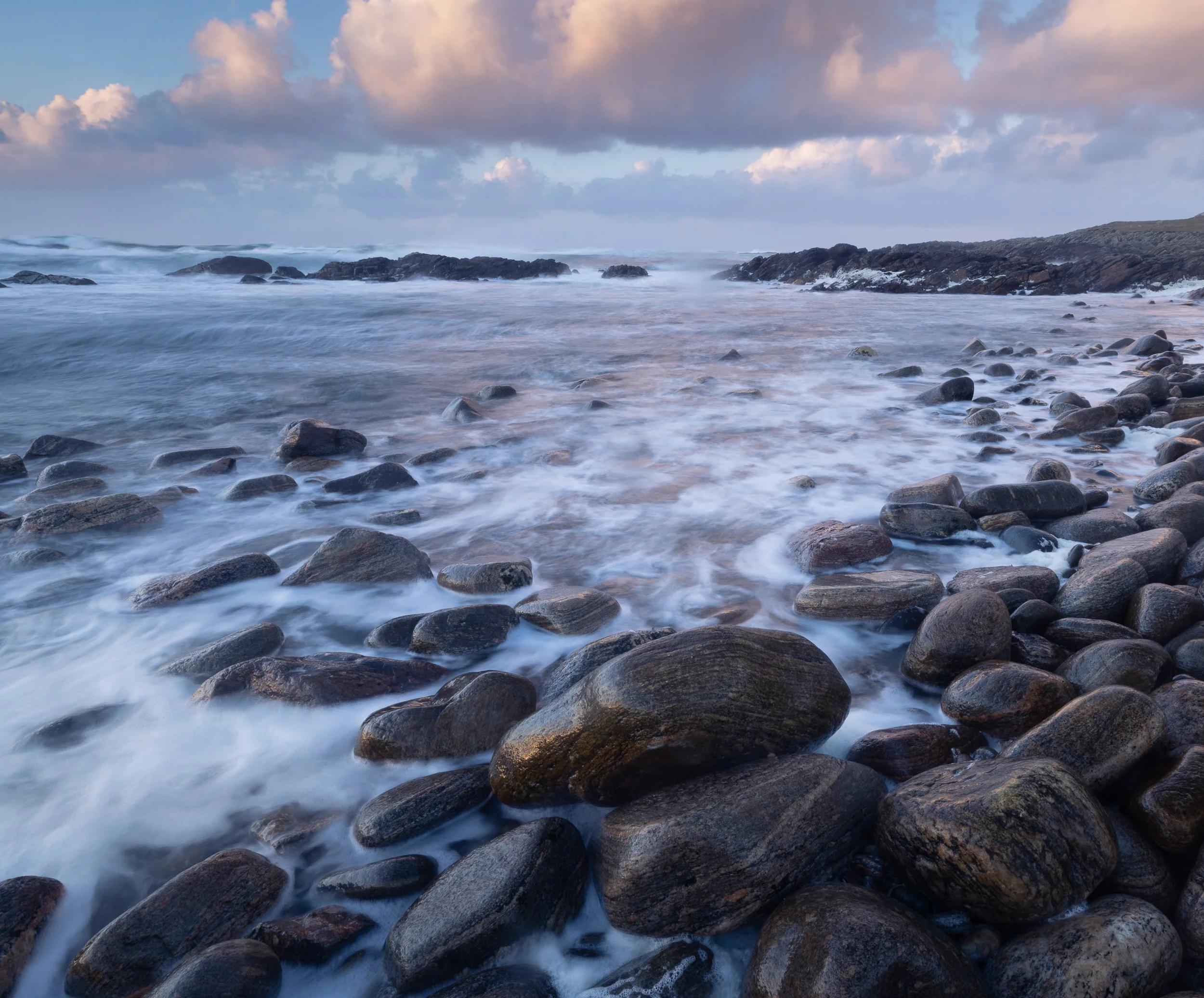
North Uist seascapes as the Atlantic storms approach
Sunrise is also at a more civilised hour, although that advantage disappears when you need several hours to climb a mountain beforehand. At least the shorter days make it possible to photograph dawn, sunset and even the stars without entirely sacrificing a night's sleep.
October also brings the possibility of early snow on the summits, rainbows following passing showers, wild seas and cloud inversions. Temperatures can fall below freezing at altitude, but without the prolonged cold of midwinter.
There is another advantage: considerably fewer midges than during the summer months!
Of course, none of these conditions is guaranteed. There was very little snow this year, but certainly no shortage of wind and rain as usual.
What are the best areas of Scotland to visit?
It's difficult to choose a single best destination in Scotland. Glencoe offers magnificent mountain scenery, Ardnamurchan combines wild coastlines with atmospheric woodland, Skye has extraordinary mountain ridges, while Harris and Uist are renowned for their expansive Atlantic beaches.
All are wonderful places to explore, whether you're carrying a professional camera or simply taking photographs on your phone.
However, the best location on any particular day often depends on the weather, tides and light.
And in Scotland, those conditions can change remarkably quickly.
Scotland by campervan: letting the weather decide
My original plan was to travel clockwise, allowing me to visit certain coastal locations on Uist at more favourable tides. The accompanying interactive map shows my planned route in red and my actual journey in blue. (The map is interactive and can be zoomed)
Unfortunately, a succession of Atlantic storms disrupted ferry services. Sailings were cancelled or delayed, forcing considerable detours and eventually an anticlockwise journey.
Fortunately, Caledonian MacBrayne (CalMac) are well accustomed to these conditions. Rearranging ferries by telephone was generally straightforward, although this year the diversion/delays resulted in extra driving costs, fuel, time and mileage.
This is where travelling around Scotland by campervan really comes into its own. My VW provides the freedom to change direction, spend longer somewhere productive or move on when conditions improve elsewhere. October is also a good time for finding suitable overnight, off-grid, parking locations for free, or reasonably priced campsites when I need a shower, laundry and a complete recharge.
For daily decisions, I rely heavily on the free Mountain Weather Information Service (MWIS). Forecasts usually allow me to make reasonably reliable plans about two days ahead. I would be reluctant to commit to a particular photography location much further in advance.
Glencoe: two minutes of extraordinary sunrise
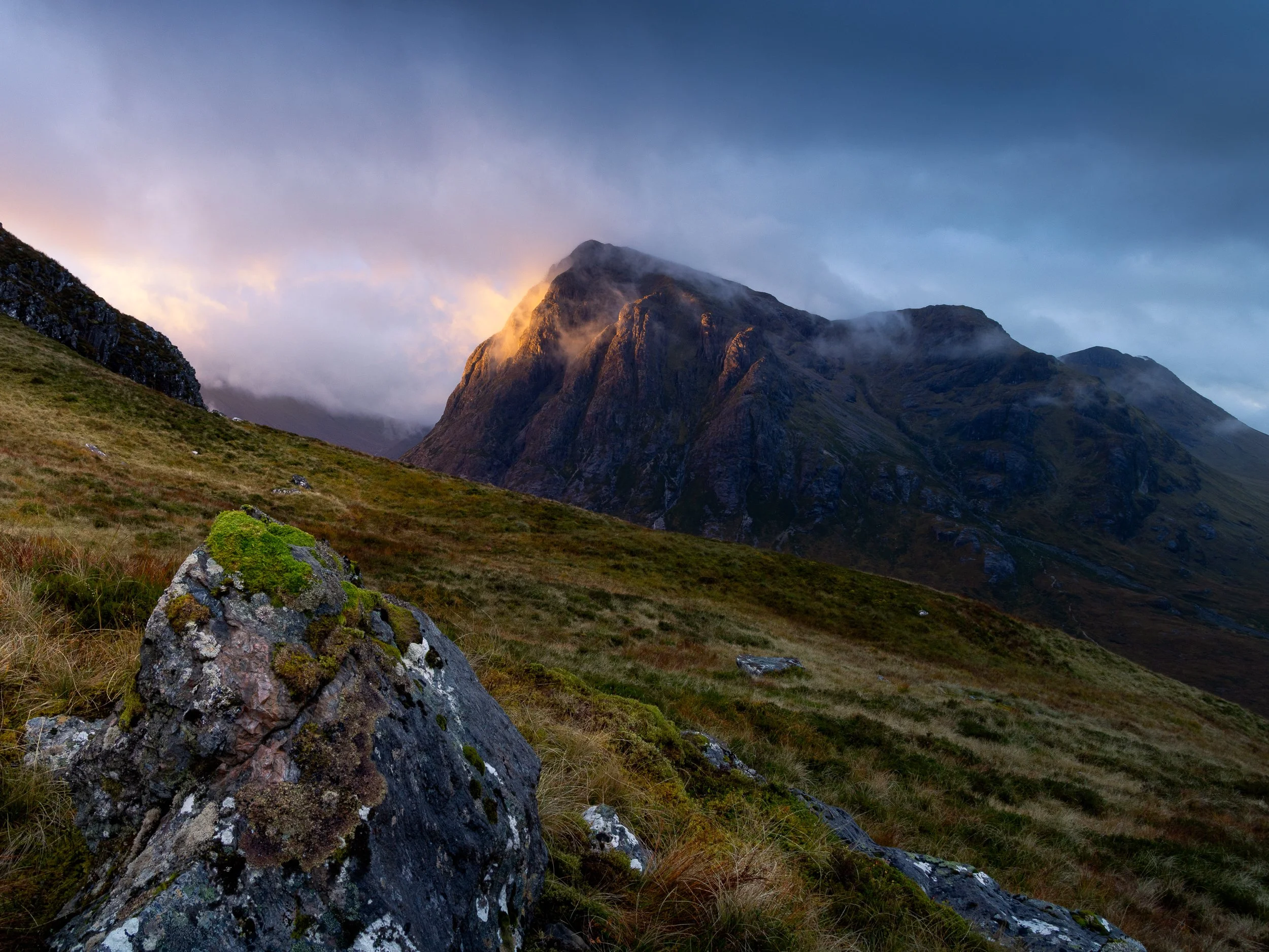
Sunrise glances briefly on Buachaille Etive Mòr
My first mountain excursion was Beinn a' Chrùlaiste, overlooking one of Scotland's most recognisable mountains, Buachaille Etive Mòr. The climb began in darkness with a head torch, hoping to reach my chosen viewpoint before sunrise.
Unfortunately, the mountain was largely clagged in, with little visibility. However, the forecast suggested there might be occasional breaks in the cloud. Then, quite suddenly, a narrow beam of sunlight struck Buachaille Etive Mòr. The effect was extraordinary, but lasted perhaps two minutes.
I was rushing to set up the tripod and camera in the half-light, knowing the opportunity might disappear at any moment. With exposures approaching a second, handheld photography wasn't an option. It was a reminder of how fleeting mountain light can be, and why arriving early enough to prepare properly is so important.
Afterwards, I enjoyed breakfast on the summit, watching occasional sunlight glance across Rannoch Moor, until the cold finally persuaded me to descend.
Ardnamurchan: missing sunrise but finding something else
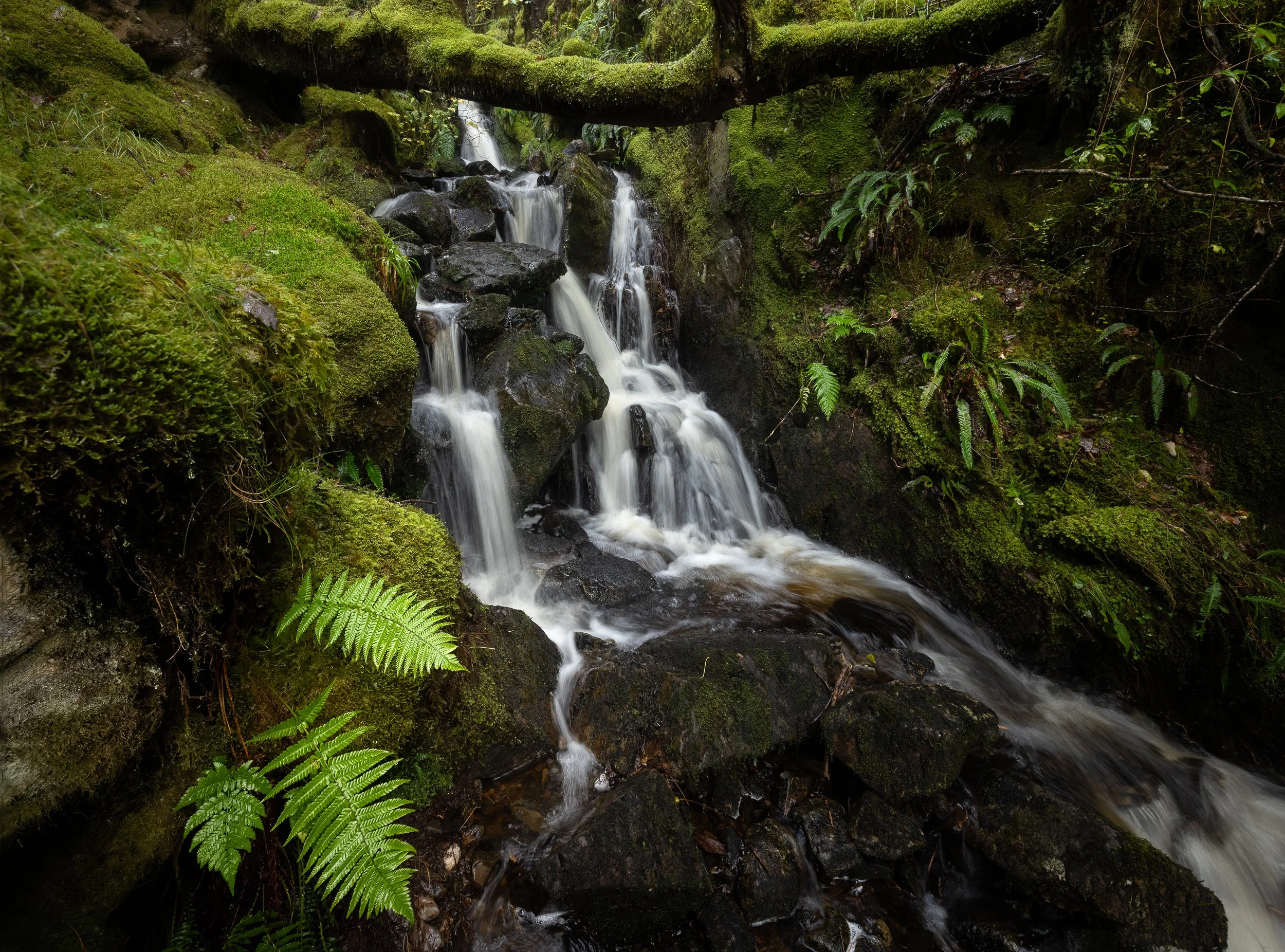
Forest in Ardnamurchan, Scotland
My next mountain was Beinn Resipol, rising above the Ardnamurchan peninsula. Another 5am start, with head torch and GPS mapping, was required. Unfortunately, extremely boggy conditions slowed my ascent, and I missed the best of the early light.
The views weren't quite what I had hoped for, but shifting cloud produced atmospheric scenes, with shafts of sunlight breaking through onto the surrounding landscape.
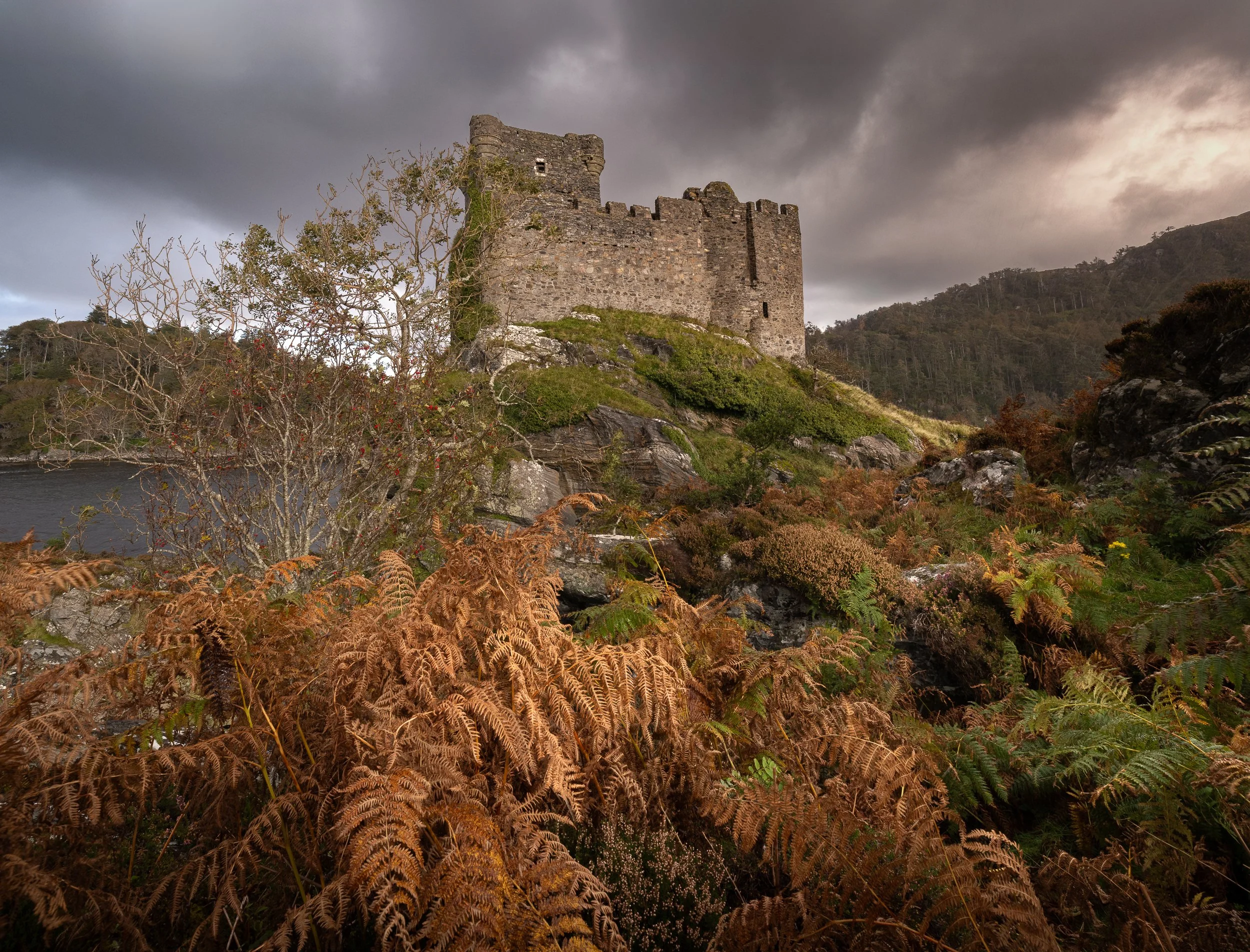
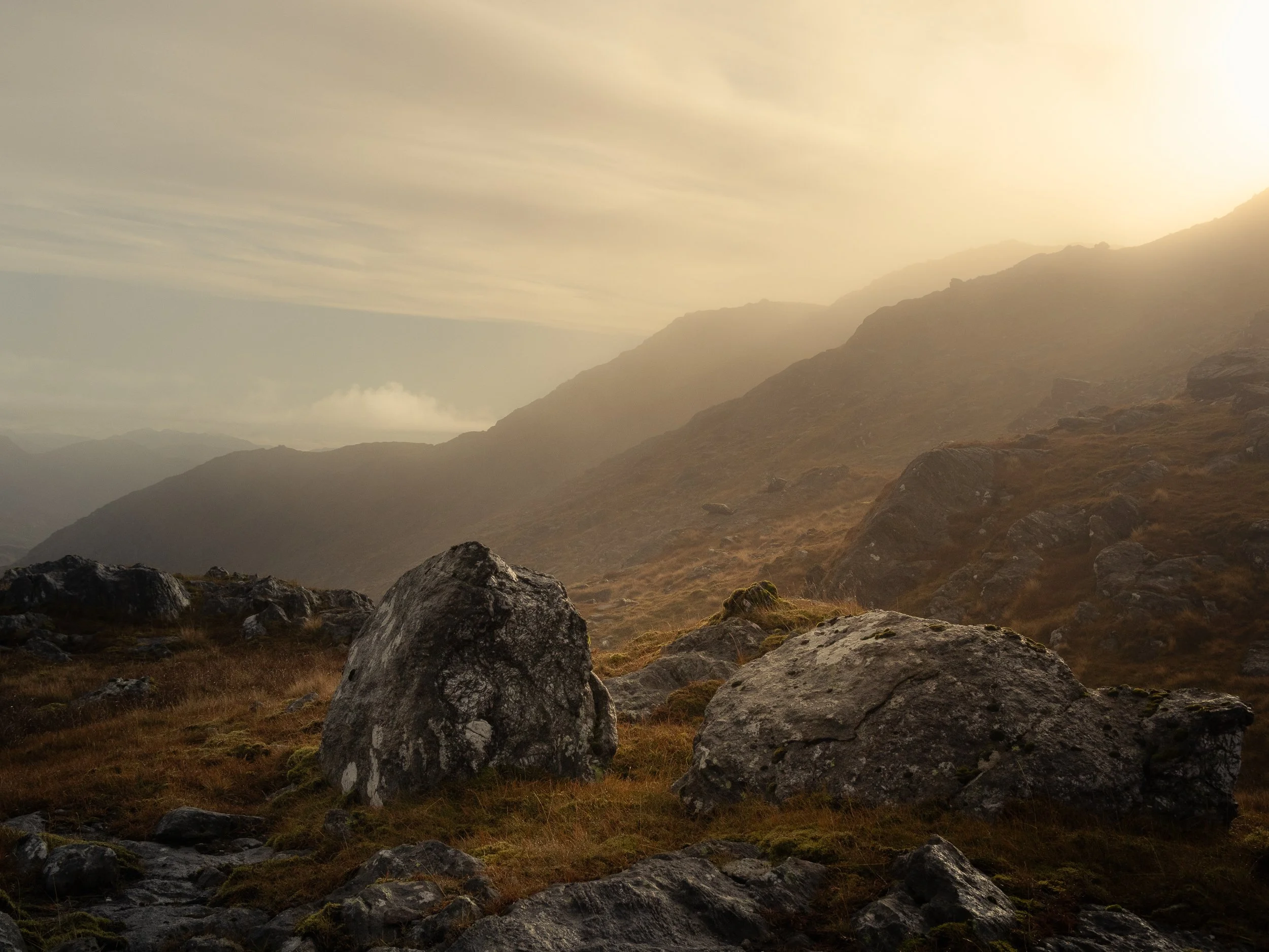
Ardnamurchan also provided some of the most rewarding woodland photography of the trip. I stayed two days longer than planned after high winds and seas cancelled my intended ferry from Mallaig to South Uist.
What initially seemed an inconvenience became a photographic opportunity. Rain and overcast skies were ideal beneath the trees, where wet foliage, moss-covered trunks and autumn colour offered wonderful subjects. Some of the best photography locations in Scotland become even more attractive in poor weather, particularly the ancient woodlands of the west coast.
Eventually, I abandoned the original ferry crossing and took the longer road route towards Skye. The extra miles were frustrating, but the scenery provided plenty of distractions.
Blà Bheinn: above the clouds on Skye
Blà Bheinn, also known as Blaven, had defeated my photographic ambitions the previous year when I climbed it in a complete whiteout.
This time the forecast promised low summit winds and potentially good light. I set off at 4.45am, taking approximately two hours and fifteen minutes to ascend in darkness. Having climbed the route previously was invaluable; this is difficult terrain and not somewhere I would recommend attempting an unfamiliar ascent by head torch.
As dawn arrived, the Red Cuillin began glowing in the early light. Beyond them, the dramatic Black Cuillin ridge stretched across the landscape, with clouds and mountain tops below my position.
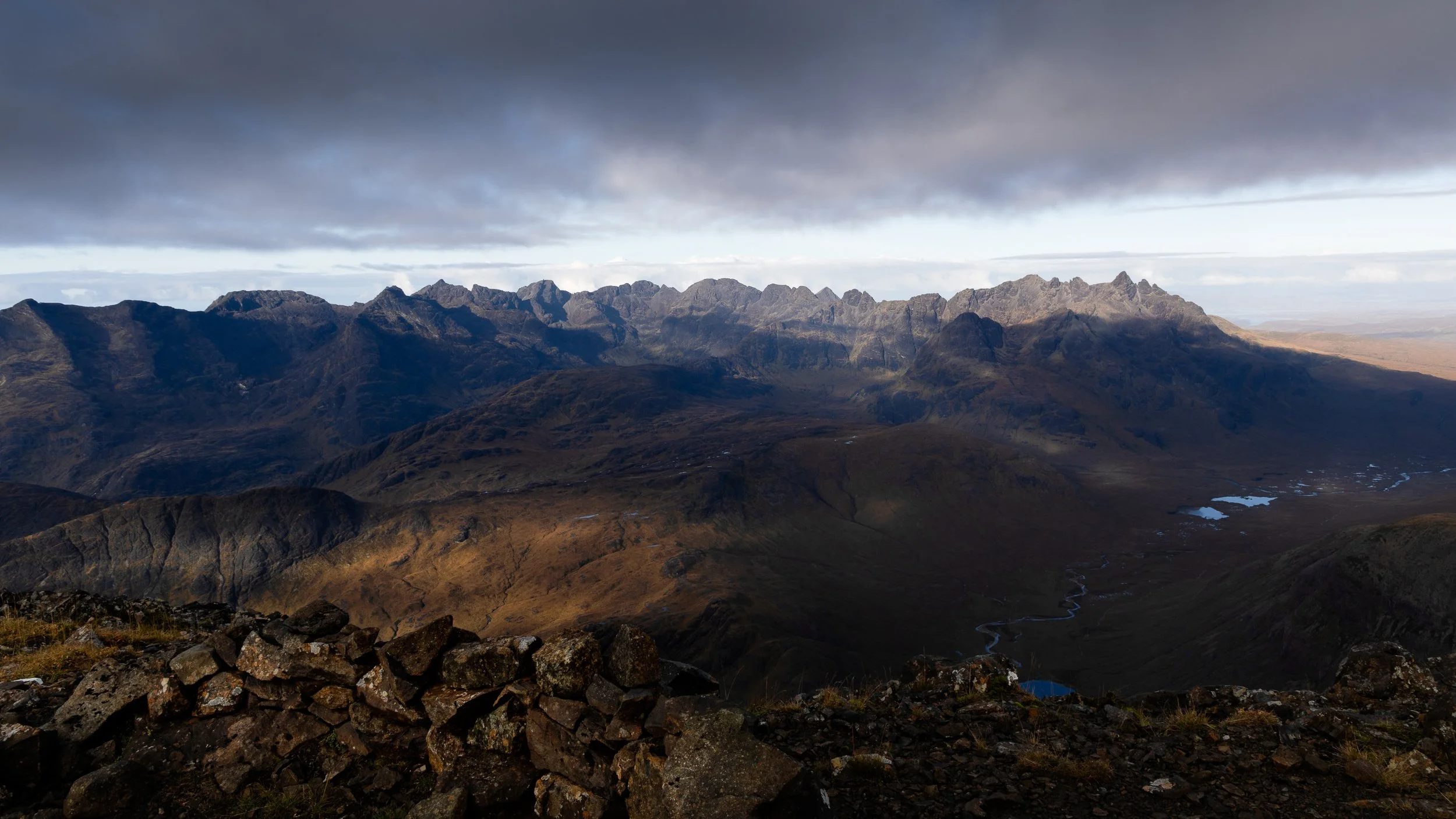
Black Cuillin ridge, Isle of Skye at sunrise. For scale the ridge in front takes 2 days to traverse. Ropes required in places.
The elevated viewpoint gave an extraordinary sense of the scale of the surrounding mountains.
I also met Elliott, who had run up to complete his final Munro. We chatted about his remarkable achievement, particularly his traverse of the Cuillin Ridge.
Scotland has 282 Munros, mountains rising at least 3,000 feet (914.4 metres) above sea level. Blà Bheinn reaches approximately 929 metres. While that might not sound particularly high, many Scottish mountains involve significant ascents from near sea level across demanding terrain. A typical Munro can easily require four to eight hours of walking and climbing. Unless, of course, you're running like Elliott!
After the disappointment of the previous year, I was delighted to have finally experienced Blà Bheinn in such beautiful conditions.
Harris and Uist: wild Atlantic seascapes
The journey continued from Uig on Skye to Tarbert on Harris.
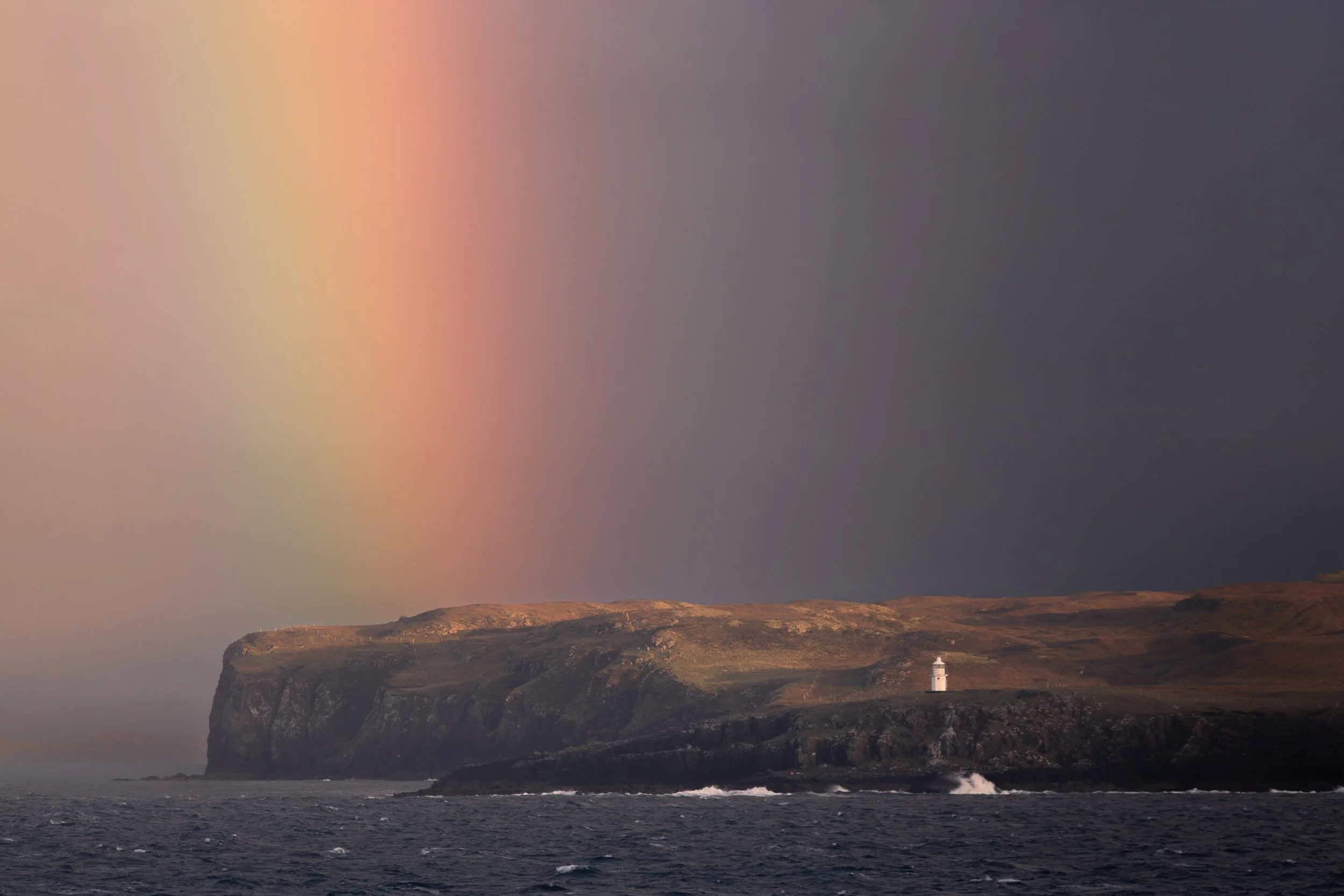
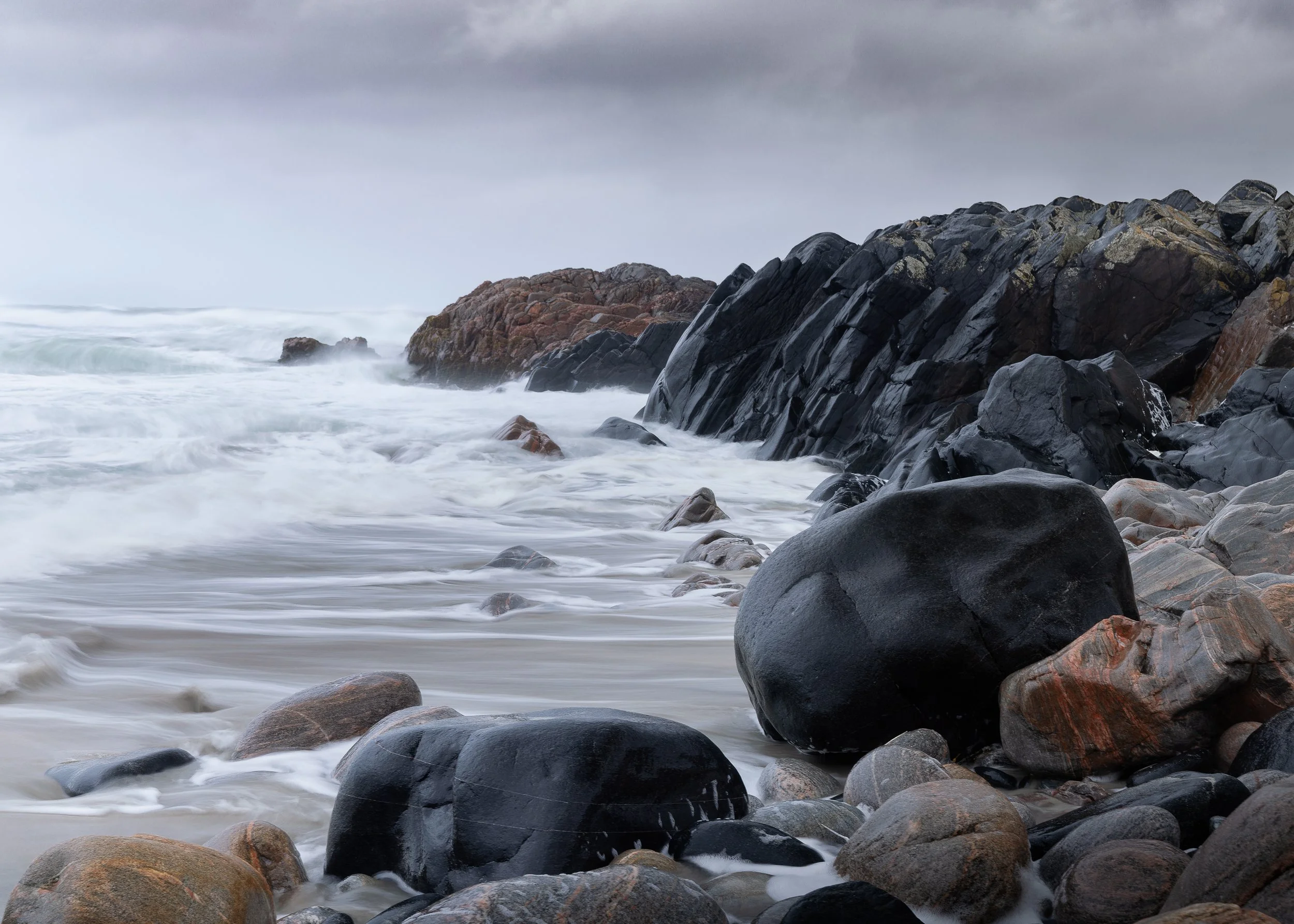
Harris is undoubtedly one of the best areas of Scotland to visit for beaches and coastal scenery. Luskentyre is the famous destination, but my revised itinerary brought unfavourable high tides at dawn. Instead, I concentrated on Seilebost, where storm-driven seas crashed over rocks with mountains providing a magnificent backdrop.
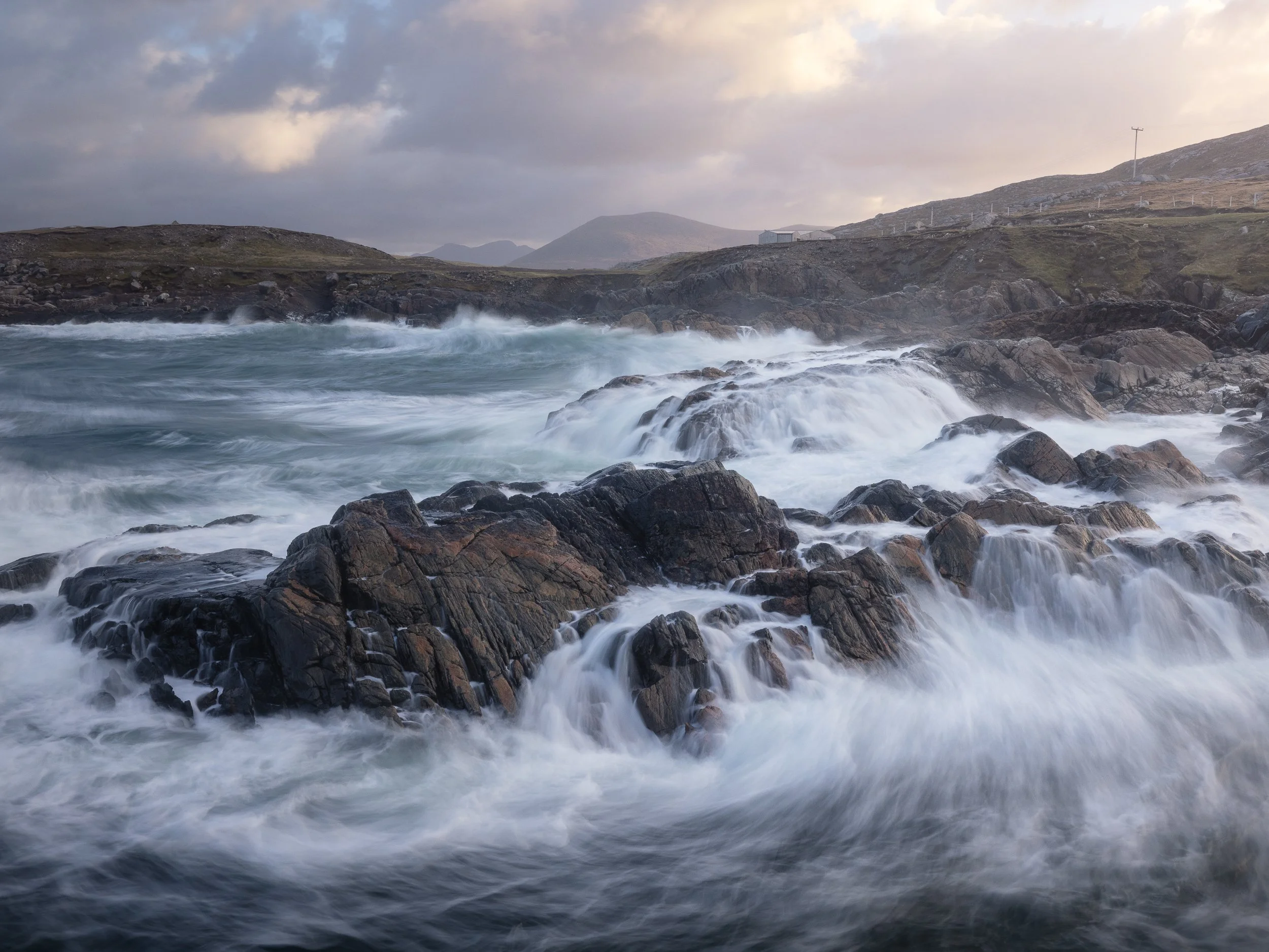
Storms hit the rocks at Seilebost on Isle of Harris
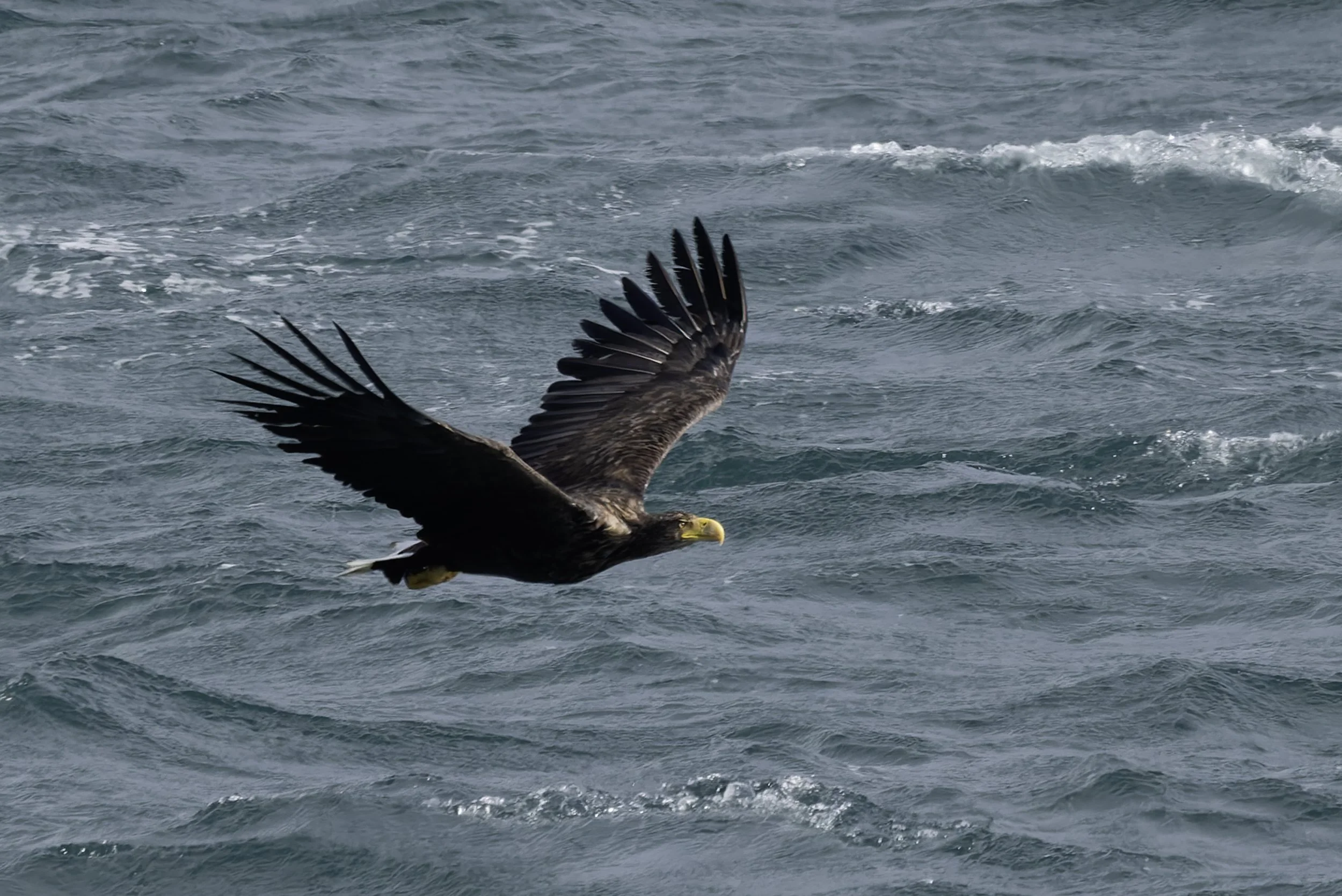
White Tailed Eagle flyby on ferry to North Uist, Scotland
From Leverburgh on the Isle of Harris, I caught the ferry to Berneray. The vessel pushed through heavy seas between small islands while I attempted to photograph a passing white-tailed eagle from the deck.
The weather was about to become considerably worse……
North Uist: photographing an Atlantic storm
On North Uist, winds reached approximately 85mph.
At one point I was genuinely concerned that the roof of my campervan might be torn off. I sheltered at a campsite for two days, restricting photography to locations accessible on foot around Hosta and Balranald Nature Reserve, which is an excellent destination for wildlife photographers.
I ventured out to photograph the storm as it struck the coastline.
The seas were extraordinary, although photographs never quite convey the scale and violence of conditions like these.
I stopped shooting as the rain arrived. The walk back was exhausting. Horizontal rain and hail battered me in powerful gusts, and reaching the relative shelter of my violently rocking campervan was an enormous relief. I held tight and put the kettle on. A cup of tea always helps in a crisis.
These conditions can produce memorable photographs, but personal safety must always come first.
South Uist was less productive photographically. The tides and weather worked against me, although I found its flat, almost surreal landscape fascinating. I spent time scouting locations, identifying potential compositions and considering where a drone might provide the additional height needed to capture the extraordinary shapes of the coastline.
Sometimes a journey is as much about preparing for the next visit as taking photographs on this one.
Returning to Skye and Glencoe
After crossing from Lochmaddy to Uig, I returned to the Quiraing for sunrise before travelling south over the Skye Bridge towards Glencoe. Conditions at the Quiraing weren't particularly inspiring, although beautiful light appeared towards the mainland.
My final mountain was Beinn Trilleachan, a Corbett rising above Glen Etive.
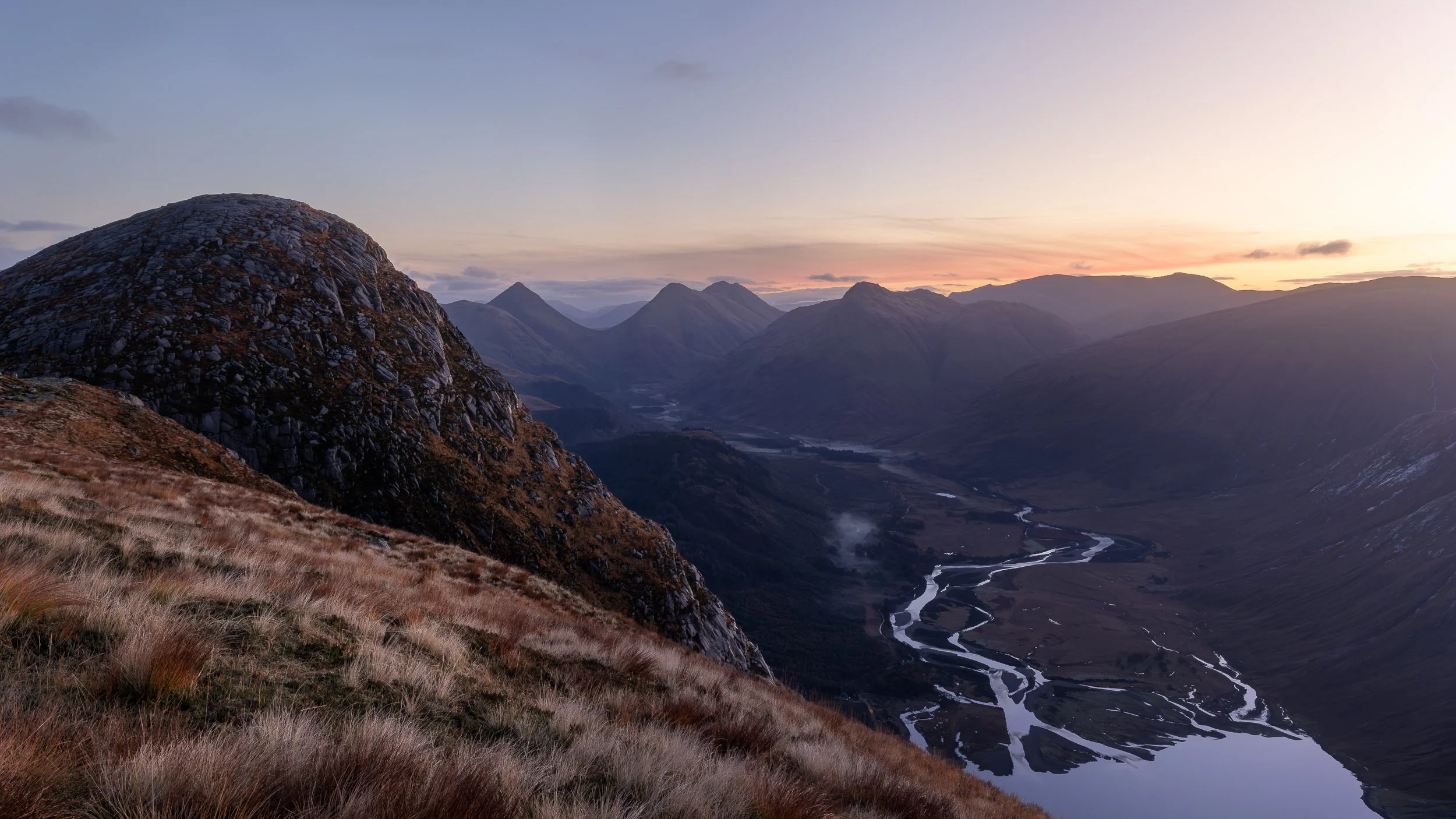
View into Glen Etive from the summit of Beinn Trilleachan
I had considered wild camping near the summit but arrived too late, deciding that a pre-dawn ascent would be the safer option. At 4.30am, I set off with my head torch into the darkness on a mountain I hadn't previously climbed.
Conditions were becoming colder. Ice and frozen hail made the ground slippery, and temperatures were around -1°C when I reached the top. Looking back along Glen Etive towards the Glencoe mountains, I was rewarded with wonderful early side light catching the foreground slopes. It was exactly the kind of directional light that makes October so appealing, revealing the textures and contours of the landscape.
I also identified a possible high-level camping location for another visit, although the arduous descent through deep, pathless bog might make me reconsider!
Let Scotland decide
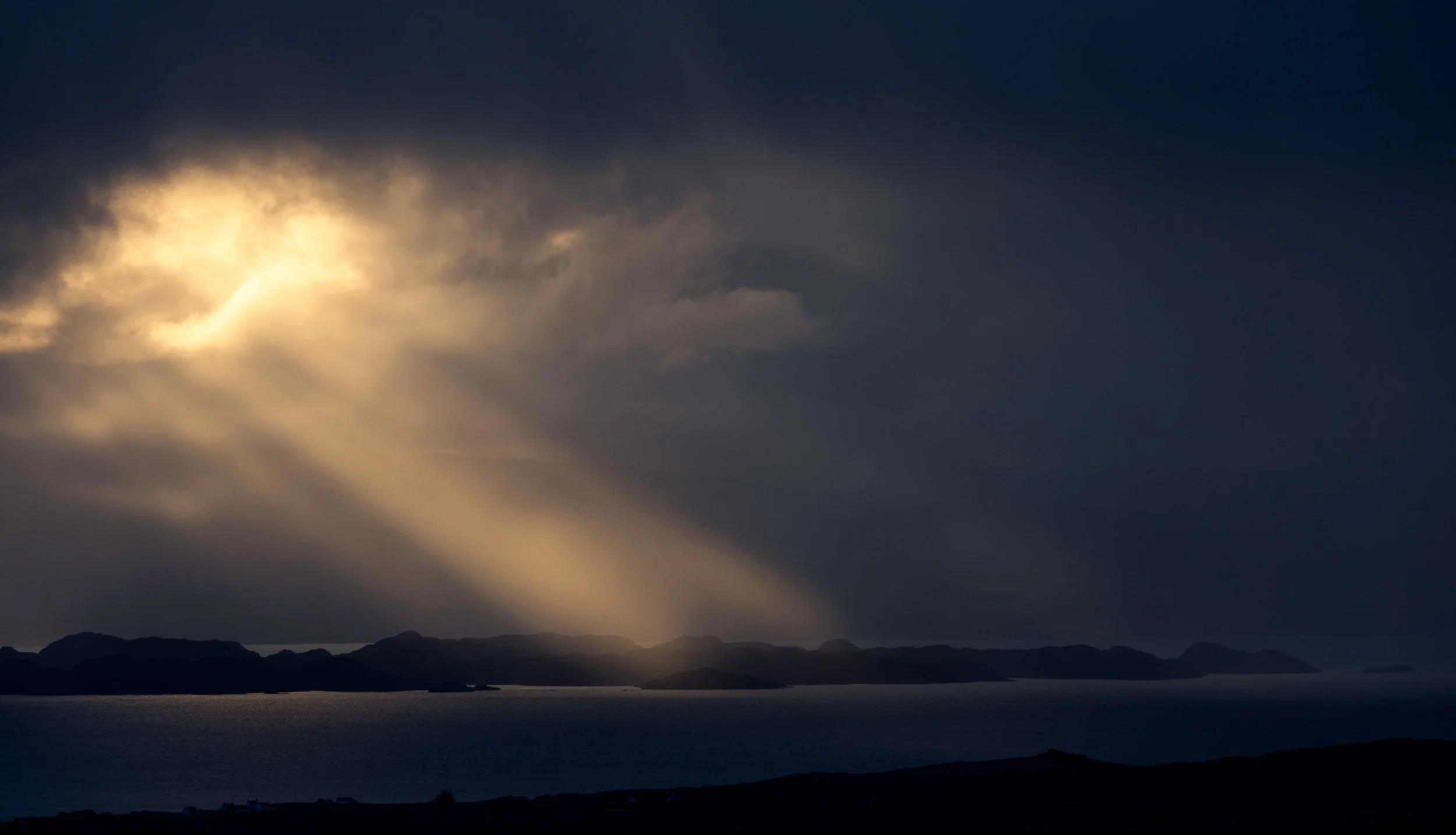
View toward the mainland from Isle of Skye at dawn with impending storms.
Looking back over the journey, very little followed my original itinerary:
Ferry cancellations, unfavourable tides, boggy mountain paths and severe storms all affected where I travelled and what I photographed. Yet some of my favourite photographs came from adapting to those conditions rather than fighting them. The woodlands of Ardnamurchan provided wonderful alternatives to the mountains, while the sunrise views from Blà Bheinn and Beinn Trilleachan justified those very early starts.
The less productive locations were valuable too. I returned with new places to explore and a better understanding of when to photograph them. For me, October remains one of the best months to explore Scotland, whether you're visiting for the scenery, travelling by campervan or heading into the mountains with a camera.
The changing weather isn't simply something to endure. It is often what makes these landscapes so extraordinary.
In Scotland, the photographer doesn't really dictate the itinerary. The weather does.
And that alone makes every journey an adventure. If you have any questions about the locations and kit I use, please ask in the comments below